
Winemaker Notes
Professional Ratings
-
Robert Parker's Wine Advocate
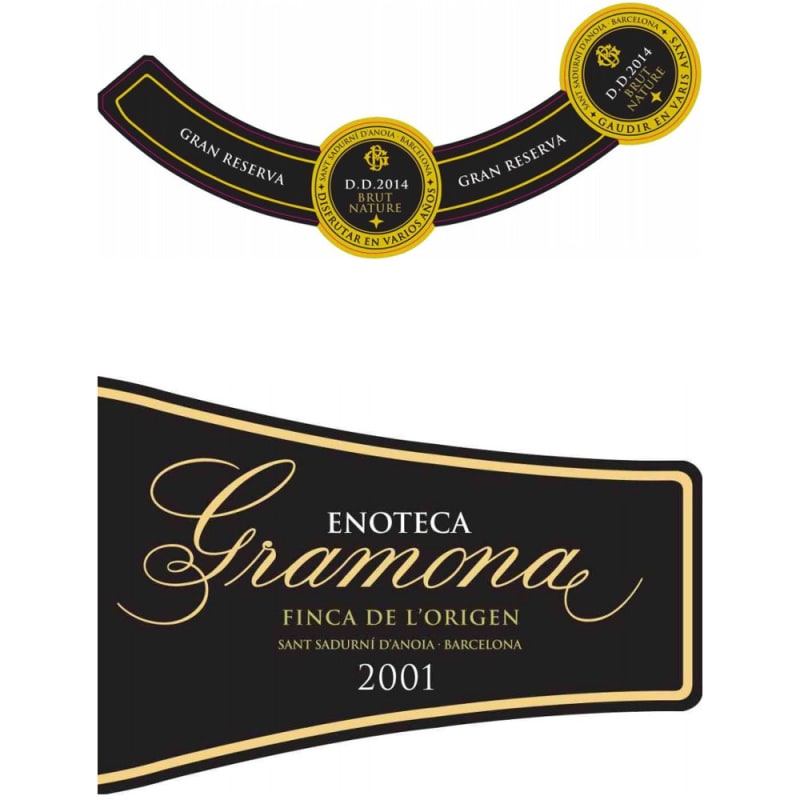
Basically the same wine as the Brut Nature, the 2001 Enoteca Gramona Brut is a Gran Reserva that has a dosage for their centenary solera and finished with some six grams of sugar. The old wine added after the disgorgement adds to and balances the acidity. It's impossible not to compare the two 2001 Enoteca wines, and again at first I found myself preferring the Brut version which shows more nuances in the nose and also more pungent aromas with amplified notes of the autolysis, yeasts, bread and bakery. The palate feels rounder and there is noticeable sweetness toward the end, and even if I prefer the nose in the first place, the effect of the added old wine became more apparent with time and I ended up giving the edge to the Brut Nature. Two great Cavas anyway.


Representing the topmost expression of a Champagne house, a vintage Champagne is one made from the produce of a single, superior harvest year. Vintage Champagnes account for a mere 5% of total Champagne production and are produced about three times in a decade. Champagne is typically made as a blend of multiple years in order to preserve the house style; these will have non-vintage, or simply, NV on the label. The term, "vintage," as it applies to all wine, simply means a single harvest year.

Known for bold reds, crisp whites, easy-drinking rosés, distinctive sparkling, and fortified wines, Spain has embraced international varieties and wine styles while continuing to place primary emphasis on its own native grapes. Though the country’s climate is diverse, it is generally hot and dry. In the center of the country lies a vast, arid plateau known as the Meseta Central, characterized by extremely hot summers and frequent drought.
Rioja is Spain’s best-known region, where earthy, age-worthy Spanish reds are made from Tempranillo and Garnacha (Grenache). Rioja also produces rich, nutty whites from the local Viura grape.
Ribera del Duero is gaining ground for Spanish wines with its single varietal Tempranillo wines, recognized for their concentration of fruit and opulence. Priorat, a sub-region of Catalonia, specializes in bold, full-bodied Spanish red wine blends of Garnacha (Grenache), Cariñena (Carignan), and often Syrah and Cabernet Sauvignon. Catalonia is also home to Cava, a Spanish sparkling wine made in the traditional method but from indigenous varieties. In the cool, damp northwest Spanish wine region of Galicia, refreshing Spanish white Albariño and Verdejo dominate.
Sherry, Spain’s famous fortified wine, is produced in a wide range of styles from dry to lusciously sweet at the country’s southern tip in Jerez.