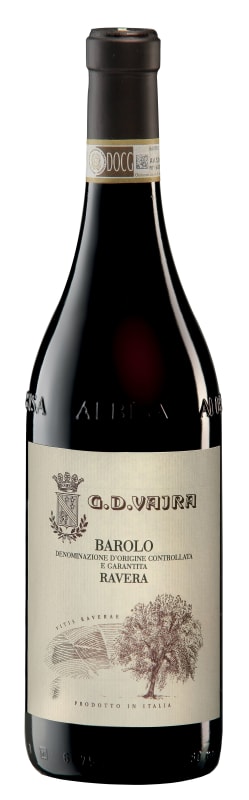


Winemaker Notes
Blend: 100% Nebbiolo
Professional Ratings
-
Jeb Dunnuck
The 2021 Barolo Ravera comes from an amphitheater-shaped vineyard that captures the sunlight, which the producers believe is what gives this cuvée its depth and richness. In the glass, the nose of the 2021 Barolo Ravera is remarkably concentrated, revealing notes of black raspberry and grenadine, fresh leather, and pressed flowers, with a long and sustained feel. The generous sweetness of fruit and its more noble, ripe tannins come through on the mid-palate, but it has a lot of finesse on the finish. The sapidity and purity of the fruit meets the tannins and acidity where they are fabulously. The estate keeps improving these wines, and this one is exceptional.
-
Robert Parker's Wine Advocate
From one of the most sought-after crus sites today, the G.D. Vajra 2021 Barolo Ravera opens to a vibrant ruby color. The wine takes its time opening, especially when tasted young, but that delay bodes well for its future bottle evolution. This wine is built like a wall, with each brick representing its own distinct character. There is dark fruit, pressed flower, herb, ebony and a very elegant mineral side. The bouquet is direct and vertical, with lifted intensity over a medium-plus palate. The tannins are elegantly managed, and this wine has the latitude for long cellar aging. It ferments in stainless steel and ages in large oak casks.
Rating: 97+ -
Wine Spectator
This red is complex and solidly built, featuring black cherry, blackberry and black currant aromas and flavors. Iron, earth and underbrush accents chime in on the firm finish. Remains fresh and vibrant.
-
Decanter
Harvested around the same time as Bricco delle Viole, the Ravera saw an even longer maceration – 55 days – and slightly more time in wood. All GD Vajra’s Barolo mature in large Slavonian oak casks, allowing site to shine. Reserved to begin with, this reveals tobacco, bay leaf and wet stone. Full and dense with some of the richness that the Bricco delle Viole expresses but ultimately steelier in temperament. Tangy blackcurrant is underscored by a distinct mineral edge. Firm, chiselled tannins build in strength without becoming brawny. Definitely cellarworthy.
-
James Suckling
This wine shows aromas of black cherries, fresh violets, thyme and touches of mint and smoke. Relaxing attack on the palate, with firm, dusty yet ripe tannins and crisp acidity. Medium- to full-bodied, it needs time to reach its full potential. Try from 2027.
-
Vinous
The 2021 Barolo Ravera is laced with bright red-toned fruit, iron, spice, cedar, tobacco and dried herbs. Bright acids and beams of tannin give the Ravera its distinctively driving feel. Today, the 2021 is a bit sinewy. I suspect it will always remain a vibrant, steely Barolo. The Ravera is a fine choice for readers who appreciate the more savory, mineral side of Barolo.
Rating: 95+


Responsible for some of the most elegant and age-worthy wines in the world, Nebbiolo, named for the ubiquitous autumnal fog (called nebbia in Italian), is the star variety of northern Italy’s Piedmont region. Grown throughout the area, as well as in the neighboring Valle d’Aosta and Valtellina, it reaches its highest potential in the Piedmontese villages of Barolo, Barbaresco and Roero. Outside of Italy, growers are still very much in the experimentation stage but some success has been achieved in parts of California. Somm Secret—If you’re new to Nebbiolo, start with a charming, wallet-friendly, early-drinking Langhe Nebbiolo or Nebbiolo d'Alba.

The center of the production of the world’s most exclusive and age-worthy red wines made from Nebbiolo, the Barolo wine region includes five core townships: La Morra, Monforte d’Alba, Serralunga d’Alba, Castiglione Falletto and the Barolo village itself, as well as a few outlying villages. The landscape of Barolo, characterized by prominent and castle-topped hills, is full of history and romance centered on the Nebbiolo grape. Its wines, with the signature “tar and roses” aromas, have a deceptively light garnet color but full presence on the palate and plenty of tannins and acidity. In a well-made Barolo wine, one can expect to find complexity and good evolution with notes of, for example, strawberry, cherry, plum, leather, truffle, anise, fresh and dried herbs, tobacco and violets.
There are two predominant soil types here, which distinguish Barolo from the lesser surrounding areas. Compact and fertile Tortonian sandy marls define the vineyards farthest west and at higher elevations. Typically the Barolo wines coming from this side, from La Morra and Barolo, can be approachable relatively early on in their evolution and represent the “feminine” side of Barolo, often closer in style to Barbaresco with elegant perfume and fresh fruit.
On the eastern side of the Barolo wine region, Helvetian soils of compressed sandstone and chalks are less fertile, producing wines with intense body, power and structured tannins. This more “masculine” style comes from Monforte d’Alba and Serralunga d’Alba. The township of Castiglione Falletto covers a spine with both soil types.
The best Barolo wines need 10-15 years before they are ready to drink, and can further age for several decades.