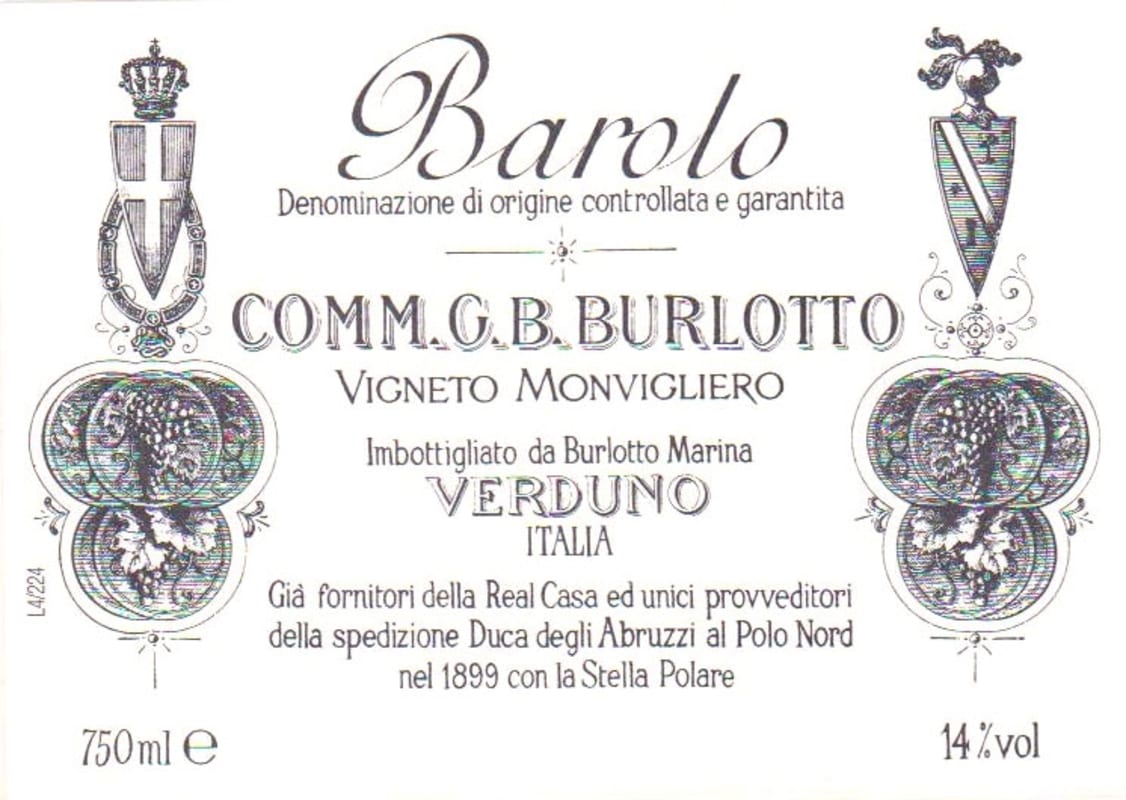

Winemaker Notes
Like his ancestors, Fabio approaches Monvigliero in a way that is both classical and idiosyncratic— to extract the vineyard's essential greatness. At the core of this technique is a gentle crushing of all the grapes by foot, an incredible 60-day maceration on the skins and, of course, long aging in large wood botti. It's an approach virtually unheard of today, yet its brilliance is revealed in every glass of this unique Barolo. In fact, Monvigliero's magic must have as much to do with the technique as it does the vineyard's relatively high altitude or the 45-year-old vines in limestone- rich soil.
The foot treading avoids the problem of mechanical extraction: breaking the seeds and tannins, which causes bitterness. It also explains how Monvigliero's fruit can withstand sixty days of skin contact—a practice that once flourished in the Langhe's greatest cellars but vanished
by the 1980s. The combination of foot treading, long maceration and traditional botte aging produces a wine of powerful structure, but with an ethereally delicate mouthfeel.
Professional Ratings
-
Jeb Dunnuck
The 2006 Barolo Monvigliero displays a completely different personality, with notes of clove, fresh spice, wild herbs, and beautiful wildflower perfume alongside ripe cranberries. Medium-bodied, it’s not a large wine but one defined by length, finesse, and purity. The wine retains exceptional clarity and sense of place even at this stage, with fruit that becomes more expressive as it opens.
-
Robert Parker's Wine Advocate
The 2006 Barolo Vigneto Monvigliero is the finest wine I have ever tasted from Burlotto. Monvigliero is a site that typically yields Baroli with high-toned aromatics that can tend towards excessive herbaceousness if there isn't enough fruit to provide balance, something I have often found in this bottling. Not in 2006. This sumptuous yet delicate, classically built Barolo flows with gorgeous layers of red berries, spices, flowers and herbs, showing superb harmony, plenty of depth and fabulous overall balance. To be sure, the wine's signature profile bears more than a passing resemblance to the wines of northern Piedmont, but in 2006, all of the elements are in perfect harmony. This is a fabulous effort from Burlotto, and is highly recommended, particularly for readers who appreciate a firm, classic style of Barolo. Anticipated maturity: 2016-2031.


Responsible for some of the most elegant and age-worthy wines in the world, Nebbiolo, named for the ubiquitous autumnal fog (called nebbia in Italian), is the star variety of northern Italy’s Piedmont region. Grown throughout the area, as well as in the neighboring Valle d’Aosta and Valtellina, it reaches its highest potential in the Piedmontese villages of Barolo, Barbaresco and Roero. Outside of Italy, growers are still very much in the experimentation stage but some success has been achieved in parts of California. Somm Secret—If you’re new to Nebbiolo, start with a charming, wallet-friendly, early-drinking Langhe Nebbiolo or Nebbiolo d'Alba.

The center of the production of the world’s most exclusive and age-worthy red wines made from Nebbiolo, the Barolo wine region includes five core townships: La Morra, Monforte d’Alba, Serralunga d’Alba, Castiglione Falletto and the Barolo village itself, as well as a few outlying villages. The landscape of Barolo, characterized by prominent and castle-topped hills, is full of history and romance centered on the Nebbiolo grape. Its wines, with the signature “tar and roses” aromas, have a deceptively light garnet color but full presence on the palate and plenty of tannins and acidity. In a well-made Barolo wine, one can expect to find complexity and good evolution with notes of, for example, strawberry, cherry, plum, leather, truffle, anise, fresh and dried herbs, tobacco and violets.
There are two predominant soil types here, which distinguish Barolo from the lesser surrounding areas. Compact and fertile Tortonian sandy marls define the vineyards farthest west and at higher elevations. Typically the Barolo wines coming from this side, from La Morra and Barolo, can be approachable relatively early on in their evolution and represent the “feminine” side of Barolo, often closer in style to Barbaresco with elegant perfume and fresh fruit.
On the eastern side of the Barolo wine region, Helvetian soils of compressed sandstone and chalks are less fertile, producing wines with intense body, power and structured tannins. This more “masculine” style comes from Monforte d’Alba and Serralunga d’Alba. The township of Castiglione Falletto covers a spine with both soil types.
The best Barolo wines need 10-15 years before they are ready to drink, and can further age for several decades.