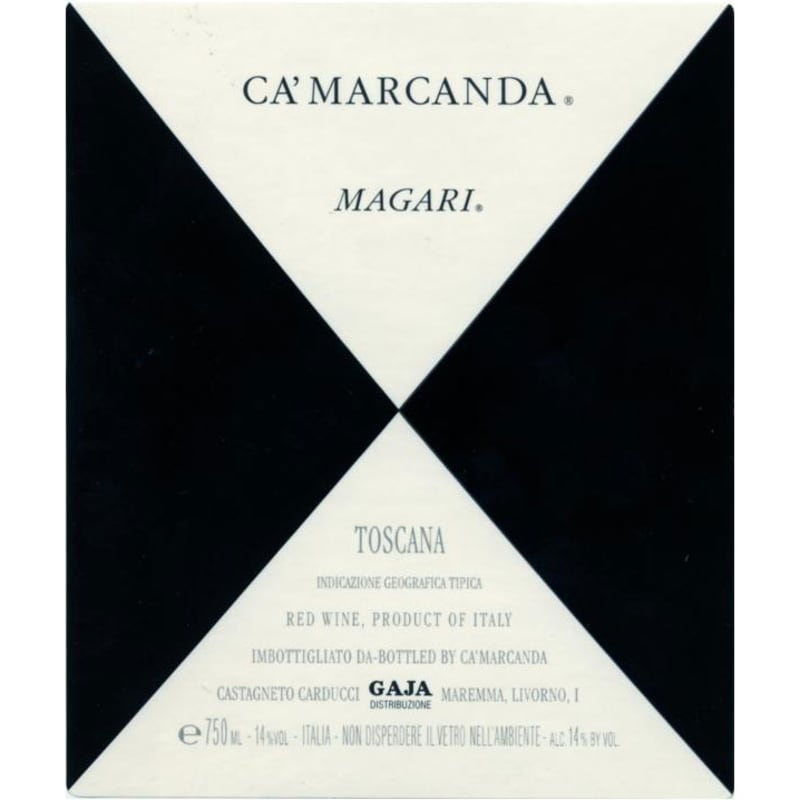

Winemaker Notes
Blend: 50% Merlot, 25% Cabernet Sauvignon, 25% Cabernet Franc
Professional Ratings
-
James Suckling
Gorgeous aromas of crushed raspberries and blueberries. Full body, well-integrated tannins and a fresh, clean finish. Delicious already. Drink or hold.
-
Robert Parker's Wine Advocate
The 2011 Magari IGT is a soft and savory wine that boasts dark extraction and a high degree of aromatic intensity. Lush cherry and blackberry emerge from this blend of mostly Merlot with Cabernet Sauvignon and Cabernet Franc. You feel a point of alcoholic heat that is in line with the warm 2011 vintage, that extra power folds nicely within the broad texture of the mouthfeel.
-
Wine Enthusiast
Made with a blend of 50% Merlot, 25% Cabernet Sauvignon and 25% Cabernet Franc, this wine starts with aromas of espresso, coffee, black plum and cooking spices. The concentrated palate delivers black currants and black cherry layered with espresso, dark chocolate and toasted oak. It’s soft but still tightly wound and finishes on a drying, astringent note. Drink through 2018.
-
Wine Spectator
A deep, rich version, with the plum, black cherry, vanilla and toast flavors aligned with a dense texture and refined tannins. Long and harmonious, this should benefit from additional time in the bottle. Merlot, Cabernet Sauvignon and Cabernet Franc. Best from 2015 through 2022.
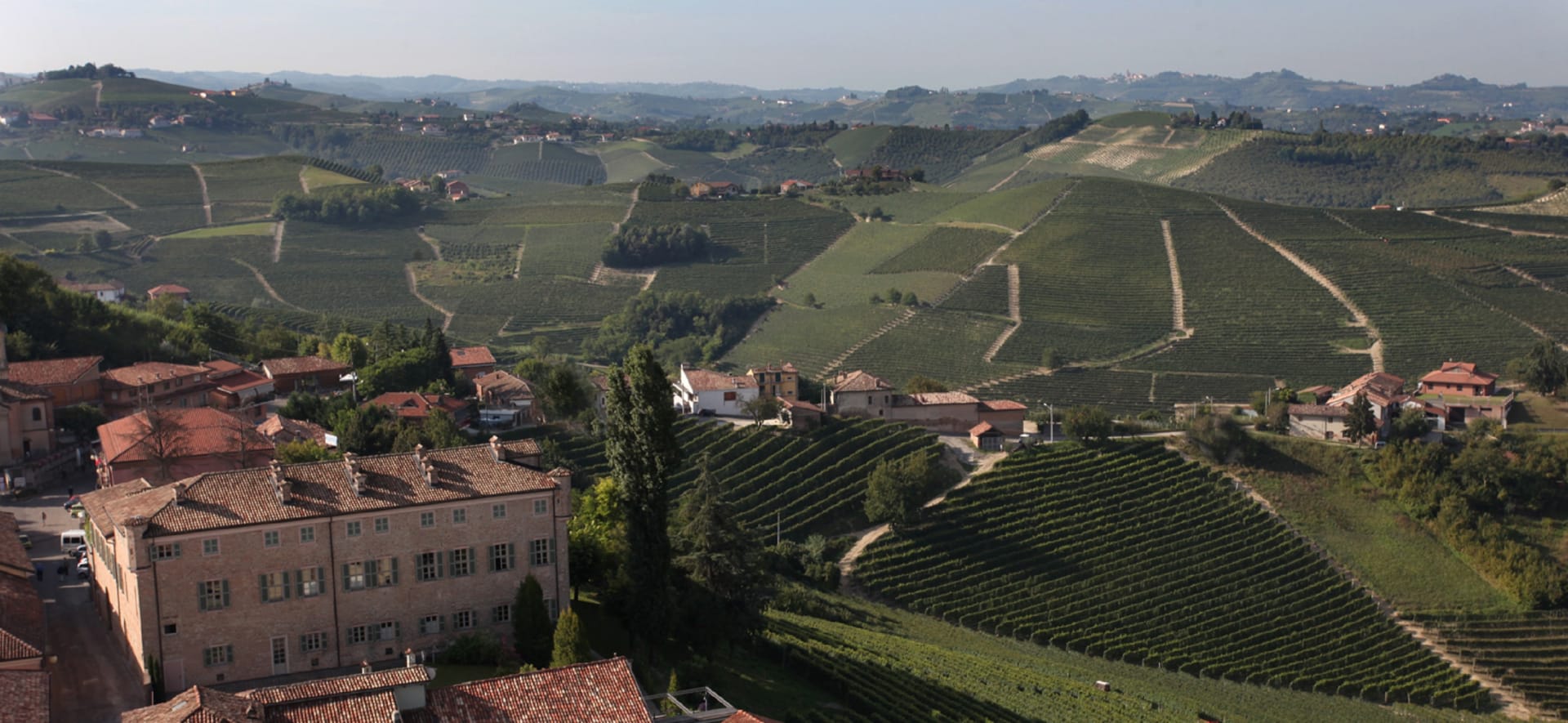


Perched atop a steep hill in the Langhe sits the small village of Barbaresco, home of the GAJA winery. The story of the GAJA Winery can be traced to a singular, founding purpose: to produce original wines with a sense of place which reflect the tradition and culture of those who made it. This philosophy has inspired five generations of impeccable winemaking. It started over 150 years ago when Giovanni Gaja opened a small restaurant in Barbaresco, making wine to complement the food he served. In 1859, he founded the Gaja Winery, producing some of the first wine from Piedmont to be bottled and sold outside the region. Since that time, the winery has been shaped by each generation’s hand, notably that of Clotilde Rey, Angelo Gaja’s grandmother. Her passion for uncompromising quality influenced and informed Angelo Gaja. Through Angelo, these values have become the cornerstone of the GAJA philosophy and are engrained in every aspect of wine production
In 1961, Angelo Gaja began his mission of bringing this great winery to an even higher level. He was the first to use barriques, 225-liter French oak barrels. Under his direction, GAJA pioneered the production of single-vineyard designated wines and was the first to plant Cabernet Sauvignon, Chardonnay and Sauvignon Blanc varietals in Piedmont. He was also instrumental in elevating the native Nebbiolo grape to world-class esteem.
Angelo Gaja is joined by the fifth generation of the GAJA family – his daughters Gaia and Rossana and his son Giovanni. Together they continue to advance the winery’s legacy. To fully realize their vision, all GAJA wines are produced exclusively from grapes grown in estate-owned vineyards, including 250 acres in Piedmont’s Barbaresco and Barolo districts as well as estates in Pieve Santa Restituta (Montalcino) and Ca’Marcanda (Bolgheri). It is from these storied vineyards, and their terroir – the combination of soil, weather and vines that grow upon them, that GAJA wines reveal their true heart and soul.

One of the world’s most classic and popular styles of red wine, Bordeaux-inspired blends have spread from their homeland in France to nearly every corner of the New World. Typically based on either Cabernet Sauvignon or Merlot and supported by Cabernet Franc, Malbec and Petit Verdot, the best of these are densely hued, fragrant, full of fruit and boast a structure that begs for cellar time. Somm Secret—Blends from Bordeaux are generally earthier compared to those from the New World, which tend to be fruit-dominant.

An outstanding wine region made famous by Marchese Mario Incisa della Rocchetta, who planted Cabernet Sauvignon vines for his own consumption in 1940s on his San Guido estate, and called the resulting wine, Sassicaia. Today the region’s Tuscan reds are based on Cabernet Sauvignon and Merlot, which can be made as single varietal wines or blends. The local Sangiovese can make up no more than 50% of the blends. Today Sassicaia has its own DOC designation within the Bogheri DOC appellation.