


Winemaker Notes
The defining feature is its floral character and the sweetness of both aromas and tannins, which give the wine remarkable finesse. On the nose, sweet and fresh notes of pollen and delicate flowers emerge, with hints of bergamot, roses and violets, alongside nuances of lemongrass, marzipan, wild strawberries, and redcurrant. The aromatic profile is very elegant and expressive. On the palate, it is delicate and medium-bodied, gentle yet compact. The texture is smooth and fresh, supported by fine, sweet tannins that make the wine immediately approachable and very enjoyable. The finish is long, with a persistent sense of aromatic sweetness and freshness, highly satisfying and inviting another sip
Professional Ratings
-
James Suckling
A restrained wine with vibrant wild strawberries, lemon tree, a whiff of eucalyptus and potpourri. Medium- to full-bodied, it’s very classic and fresh. Tannins are firm and dusty yet ripe, with ferrous, savory notes. The polished finish is reminiscent of licorice and full of harmony. Drink or hold.
-
Jeb Dunnuck
Bottled in July 2025, the 2023 Barbaresco pours a medium ruby hue and offers an elegant perfume with refined tannins and bright acidity. Aromas of ripe raspberries, currants, fresh basil, wildflowers, and delicate graphite emerge from the glass, and the palate is mouthwatering and long, with excellent balance. Production was significantly reduced due to sunburn during the growing season, which led the estate to cut a substantial portion of the fruit. Drink 2028-2050.
-
Decanter
Despite extreme summer heat, the excessive rain in spring generated big berries with lots of juice, according to Gaia Gaja. Rather than translating as dilution, the estate Barbaresco is beautifully proportioned. It conveys a sense of ethereal weightlessness and delicacy with strength. Starting from aromas of cedar and rooibos tea, it evolves to cinnamon, cardamom and spring flowers. Midweight and streamlined, this stretches out with long, silky tannins effortlessly enfolding bright forest berries. Accents of clove and star anise are neatly embedded. A zesty finish explodes with spiced citrus. It feels ready to drink yet is not in a hurry.
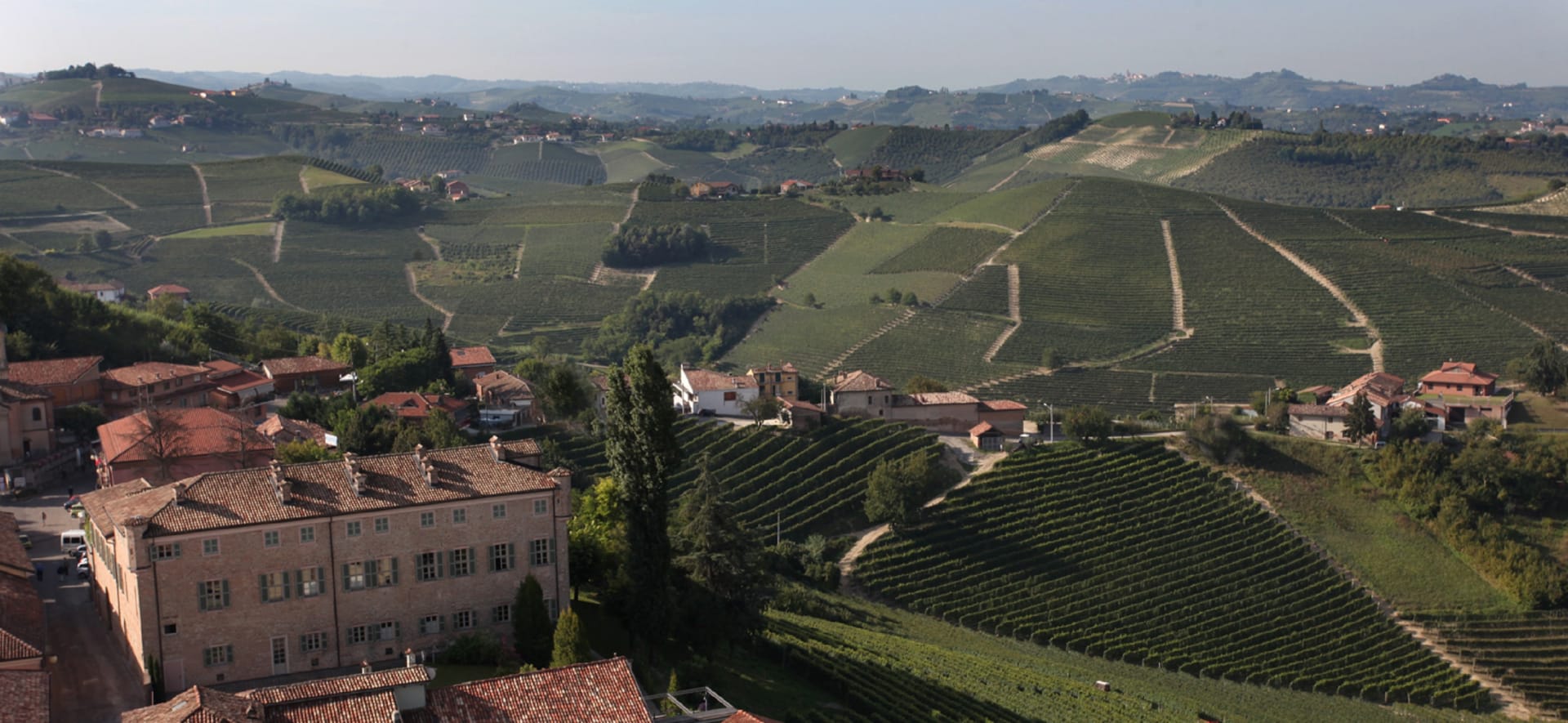


Perched atop a steep hill in the Langhe sits the small village of Barbaresco, home of the GAJA winery. The story of the GAJA Winery can be traced to a singular, founding purpose: to produce original wines with a sense of place which reflect the tradition and culture of those who made it. This philosophy has inspired five generations of impeccable winemaking. It started over 150 years ago when Giovanni Gaja opened a small restaurant in Barbaresco, making wine to complement the food he served. In 1859, he founded the Gaja Winery, producing some of the first wine from Piedmont to be bottled and sold outside the region. Since that time, the winery has been shaped by each generation’s hand, notably that of Clotilde Rey, Angelo Gaja’s grandmother. Her passion for uncompromising quality influenced and informed Angelo Gaja. Through Angelo, these values have become the cornerstone of the GAJA philosophy and are engrained in every aspect of wine production
In 1961, Angelo Gaja began his mission of bringing this great winery to an even higher level. He was the first to use barriques, 225-liter French oak barrels. Under his direction, GAJA pioneered the production of single-vineyard designated wines and was the first to plant Cabernet Sauvignon, Chardonnay and Sauvignon Blanc varietals in Piedmont. He was also instrumental in elevating the native Nebbiolo grape to world-class esteem.
Angelo Gaja is joined by the fifth generation of the GAJA family – his daughters Gaia and Rossana and his son Giovanni. Together they continue to advance the winery’s legacy. To fully realize their vision, all GAJA wines are produced exclusively from grapes grown in estate-owned vineyards, including 250 acres in Piedmont’s Barbaresco and Barolo districts as well as estates in Pieve Santa Restituta (Montalcino) and Ca’Marcanda (Bolgheri). It is from these storied vineyards, and their terroir – the combination of soil, weather and vines that grow upon them, that GAJA wines reveal their true heart and soul.

Responsible for some of the most elegant and age-worthy wines in the world, Nebbiolo, named for the ubiquitous autumnal fog (called nebbia in Italian), is the star variety of northern Italy’s Piedmont region. Grown throughout the area, as well as in the neighboring Valle d’Aosta and Valtellina, it reaches its highest potential in the Piedmontese villages of Barolo, Barbaresco and Roero. Outside of Italy, growers are still very much in the experimentation stage but some success has been achieved in parts of California. Somm Secret—If you’re new to Nebbiolo, start with a charming, wallet-friendly, early-drinking Langhe Nebbiolo or Nebbiolo d'Alba.

A wine that most perfectly conveys the spirit and essence of its place, Barbaresco is true reflection of terroir. Its star grape, like that in the neighboring Barolo region, is Nebbiolo. Four townships within the Barbaresco zone can produce Barbaresco: the actual village of Barbaresco, as well as Neive, Treiso and San Rocco Seno d'Elvio.
Broadly speaking there are more similarities in the soils of Barbaresco and Barolo than there are differences. Barbaresco’s soils are approximately of the same two major soil types as Barolo: blue-grey marl of the Tortonion epoch, producing more fragile and aromatic characteristics, and Helvetian white yellow marl, which produces wines with more structure and tannins.
Nebbiolo ripens earlier in Barbaresco than in Barolo, primarily due to the vineyards’ proximity to the Tanaro River and lower elevations. While the wines here are still powerful, Barbaresco expresses a more feminine side of Nebbiolo, often with softer tannins, delicate fruit and an elegant perfume. Typical in a well-made Barbaresco are expressions of rose petal, cherry, strawberry, violets, smoke and spice. These wines need a few years before they reach their peak, the best of which need over a decade or longer. Bottle aging adds more savory characteristics, such as earth, iron and dried fruit.