


Winemaker Notes
Bright salmon-pink. On the nose, aromas of lemon, raspberry, and strawberry with a whiff of salt. On the palate, mouthwateringly bright and effervescent. Snappy with gulpable appeal, with fraises de bois, bright raspberry and mineral flavors. Finishes salty and clean, begging for another sip.
Gaintza Rose’s low alcohol, effervescence and bright acidity make it a wonderful aperitif on its own, but it would be beautiful with shellfish, shrimp, and fried seafood.
Blend: 60% Hondarrabi Beltza, 40% Hondarrabi Zuri
Professional Ratings
-
Robert Parker's Wine Advocate
The 2019 Roses is a very pale rosé, really a clarete, produced with 50/50 red and white grapes, Hondarribi Beltza and Hondarribi Zuri. It fermented at low temperature to keep the dissolved carbonic gas in the wine and was kept with the lees for four or five months before being bottled. It's mellow and elegant, a little closed and a touch more reductive than the whites (could be the moment), but it has the solid palate of its siblings, with that light bubbling providing a nice mouthfeel and surprisingly enough coming through as quite dry, as there is a tendency (which I don't enjoy) to leave more residual sugar in rosé. They don't have a lot of red grapes, so production was limited,

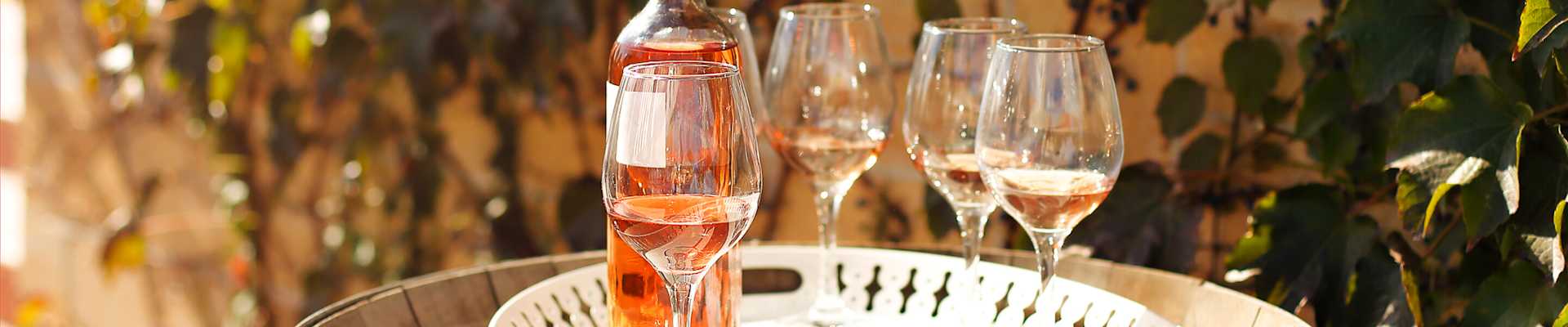
Whether it’s playful and fun or savory and serious, most rosé today is not your grandmother’s White Zinfandel, though that category remains strong. Pink wine has recently become quite trendy, and this time around it’s commonly quite dry. Since the pigment in red wines comes from keeping fermenting juice in contact with the grape skins for an extended period, it follows that a pink wine can be made using just a brief period of skin contact—usually just a couple of days. The resulting color depends on grape variety and winemaking style, ranging from pale salmon to deep magenta.

On the southern edge of the rocky Bay of Biscay in northern Spain, this is Basque country and home to the refreshing and slightly effervescent (usually) white wine, Txakoli. Three subregions compose the larger one: Getariako Txakolina, Bizkaiko Txakolina and Arabako Txakolina. While Hondarribi Zuri and Hondarrabi Beltza are the main grape varieties, other French varieties are scattered throughout the region.