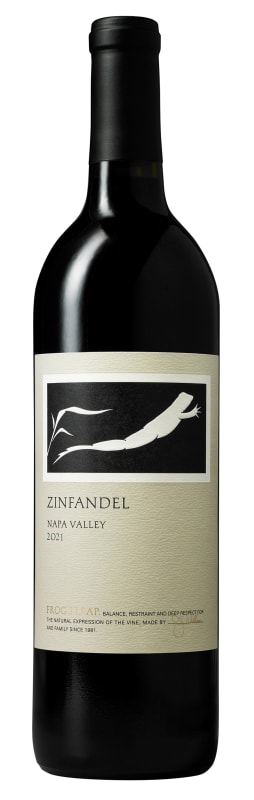


Winemaker Notes
Using their now well-established technique of cold-soaking the Petite Sirah portion of the co-ferment and then infusing it into the fermenting Zinfandel ten days later, Frog's Leap locks in the freshness of the fruit and accentuate the elegance of the resulting wine. A dash of Carignane adds additional acidity and structure, preserved nicely by their practice of aging Zinfandel largely in small concrete tanks. The resulting wine is beautiful: deeply flavored, balanced, and fresh—a great summer drinker to be sure, especially with a quick chill. But don’t be afraid to put a few bottles away in the cellar; like all Frog's Leap Zins, this wine has decades of life ahead of it.
Blend: 81% Zinfandel, 10% Petite Sirah, 9% Carignane
Professional Ratings
-
Wine Enthusiast
Mouthwatering and delicious with crisp acidity and a driving finish, this wine offers a pleasing range of flavors including mixed cherries, cranberries, warming spices and savory accents. Both friendly and beguiling, it has pleasing approachability and depth. Firm while moderate tannins and mouthwatering acidity create a palate-cleansing accompaniment to a wide range of foods.
-
Wine & Spirits
Rory Williams reports that dry farming through the third drought year in a row held yields down by 20 percent. The Frog’s Leap team encouraged freshness in the wine by cold-soaking petite sirah and adding it to the fermenting zinfandel; they also aged most of the lot in concrete. The wine presents a rustic sense of old-time Napa, along with a seamlessly integrated structure. It’s clean and direct, with firm, blue-black fruit that lasts long past each sip.
-
James Suckling
A medium-bodied, juicy and succulent zinfandel with aromas of dark cherries, plums, wild berries and mixed herbs. Well-rounded with a caressing texture and a satisfying wild berry character toward the finish.


Undoubtedly proving its merit over and over, Napa Valley is a now a leading force in the world of prestigious red wine regions. Though Cabernet Sauvignon dominates Napa Valley, other red varieties certainly thrive here. Important but often overlooked include Merlot and other Bordeaux varieties well-regarded on their own as well as for their blending capacities. Very old vine Zinfandel represents an important historical stronghold for the region and Pinot noir is produced in the cooler southern parts, close to the San Pablo Bay.
Perfectly situated running north to south, the valley acts as a corridor, pulling cool, moist air up from the San Pablo Bay in the evenings during the hot days of the growing season, which leads to even and slow grape ripening. Furthermore the valley claims over 100 soil variations including layers of volcanic, gravel, sand and silt—a combination excellent for world-class red wine production.