

Winemaker Notes
Professional Ratings
-
Wine & Spirits
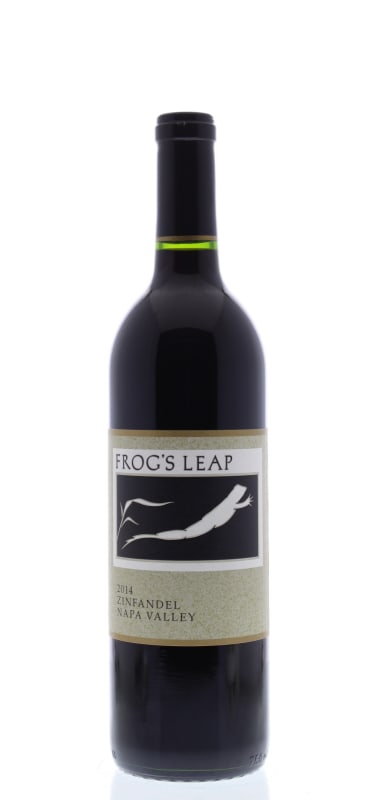
John Williams is on a roll, following his exceptional 2013 Zinfandel with an equally delicious 2014. He dry-farms his 40-year-old vines, harvesting them at the same time as his Petite Sirah so he can co-ferment the fruit. That brings the tannins together in a refreshing, gentle structure that lifts the fruit flavors, presenting them as perfectly ripe forest berries. The tannins feel plus, even as they carry a note of black-peppercorn spice and manzanita. This is a beautiful Napa Valley red that happens to speak with an accent of Zin.
-
Wilfred Wong of Wine.com
Have you ever heard of the term "Throwback Zinfandel?" Probably not, because as I was tasting the 2014 Frog's Leap Zinfandel I was kind of thinking this way and had never heard the phrase. When I first drank wines as a young adult, the wines were 12.5% to 13.5% in alcohol. Today, it is not uncommon to find zin "monsters of the midway" to be in the 15-16% bracket. Highly fashionable, but perhaps too much for food pairings. This one harkens back to the past. Medium to deep ruby color; zany and wild ripe berries in the nose, medium depth; medium bodied, perky palate, with racy tannins; red fruit, dried dust and earth in the flavors with some rusticity; medium finish, meaningful in the aftertaste because you can actually taste the fruit and earth. (Tasted: April 28, 2016, San Francisco, CA)


Undoubtedly proving its merit over and over, Napa Valley is a now a leading force in the world of prestigious red wine regions. Though Cabernet Sauvignon dominates Napa Valley, other red varieties certainly thrive here. Important but often overlooked include Merlot and other Bordeaux varieties well-regarded on their own as well as for their blending capacities. Very old vine Zinfandel represents an important historical stronghold for the region and Pinot noir is produced in the cooler southern parts, close to the San Pablo Bay.
Perfectly situated running north to south, the valley acts as a corridor, pulling cool, moist air up from the San Pablo Bay in the evenings during the hot days of the growing season, which leads to even and slow grape ripening. Furthermore the valley claims over 100 soil variations including layers of volcanic, gravel, sand and silt—a combination excellent for world-class red wine production.