


Winemaker Notes
Generous but up-tempo fruitiness from the Zinfandel meets some serious backbone and savory depth from the Tempranillo, Merlot and Petite Sirah. The soft, friendly drinkability of Cinsault provides lift, keeping the strong personalities in balance, and spicy, floral Syrah shuts down the party. Layered but eminently drinkable, the '23 is best served at a cool cellar temperature, around 55F.
Blend: 36% Zinfandel, 15% Cinsault, 13% Petite Sirah, 13% Carignane, 10% Tempranillo, 9% Merlot, 4% Syrah
Professional Ratings
-
Vinous
The 2023 Flycatcher is a blend of 36% Zinfandel, 15% Cinsault, 13% Petite Sirah, 13% Carignane, 10% Tempranillo, 9% Merlot and 4% Syrah. Crushed red berry fruit, blood orange, cinnamon and crushed flowers soar from the glass. This vibrant, exuberant red offers tons of forward fruit buffered by brisk acids that add notable energy. Eminently quaffable, the 2023 also has plenty of complexity to satisfy more intellectually curious wine lovers.
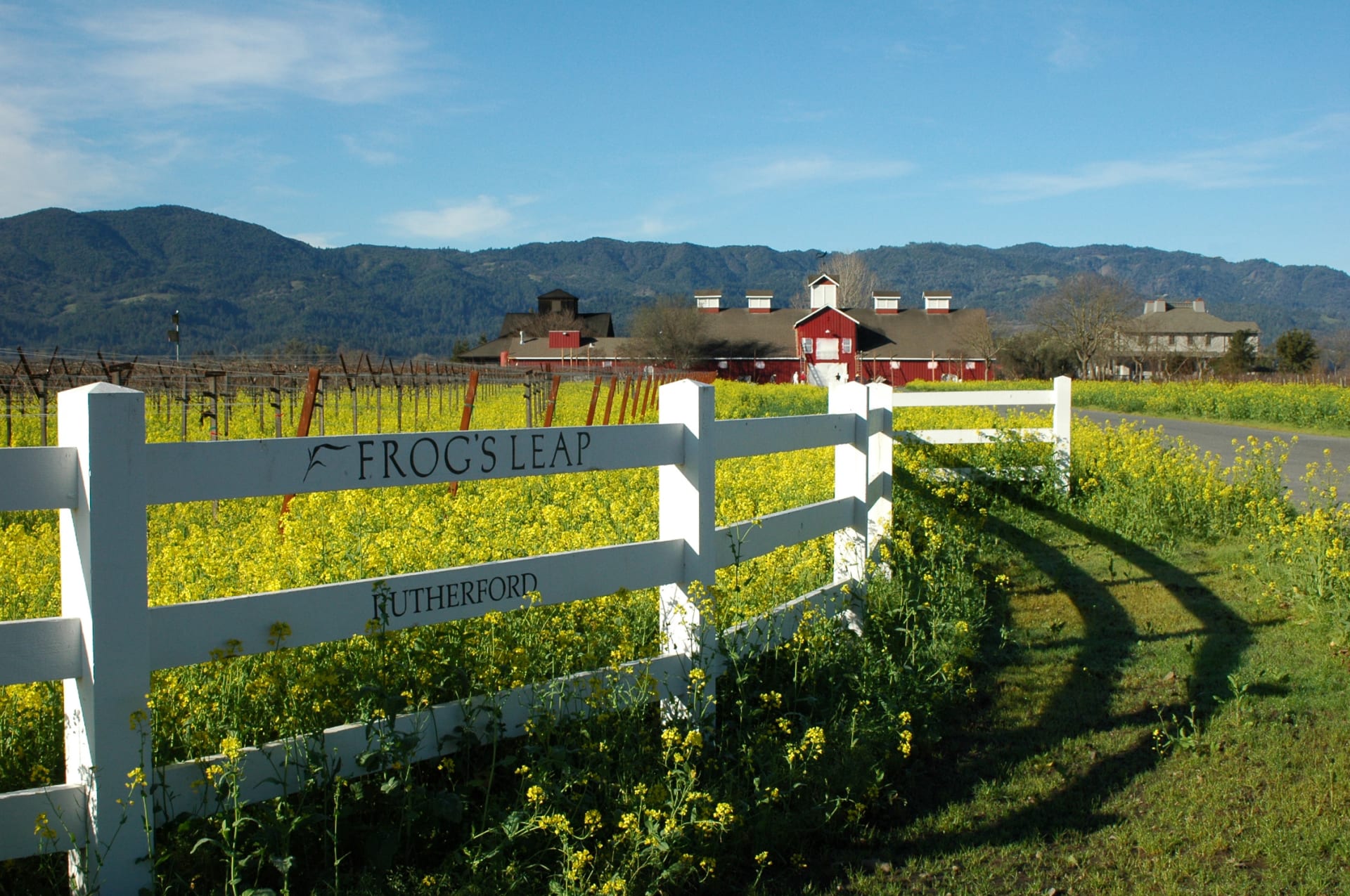



Frog's Leap is a family-owned winery dedicated to sustainable principles and committed to producing wines with balance, restraint and respect for terroir. Frog's Leap makes its home amongst 200 acres of vineyards in Rutherford at the historic ‘Red Barn’. Founded by John Williams in 1981, Frog’s Leap continues to be family-owned and operated. As the owner and winemaker, John has made every vintage for over four decades. Frog’s Leap has earned an enviable reputation for our sincere dedication to sustainable principles and our commitment to handcrafting wines. This noted ‘ghost winery’ was built in 1884 as the Adamson Winery and renovated in 1994 as Frog's Leap's permanent home. A handsome bi-level barrel chai completes the state-of-the-art winemaking facility and guests are received in the warm and welcoming LEED-certified hospitality center.
Now in its fourth decade of production, Winemakers John and Rory Williams hand-craft Sauvignon Blanc, Chardonnay, Zinfandel, Merlot, and an Estate-Grown Rutherford Cabernet Sauvignon. Using the best of Napa Valley's organically grown, dry- farmed grapes and the most traditional winemaking techniques, Frog's Leap strives to produce wines that deeply reflect the soils and climate from which they emanate. Thoughtfully shepherding both natural and earned resources, Frog’s Leap consistently returns more than it takes from the environment.
First certified by California Certified Organic Farmers (CCOF) in 1988 Frog's Leap has been a leader in the industry for decades. Fundamentally, organic farming means that if you take from the soil, you must return to the soil in equal measure. In the case of regenerative farming – a practice firmly embraced by Frog's Leap – you must return to the soil in greater measure than you take. Using a traditional approach to winemaking Frog’s Leap’s intention is to craft wines that are deeply reflective of the influences from which they emanate. Frog’s Leap makes wine of balance and restraint, with respect for the natural expression of the vine. The winery relies on techniques such as crop rotation, green manure, compost and biological pest control to maintain soil productivity and control pests on a farm. Organic farming excludes the use of manufactured fertilizers and pesticides, plant growth regulators and genetically modified organisms. Organic farming involves mechanical weed control (via cultivating or hoeing) rather than herbicidal weed control.
Frog's Leap presents a relaxed approach to enjoying wine. An easy hospitality and warm sense of humor is juxtaposed with a more serious sensibility when making wine. The wines produced range from Cabernet Sauvignon and Chardonnay to Zinfandel and Sauvignon Blanc. The winery has quite the line up to offer and hope you’ll try one of these delicious wines that harmoniously combine quality, sustainability and value.

California is a winemaking colossus; by itself it is the fourth largest producer in the world. Red wine accounts for 56% of the total by volume, and red grapes 63% of total acres planted. In addition, a number of California red wines are heralded as being among the most prestigious and sought-after wines in the world.
While the state’s incredibly diverse geography, soils and microclimates allow for a wide array of styles, the key factor unifying California red wine is the abundance of sunshine and a long, consistent growing season. This leads to well-developed fruit marked both by impressive ripeness and balancing acidity.
The state’s most famous red wine region, of course, is Napa Valley, where Cabernet Sauvignon reigns as king. But California boasts a wealth of other impressive appellations. The much larger and climatically varied Sonoma County also produces world class California Cabernet, along with wonderful examples of California Pinot Noir and Zinfandel.
Fine versions of Cabernet and Zinfandel hail from Paso Robles as well, which is also gaining fame with Rhone varietals like Syrah and Grenache. As for Pinot Noir, terrific examples can be found from AVA’s such as Anderson Valley, Carneros, Santa Lucia Highlands and Sta. Rita Hills. Wineries in Santa Barbara and San Luis Obispo Counties are making wonderful Syrahs, and the Sierra Foothill appellations are proving to be an experimental hotbed, with Italian and Spanish varietals employed to great effect.
This of course is a mere sketch. The subject of California red wine is as deep and broad as an ocean, and absolutely a joy to explore!