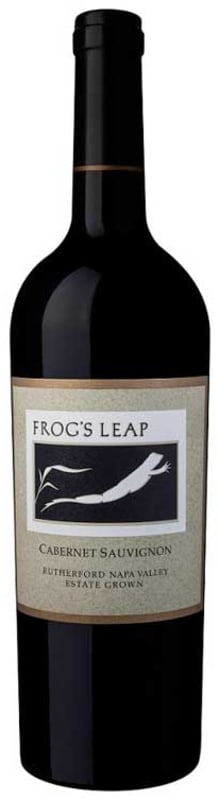


Winemaker Notes
The 2015 is a remarkable wine: rich, deep mocha aromas, superb balance, with very long and deep flavors. Is the Merlot contributing? We think yes. Please wait 10 years to open and even then give it an hour in the decanter. Can’t wait? Grill a well-aged N.Y. strip and serve simply with a peppery arugula salad.
Blend: 78% Cabernet Sauvignon, 13% Merlot, 9% Cabernet Franc
Professional Ratings
-
James Suckling
This is what a 10-year-old Napa cab should taste like, offering savory, leathery accents to the bold, dark fruit flavors on a supportive texture of fine-grained tannins. Full-bodied with roasted fruit, black olive, grilled beef, singed rosemary and iron flavors.
-
Robert Parker's Wine Advocate
A blend of 78% Cabernet Sauvignon, 13% Merlot and 9% Cabernet Franc, the 2015 Cabernet Sauvignon Estate Grown is slightly fading and showing some bricking at the rim, but nothing alarming—it's aging about as I'd expect. Cherries and tobacco leaves mark the nose, while the medium-bodied palate is smooth and silky, made in paradigm of balance and medium-bodied elegance, with a long, softly dusty finish.
-
Wilfred Wong of Wine.com
Finely balanced with just the right amount of muscle, the firmly structured 2015 Frog's Leap Cabernet Sauvignon exhibits lovely currants and savory spices in the flavors. Pair it with a grilled duck salad. (Tasted: November 20, 2017, San Francisco, CA)
-
Wine & Spirits
John Williams and his team at Frog’s Leap built their Rutherford Estate cabernet program on three vineyards: Red Barn (surrounding the winery), Chavez Leeds (in partnership with viticulturist Frank Leeds’s family) and the Rossi Ranch, 50 acres of prime real estate on the Rutherford Bench west of Highway 29, a property the winery purchased in 2007. This blend includes 13 percent merlot from Rossi, which fills out the wine and polishes the bitter, earthy tannins of cabernet, making this a fat, luscious vintage to serve with filet mignon.
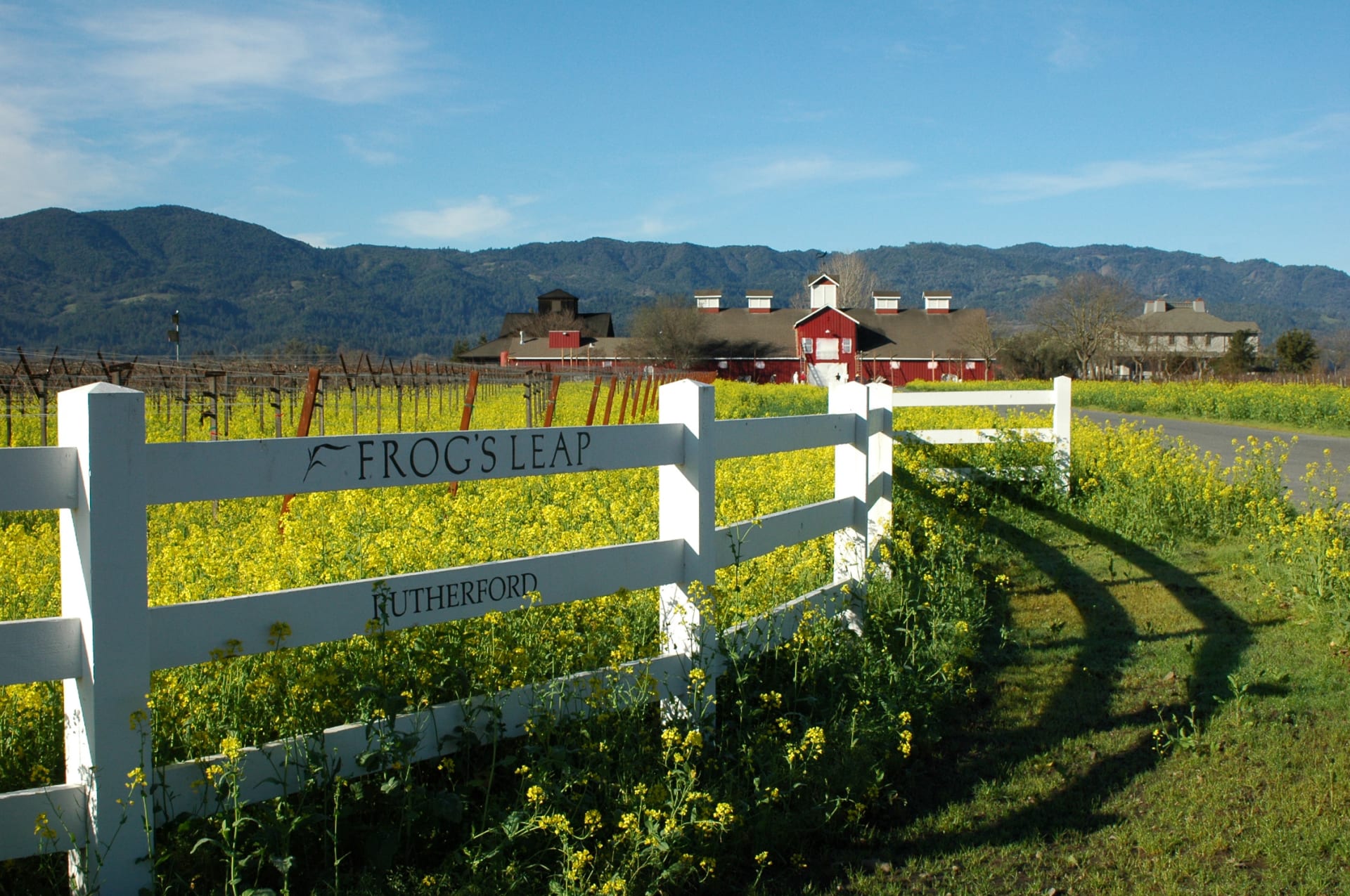


Frog's Leap is a family-owned winery dedicated to sustainable principles and committed to producing wines with balance, restraint and respect for terroir. Frog's Leap makes its home amongst 200 acres of vineyards in Rutherford at the historic ‘Red Barn’. Founded by John Williams in 1981, Frog’s Leap continues to be family-owned and operated. As the owner and winemaker, John has made every vintage for over four decades. Frog’s Leap has earned an enviable reputation for our sincere dedication to sustainable principles and our commitment to handcrafting wines. This noted ‘ghost winery’ was built in 1884 as the Adamson Winery and renovated in 1994 as Frog's Leap's permanent home. A handsome bi-level barrel chai completes the state-of-the-art winemaking facility and guests are received in the warm and welcoming LEED-certified hospitality center.
Now in its fourth decade of production, Winemakers John and Rory Williams hand-craft Sauvignon Blanc, Chardonnay, Zinfandel, Merlot, and an Estate-Grown Rutherford Cabernet Sauvignon. Using the best of Napa Valley's organically grown, dry- farmed grapes and the most traditional winemaking techniques, Frog's Leap strives to produce wines that deeply reflect the soils and climate from which they emanate. Thoughtfully shepherding both natural and earned resources, Frog’s Leap consistently returns more than it takes from the environment.
First certified by California Certified Organic Farmers (CCOF) in 1988 Frog's Leap has been a leader in the industry for decades. Fundamentally, organic farming means that if you take from the soil, you must return to the soil in equal measure. In the case of regenerative farming – a practice firmly embraced by Frog's Leap – you must return to the soil in greater measure than you take. Using a traditional approach to winemaking Frog’s Leap’s intention is to craft wines that are deeply reflective of the influences from which they emanate. Frog’s Leap makes wine of balance and restraint, with respect for the natural expression of the vine. The winery relies on techniques such as crop rotation, green manure, compost and biological pest control to maintain soil productivity and control pests on a farm. Organic farming excludes the use of manufactured fertilizers and pesticides, plant growth regulators and genetically modified organisms. Organic farming involves mechanical weed control (via cultivating or hoeing) rather than herbicidal weed control.
Frog's Leap presents a relaxed approach to enjoying wine. An easy hospitality and warm sense of humor is juxtaposed with a more serious sensibility when making wine. The wines produced range from Cabernet Sauvignon and Chardonnay to Zinfandel and Sauvignon Blanc. The winery has quite the line up to offer and hope you’ll try one of these delicious wines that harmoniously combine quality, sustainability and value.

A noble variety bestowed with both power and concentration, Cabernet Sauvignon enjoys success all over the globe, its best examples showing potential to age beautifully for decades. Cabernet Sauvignon flourishes in Bordeaux's Medoc where it is often blended with Merlot and smaller amounts of some combination of Cabernet Franc, Malbecand Petit Verdot. In the Napa Valley, ‘Cab’ is responsible for some of the world’s most prestigious, age-worthy and sought-after “cult” wines. Somm Secret—DNA profiling in 1997 revealed that Cabernet Sauvignon was born from a spontaneous crossing of Cabernet Franc and Sauvignon Blanc in 17th century southwest France.

The Rutherford sub-region of Napa Valley centers on the town of Rutherford and covers some of Napa Valley’s finest vineyard real estate, spanning from the Mayacamas in the west, to the Vaca Mountains on the other side of the valley.
Inside of the Rutherford AVA, bordering the Mayacamas, is a stretch of uplands called the Rutherford Bench. (These bench lands technically run the length of Oakville as well). Mountain runoff creates deep, well-drained, alluvial soils on the bench, giving vine roots plenty of reason to permeate deep into the ground. The result is wine with great structure and complexity.
Rutherford Cabernet Sauvingons and Bordeaux Blends garner substantial attention for their enticing fragrances of dusty earth and dried herbs, broad and juicy mid-palates and lush and fine-grained tannins. The sub-appellation claims some of the valley’s most prized vineyards today, namely Caymus, Rubicon and Beckstoffer Georges III.
It is also home to Napa’s most influential and historic personalities. Thomas Rutherford, responsible for the appellation's name, made serious investments here in grape growing and wine production between the years of 1850 to 1880. Gustave Niebaum purchased a large swath of land and completed his winery in 1887, calling it “Inglenook.” Today this remains the oldest bonded winery in California. Georges Latour founded Beaulieu Vineyard in 1900, making it the oldest continuous winery in the state. Latour also hired the famous enologist, André Tchelistcheff, a man credited for single-handedly defining the modern Napa winemaking style.