

Winemaker Notes
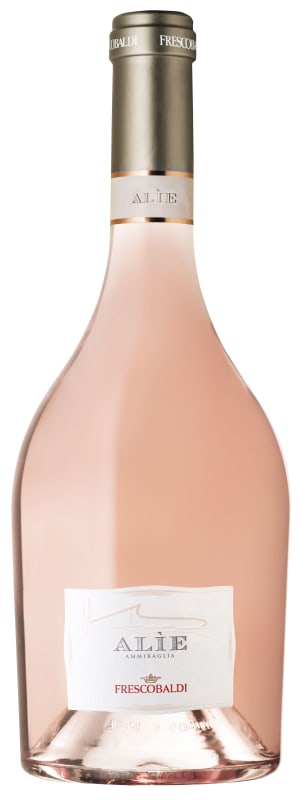
Alìe 2018 stands out for its extreme sensuality. Its pale pink color with peach nuances immediately expresses its intriguing personality. The sharp and unmistakable bouquet floods the senses with intoxicating Mediterranean aromas that meld with the fragrances of fresh and ripe fruit. September peach bursts forth followed by floral notes with subtle scents of rose. The result is an extremely mellow, fine and elegant nose. In the mouth, the fruity notes return, with the addition of captivating touches of citrus such as pink grapefruit. Little by little, a tangy undertone elegantly makes its entrance into this whirlwind of flavor sensations. Alìe 2018 is
full, silky and deep, with an after-taste that explodes in a succession of fresh and persistent aromas.
Professional Ratings
-
James Suckling
Fresh watermelon, candied citrus and spices. Light body, fresh acidity and an easy finish. Drink now.



Frescobaldi’s story is strictly connected with the history of Tuscany. At the high point of medieval Florence, the Frescobaldis spread their influence as bankers, becoming patrons of major works in Florence, such as Santa Trinita bridge and the Basilica of Santo Spirito.
Frescobaldi embodies the essence of Tuscany, its extraordinary vocation for viticulture and the diversity of its territories.
Frescobaldi’s uniqueness stems precisely from the representation of Toscana diversity, from its estates and from wines which express a kaleidoscope of aromas and sensations, springing from the characteristics of each individual terroir. The Estates are positioned in prime areas of Tuscany and each tells its own story, made up of nature, terroir and people.
From Tenuta Castiglioni, where the family’s 700 years of wine-growing history began, to CastelGiocondo on the Montalcino hills, to the timeless Castello Nipozzano. From the hidden gem of Castello Pomino, up to Tenuta Ammiraglia’s new horizons overlooking the sea, to Tenuta Perano a natural amphitheater in the heart of Chianti Classico, ending with Remole, that expresses all the character of Tuscany.
Behind every Frescobaldi wine lies the passion of agronomists and oenologists, who know their vineyards and terroirs down to the finest detail. Their art, creating quality wines, requires the iron rule of respect. Respect for tradition, which guide them, even in the midst of innovation or avant-garde solutions. Respect fort Tuscany, the living land, to be cultivated in harmony and serenity. Respect for each individual terroir, borne of a unique combination of soil, altitude and microclimate, each giving us a wine with its own matchless personality.
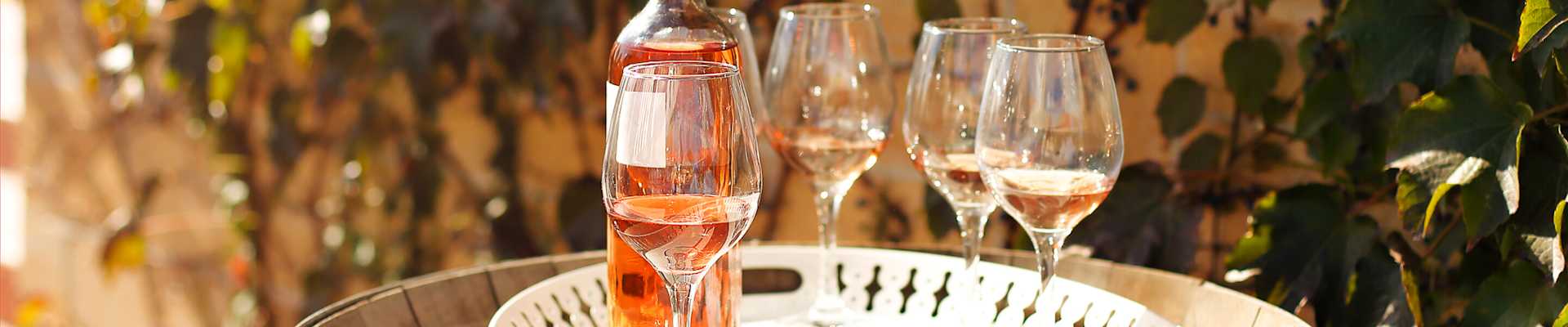
Whether it’s playful and fun or savory and serious, most rosé today is not your grandmother’s White Zinfandel, though that category remains strong. Pink wine has recently become quite trendy, and this time around it’s commonly quite dry. Since the pigment in red wines comes from keeping fermenting juice in contact with the grape skins for an extended period, it follows that a pink wine can be made using just a brief period of skin contact—usually just a couple of days. The resulting color depends on grape variety and winemaking style, ranging from pale salmon to deep magenta.

One of the most iconic Italian regions for wine, scenery and history, Tuscany is the world’s most important outpost for the Sangiovese grape. Tuscan wine ranges in style from fruity and simple to complex and age-worthy, Sangiovese makes up a significant percentage of plantings here, with the white Trebbiano Toscano coming in second.
Within Tuscany, many esteemed wines have their own respective sub-zones, including Chianti, Brunello di Montalcino and Vino Nobile di Montepulciano. The climate is Mediterranean and the topography consists mostly of picturesque rolling hills, scattered with vineyards.
Sangiovese at its simplest produces straightforward pizza-friendly Tuscan wines with bright and juicy red fruit, but at its best it shows remarkable complexity and ageability. Top-quality Sangiovese-based wines can be expressive of a range of characteristics such as sour cherry, balsamic, dried herbs, leather, fresh earth, dried flowers, anise and tobacco. Brunello, an exceptionally bold Tuscan wine, expresses well the particularities of vintage variations and is thus popular among collectors. Chianti is associated with tangy and food-friendly dry wines at various price points. A more recent phenomenon as of the 1970s is the “Super Tuscan”—a red wine made from international grape varieties like Cabernet Sauvignon, Merlot, Cabernet Franc and Syrah, with or without Sangiovese. These are common in Tuscany’s coastal regions like Bolgheri, Val di Cornia, Carmignano and the island of Elba.