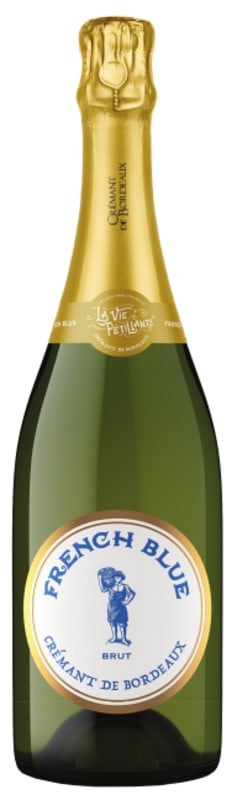


Winemaker Notes
Pale gold color, elegant stream of fine bubbles. Complex on the nose, white flowers, sweet almonds and a touch of wild strawberry. Creamy mousse, brioche notes on the finish.
Blend: 80% Merlot, 13% Sémillon, 7% Muscadelle
Professional Ratings
-
Tasting Panel
Delicate bubbles burst to reveal chamomile, papaya, and lime chiffon. Mouth-filling, with a base of wet stone leading to a palate of complexity and vibrancy.


A term typically reserved for Champagne and Sparkling Wines, non-vintage or simply “NV” on a label indicates a blend of finished wines from different vintages (years of harvest). To make non-vintage Champagne, typically the current year’s harvest (in other words, the current vintage) forms the base of the blend. Finished wines from previous years, called “vins de reserve” are blended in at approximately 10-50% of the total volume in order to achieve the flavor, complexity, body and acidity for the desired house style. A tiny proportion of Champagnes are made from a single vintage.
There are also some very large production still wines that may not claim one particular vintage. This would be at the discretion of the winemaker’s goals for character of the final wine.

One of the most important wine regions of the world, Bordeaux is a powerhouse producer of wines of all colors, sweetness levels, and price points. Separated from the Atlantic Ocean by a coastal pine forest, this relatively flat region has a mild maritime climate, marked by cool wet winters and warm summers. Annual weather differences create significant vintage variations, making Bordeaux an exciting French wine region to follow.
The Gironde estuary, a defining feature of Bordeaux, separates most of the region into the Left Bank and the Right Bank. Farther inland, where the Gironde splits into the Garonne and Dordogne Rivers, the bucolic, rolling hills of the area in between, called Entre-Deux-Mers, is a source of great quality, approachable reds and whites.
The Left Bank, dominated by Cabernet Sauvignon, contains the Médoc, Graves, and Sauternes, as well as the region’s most famous chateaux. Merlot is important here as the perfect blending grape for Cabernet Sauvignon adding plush fruit and softening Cabernet's sometimes hefty tannins. Cabernet Franc, Petit Verdot and Malbec may also be used in the Left Bank Bordeaux wine blends.
Merlot is the principal Bordeaux wine variety of the Right Bank; Cabernet Franc adds structure and complexity to Merlot, creating wines that are concentrated, supple, and more imminently ready for drinking, compared with their Left Bank counterparts. Key appellations of the Right Bank include St. Emilion and Pomerol.
Dry and sweet Bordeaux white wines are produced throughout the region from Sauvignon Blanc, Sémillon, and sometimes Muscadelle or Sauvignon Gris. Some of the finest dry whites can be found in the Graves sub-appellation of Pessac-Léognan, while Sauternes is undisputedly the gold standard for sweet wines. Small amounts of rosé and sparkling Bordeaux wines are made in the region as well.