Winemaker Notes


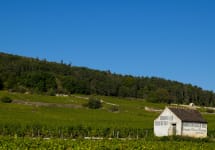
Domaine Frédéric Esmonin, from Burgundy's Gevrey-Chambertain appellation, is a true family collaboration that consists of Frederic, his father, André, and his mother, Michele. They have been farming their 10-acres of family vineyards for generations and selling their fruit to the likes of Drouhin, Jadot, and Leroy. In 1988 they began to commercialize their own labels today they are producing consistently high-quality, beautiful wines that represent a great value considering their pedigree.
Access to some of the best vineyard plots in the region is Esmonin’s greatest fortunes. Today they have Grand Cru parcels and Premier Cru parcel in some of the regions top vineyard sites. And since the best Burgundy wines start with the best grapes, Esmonin uses their decades of farming experience to optimize these plots. But farming is only part of what they do well. Esmonin also employs winemaking techniques that are gentle to the grapes and produce the finest possible quality level. Using a new bladder-press, Esmonin has excellent control over the amount of pressure exerted on the grapes, which are picked only when they have reached ideal ripeness. After a short cold maceration gives the wines an extra dimension of fruit, they are aged in carefully selected French oak barrels of Allier and Nevers forest wood made by Radoux and Berthomieu, two of the very best coopers. Wines are aged in barrels of varying age and toast and then blended in order to achieve optimum balance and complexity. The Domaine ages its wines in wooden casks for between 14 to 17 months. Typically, the grand cru and Lavaut Saint-Jacques Premier Cru wines see 80 percent new oak, whereas the village-level wines are aged in 20 percent new oak.

Thin-skinned, finicky and temperamental, Pinot Noir is also one of the most rewarding grapes to grow and remains a labor of love for some of the greatest vignerons in Burgundy. Fairly adaptable but highly reflective of the environment in which it is grown, Pinot Noir prefers a cool climate and requires low yields to achieve high quality. Outside of France, outstanding examples come from in Oregon, California and throughout specific locations in wine-producing world. Somm Secret—André Tchelistcheff, California’s most influential post-Prohibition winemaker decidedly stayed away from the grape, claiming “God made Cabernet. The Devil made Pinot Noir.”

Occupying the most northerly combe (the French term for a valley that cuts through a hillside) of the Côte de Beaune, Pernand-Vergelles sits to the west of and behind the hill of Corton. The most sought after whites of the village come from the slope of Pernand on the side of Corton where Pernand-Vergelles shares the Grand Cru Corton-Charlemagne with Aloxe-Corton. The best red producing Cru is Les Vergelles, which overlaps into Savigny-les-Beaune. Reds here are fleshy, seductive and structured while whites are both lively and age worthy.