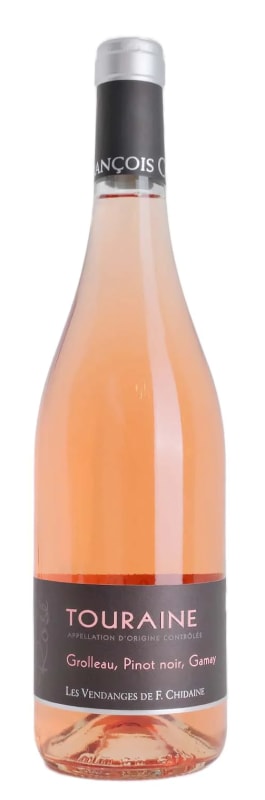


Winemaker Notes
Produced from equal parts of Grolleau, Pinot Noir and Gamay, the fruit for this wine comes from Chidaine’s estate-grown, bio-dynamically farmed vineyards located just north of the Cher river between the villages of Montrichard and Chissay-en-Touraine.
The nose of gooseberries has some some floral notes is followed by a medium-full body with a chalky texture. Excellent acidity and beautiful tension bring up the solid mineral core. Very refreshing, but surprisingly complex, this is a perennial favorite where supply never is sufficient for demand. Amazing value and very food friendly!
Professional Ratings
-
Vinous
Chidaine’s 2022 Rosé is a blend of Grolleau, Pinot Noir and Gamay. Bright and effusive, with tons of aromatic presence, the Rosé is immediately alluring. The interplay of aromatics, bright minerals and layered fruit makes for a delicious and beguiling Rosé that is absolutely delicious.

Whether it’s playful and fun or savory and serious, most rosé today is not your grandmother’s White Zinfandel, though that category remains strong. Pink wine has recently become quite trendy, and this time around it’s commonly quite dry. Since the pigment in red wines comes from keeping fermenting juice in contact with the grape skins for an extended period, it follows that a pink wine can be made using just a brief period of skin contact—usually just a couple of days. The resulting color depends on grape variety and winemaking style, ranging from pale salmon to deep magenta.

Praised for its stately Renaissance-era chateaux, the picturesque Loire valley produces pleasant wines of just about every style. Just south of Paris, the appellation lies along the river of the same name and stretches from the Atlantic coast to the center of France.
The Loire can be divided into three main growing areas, from west to east: the Lower Loire, Middle Loire, and Upper/Central Loire. The Pay Nantais region of the Lower Loire—farthest west and closest to the Atlantic—has a maritime climate and focuses on the Melon de Bourgogne variety, which makes refreshing, crisp, aromatic whites.
The Middle Loire contains Anjou, Saumur and Touraine. In Anjou, Chenin Blanc produces some of, if not the most, outstanding dry and sweet wines with a sleek, mineral edge and characteristics of crisp apple, pear and honeysuckle. Cabernet Franc dominates red and rosé production here, supported often by Grolleau and Cabernet Sauvignon. Sparkling Crémant de Loire is a specialty of Saumur. Chenin Blanc and Cabernet Franc are common in Touraine as well, along with Sauvignon Blanc, Gamay and Malbec (known locally as Côt).
The Upper Loire, with a warm, continental climate, is Sauvignon Blanc country, home to the world-renowned appellations of Sancerre and Pouilly-Fumé. Pinot Noir and Gamay produce bright, easy-drinking red wines here.