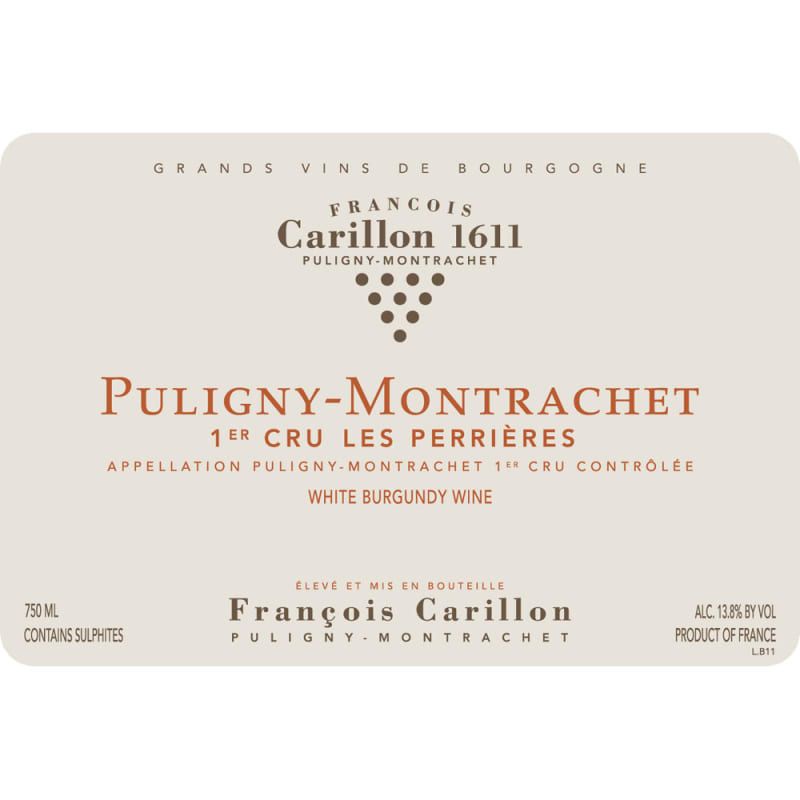

Winemaker Notes
Professional Ratings
-
Robert Parker's Wine Advocate
The 2013 Puligny-Montrachet les Perrières 1er Cru has a very withdrawn nose at the moment – hopefully more minerality will surface by the time of bottling. It does begin to open in the glass with delicate popcorn and almond scents – you just want to pry the aromatics open with your fingers. The palate is clean and fresh with orange zest and spicy notes on the entry, a crisp line of acidity and a long build on the finish that finally delivers what you expect from this vineyard with enticing salinity on the aftertaste. Range: 90-92


One of the most popular and versatile white wine grapes, Chardonnay offers a wide range of flavors and styles depending on where it is grown and how it is made. While it tends to flourish in most environments, Chardonnay from its Burgundian homeland produces some of the most remarkable and longest lived examples. California produces both oaky, buttery styles and leaner, European-inspired wines. Somm Secret—The Burgundian subregion of Chablis, while typically using older oak barrels, produces a bright style similar to the unoaked style. Anyone who doesn't like oaky Chardonnay would likely enjoy Chablis.

A source of some of the finest, juicy, silky and elegantly floral Chardonnay in the Côte de Beaune, Puligny-Montrachet lies just to the north of Chassagne-Montrachet, a village with which it shares two of its Grands Crus vineyards: Le Montrachet itself and Bâtard-Montrachet. Its other two, which it owns in their entirety, are Chevalier-Montrachet and Bienvenues-Bâtard-Montrachet. And still, some of the finest white Burgundy wines come from the prized Premiers Crus vineyards of Puligny-Montrachet. To name a few, Les Pucelles, Le Clavoillon, Les Perrières, Les Referts and Les Combettes, as well as the rest, lie northeast and up slope from the Grands Crus.
Farther to the southeast are village level whites and the hamlet of Blagny where Pinot Noir grows best and has achieved Premier Cru status.