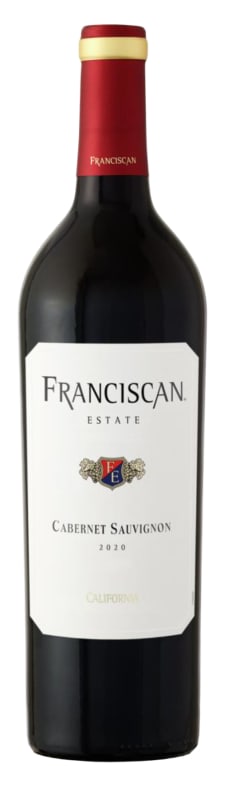


Winemaker Notes
This rich and fruit-forward Cabernet Sauvignon is classic Californian in profile — rich, generous fruit characteristics and soft tannins balanced by hints of sweet oak and a velvety smooth finish. Layered notes of ripe blackberry, plum and dark fruit jam on the palate are complemented by well-integrated hints of caramel, mocha, and vanilla. Artfully structured with appealing depth and texture, this is an approachable, easy-to-enjoyCabernet Sauvignon that stands beautifully on its own or paired with food. Try this alongside hearty, rich meats, like roasted lamb, ribeye steak, filet mignon or grilled gourmet burgers.
Professional Ratings
-
Tasting Panel
Thanks to an early and temperate growing season, this fruit-forward red aged in French and Amencan oak has developed expressive aromas of mulling spices and cherry wood and flavors of toasted vanilla and deep-dish boysenberry pie joined by gentle tannins. The plush texture continues through the pitch-perfect finish of licorice and violets


A noble variety bestowed with both power and concentration, Cabernet Sauvignon enjoys success all over the globe, its best examples showing potential to age beautifully for decades. Cabernet Sauvignon flourishes in Bordeaux's Medoc where it is often blended with Merlot and smaller amounts of some combination of Cabernet Franc, Malbecand Petit Verdot. In the Napa Valley, ‘Cab’ is responsible for some of the world’s most prestigious, age-worthy and sought-after “cult” wines. Somm Secret—DNA profiling in 1997 revealed that Cabernet Sauvignon was born from a spontaneous crossing of Cabernet Franc and Sauvignon Blanc in 17th century southwest France.

A geographic and climatic paradise for grape vines, Monterey is a part of the greater Central Coast AVA and contains within it five smaller sub-appellations, including Arroyo Seco, San Lucas, San Bernabe, Hames Valley and the famous Santa Lucia Highlands. The climate is relatively warm but tempered by cool, coastal winds, allowing the regions in Monterey County an exceptionally long growing season. Bud break often happens two weeks sooner and harvest tends to be two weeks later compared to other surrounding regions.
Monterey’s coastal side, where the cooling ocean fog allows grapes to develop a perfect sugar-acid balance, excels in the production of Chardonnay, Pinot Noir and Riesling. Warmer, inland subzones are home to fleshy, concentrated and full-bodied reds like Cabernet Sauvignon, Merlot and Zinfandel.
Chardonnay, covering about 40% of vineyard acreage, is the most widely planted grape in all of Monterey County.