

Winemaker Notes
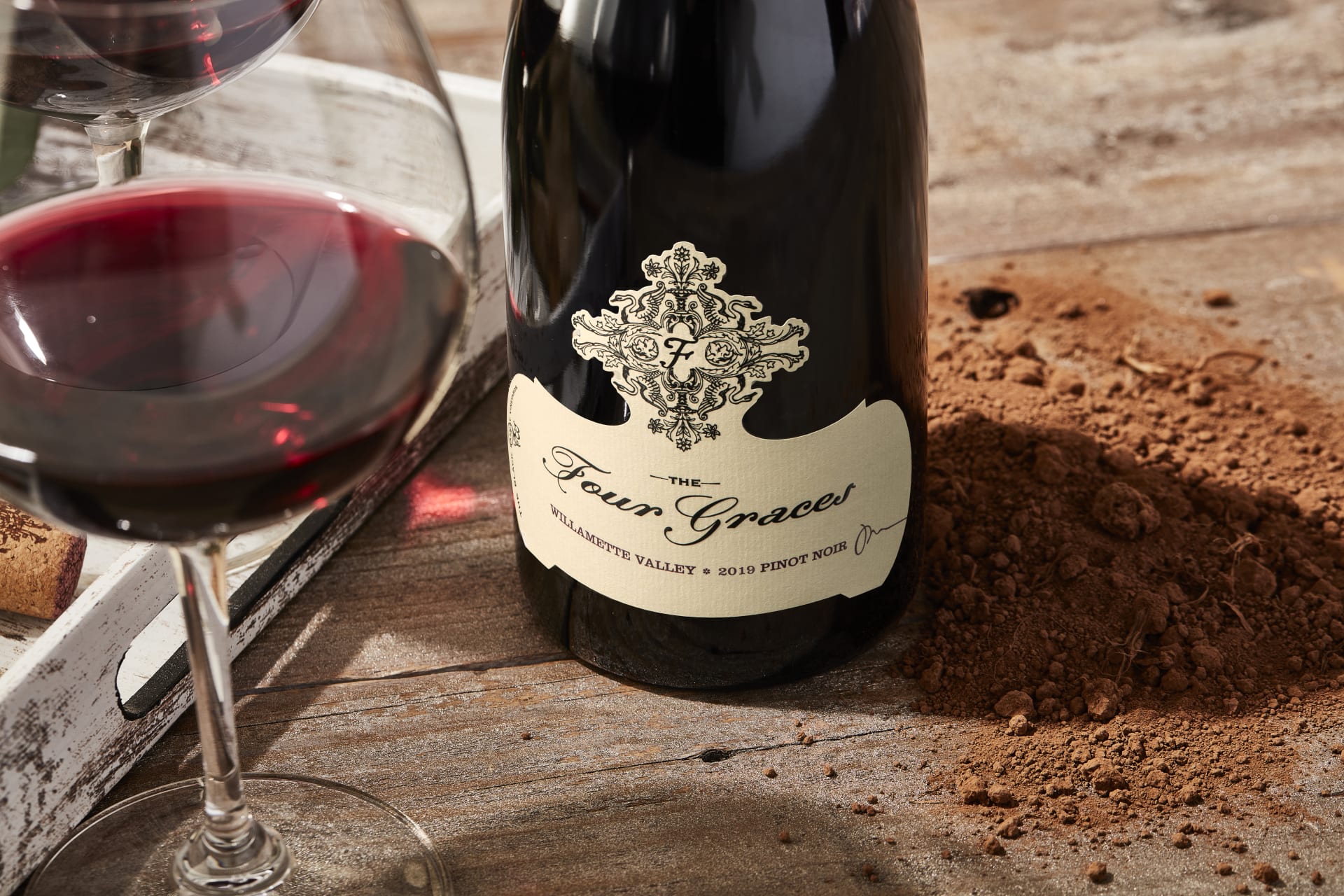



Named for the four daughters of the founders, The Four Graces are sustainably farmed, well-tended vineyards with the goal of producing rich, elegant, delicious, and complex wines.
The Black family purchased an existing vineyard in the Dundee Hills of the Willamette Valley in 2003 as a family retreat. They immediately began turning the estate into a sustainably farmed, well-tended vineyard with the goal of producing rich, elegant, delicious and complex wines.
That same year, The Four Graces was founded. The winery is named in honor of the Black’s four daughters.
In 2005 the Black’s purchased the Doe Ridge property in Yamhill-Carlton to continue the growth of the brand. They chose a site in a differing appellation to add complexity and variety.
This vineyard has been turned into one of the largest experiments of its kind with forty acres farmed sustainably through the L.I.V.E (low impact viticulture and enology) program.
Today,The Four Graces is owned by Bill Foley and produces Pinot Noir, Pinot Gris, and Pinot Blanc renowned nationally and internationally for their balance, elegance, complexity, and richness. The wines are crafted under the guidance of Marc Myer’s who has been in the industry since 2008 and believes both the Dundee and Yamhill-Carlton estates are stunning at first glance and he can’t wait to work with the fruit that comes off of these properties.

Thin-skinned, finicky and temperamental, Pinot Noir is also one of the most rewarding grapes to grow and remains a labor of love for some of the greatest vignerons in Burgundy. Fairly adaptable but highly reflective of the environment in which it is grown, Pinot Noir prefers a cool climate and requires low yields to achieve high quality. Outside of France, outstanding examples come from in Oregon, California and throughout specific locations in wine-producing world. Somm Secret—André Tchelistcheff, California’s most influential post-Prohibition winemaker decidedly stayed away from the grape, claiming “God made Cabernet. The Devil made Pinot Noir.”

Yamhill-Carlton, characterized by pastoral, rolling hills composed of shallow, quick-draining, ancient marine soil, is ideal for Pinot noir and other cool-climate-loving varieties. It is in the rain shadow of the Coast Range to its west, whose highest point climbs to an altitude of 3,500 feet. Yamhill-Carlton is actually surrounded by mountains on three sides: Chehalem Mountains to the north, the Dundee Hills to the east and the western Coast Range to its west, which, when it lets Pacific air through, serves to cool the region.
Vineyards grow on the ridges surrounding the two small communities of Yamhill and Carlton and cover about 1,200 acres of this 60,000 acre region, which roughly makes a horse-shoe shape on a map.