
Winemaker Notes
Professional Ratings
-
Wilfred Wong of Wine.com
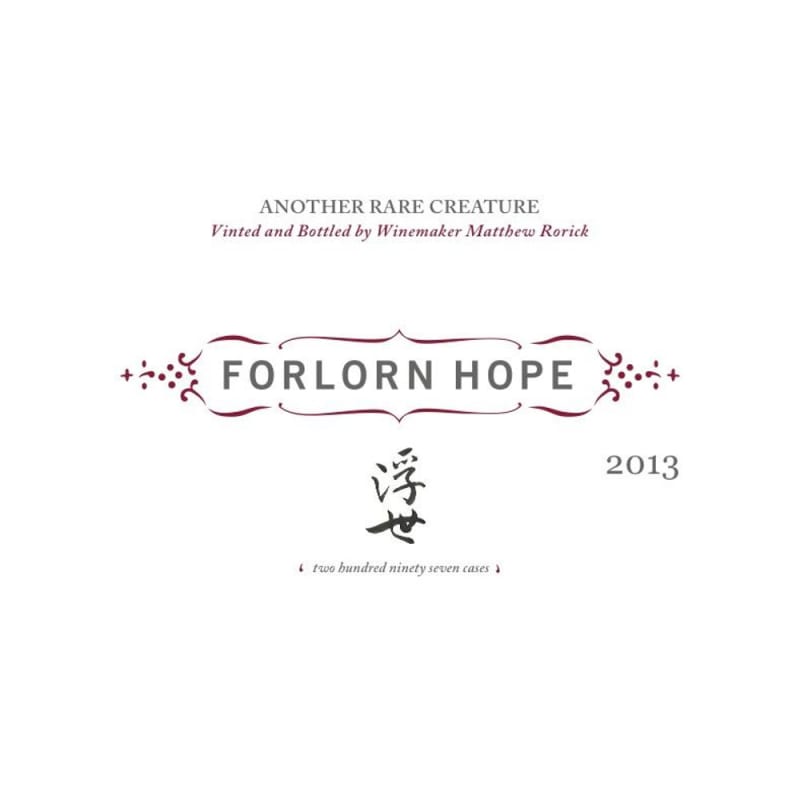
A lovely and serious rosé, the 2013 Forlorn Hope Ukiyo offers a lot intrigue and is pleasingly dry (as expected) in the finish. Faded to medium salmon in color; slight dusting of the earth in the aromas, very good richness and kind of intriguing; medium bodied, almost roundish on the palate; dry, medium acidity, good balance; earth and dust along with red fruits in the flavors; medium finish, dry aftertaste. I'll take an order of fresh salmon sashimi please. (June 2, 2015, San Francisco, CA)


Whether it’s playful and fun or savory and serious, most rosé today is not your grandmother’s White Zinfandel, though that category remains strong. Pink wine has recently become quite trendy, and this time around it’s commonly quite dry. Since the pigment in red wines comes from keeping fermenting juice in contact with the grape skins for an extended period, it follows that a pink wine can be made using just a brief period of skin contact—usually just a couple of days. The resulting color depends on grape variety and winemaking style, ranging from pale salmon to deep magenta.

As the lower part of the greater Sierra Foothills appellation, Amador is roughly a plateau whose vineyards grow at 1,200 to 2,000 feet in elevation. It is 100 miles east of both San Francisco and Napa Valley. Most of its wineries are in the oak-studded rolling hillsides of Shenandoah Valley or east in Fiddletown, where elevations are slightly higher.
The Sierra Foothills growing area was among the largest wine producers in the state during the gold rush of the late 1800s. The local wine industry enjoyed great success until just after the turn of the century when fortune-seekers moved elsewhere and its population diminished. With Prohibition, winemaking was totally abandoned, along with its vineyards. But some of these, especially Zinfandel, still remain and are the treasure chest of the Sierra Foothills as we know them.
Most Amador vines are planted in volcanic soils derived primarily from sandy clay loam and decomposed granite. Summer days are hot but nighttime temperatures typically drop 30 degrees and the humidity is low, making this an ideal environment for grape growing. Because there is adequate rain throughout the year and even snow in the winter, dry farming is possible.