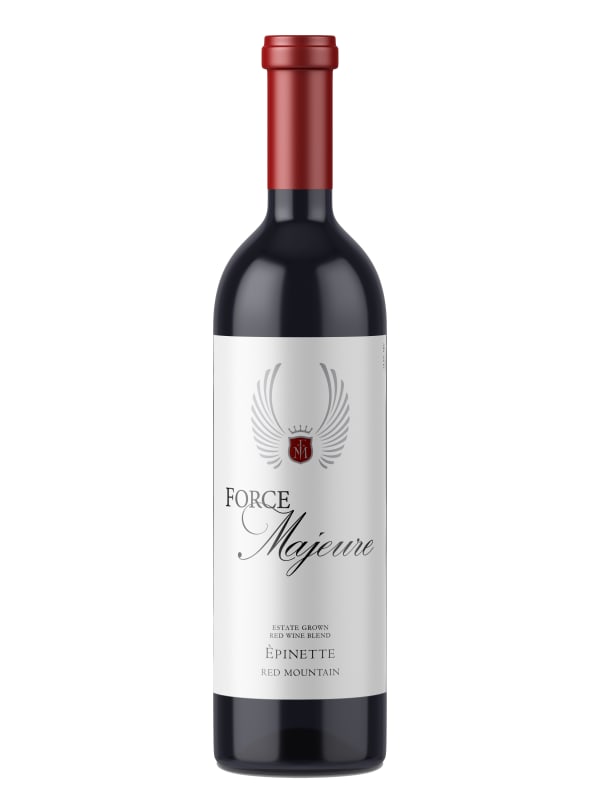


Winemaker Notes
The wine itself is a blend of primarily Merlot and Cabernet Franc, with smaller amounts of Cabernet Sauvignon and Petit Verdot, proportions of which change depending on the vintage. The Merlot and Cabernet Franc are grown in lower areas of the vineyard with deep, well-drained soils, much less rocky than the soils of our Rhone varietals.
Blend: 55% Merlot, 26% Cabernet Sauvignon,16% Cabernet Franc, 5% Petit Verdot
Professional Ratings
-
Jeb Dunnuck
Billed as the estate’s Right Bank blend, the 2017 Epinette is all estate and 53% Merlot, 26% Cabernet Sauvignon, 16% Cabernet Franc, and the rest Petit Verdot. It’s a rich, powerful, Château Pavie-like wine that has classic Red Mountain minerality as well as notes of blackcurrants, chocolate, violets, sagebrush, and white truffles. Rich, medium to full-bodied, and beautifully concentrated, with building tannins.
Rating: 95+
-
Robert Parker's Wine Advocate
A blend of Merlot, Cabernet Franc, Petit Verdot and Cabernet Sauvignon, the 2017 Épinette opens with a clean and expressive core of black raspberry and dusty plum skin with subtle dried herbs lurking on the nose. The wine is medium to full-bodied and mineral-driven on the palate, with dusty and ripe blackberry and touches of fern and sage. The wine ends with a focused and long-lasting finish with delightful Kirsh flavors and subtle hints of oak. With only 390 cases made, this will make a lovely addition to any cellar.
Rating: 92-94
-
Wine Spectator
A brooding core of tannins is wrapped in refined and tightly focused currant, crushed stone and bay leaf accents that build tension on the finish. Merlot, Cabernet Sauvignon, Cabernet Franc and Petit Verdot.


One of the world’s most classic and popular styles of red wine, Bordeaux-inspired blends have spread from their homeland in France to nearly every corner of the New World. Typically based on either Cabernet Sauvignon or Merlot and supported by Cabernet Franc, Malbec and Petit Verdot, the best of these are densely hued, fragrant, full of fruit and boast a structure that begs for cellar time. Somm Secret—Blends from Bordeaux are generally earthier compared to those from the New World, which tend to be fruit-dominant.

A coveted source of top quality red grapes among premier Washington producers, the Red Mountain AVA is actually the smallest appellation in the state. As its name might suggest, it is actually neither a mountain nor is it composed of red earth. Instead the appellation is an anticline of the Yakima fold belt, a series of geologic folds that define a number of viticultural regions in the surrounding area. It is on the eastern edge of Yakima Valley with slopes facing southwest towards the Yakima River, ideal for the ripening of grapes. The area’s springtime proliferation of cheatgrass, which has a reddish color, actually gives the area the name, "Red" Mountain.
Red Mountain produces some of the most mineral-driven, tannic and age-worthy red wines of Washington and there are a few reasons for this. It is just about the hottest appellation with normal growing season temperatures commonly reaching above 90F. The soil is particularly poor in nutrients and has a high pH, which results in significantly smaller berry sizes compared to varietal norms. The low juice to skin ratio in smaller berries combined with the strong, dry summer winds, leads to higher tannin levels in Red Mountain grapes.
The most common red grape varieties here are Cabernet Sauvignon, Merlot, Cabernet Franc and Syrah, among others. Limited white varieties are grown, namely Sauvignon blanc.
The reds of the area tend to express dark black and blue fruit, deep concentration, complex textures, high levels of tannins and as previously noted, have good aging capabilities.