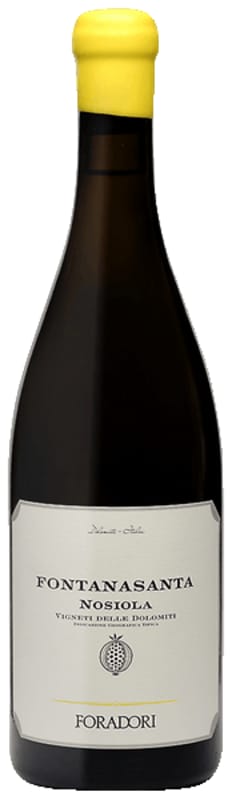


Winemaker Notes
Nosiola is an ancient Trentino grape variety, once spread throughout the region and whose cultivation has since been restricted to the areas of Valle dei Laghi, \ Colline di Trento and Pressano. It is a variety that expresses itself intensely in poor soil vineyards, cultivating wines of great delicacy and longevity.
In the past, Nosiola was always vinified on the skins. The possibility of cultivating 'real' grapes, rich in energy thanks to the biodynamic practices undertaken in the vineyard and the extraordinary strength of the amphora, means that now Foradori has the possibility to undertake an ancient style of winemaking. The amphora (Tinaja from Villarrobledo, Spain), with its shape and the porosity of the clay that it is made from, allows the wine to be in contact with the skins over a longer period of time. This is the true expression of the Nosiola, which is revealed slowly, requiring patience and time.
Professional Ratings
-
James Suckling
Crazy floral aromas of honeysuckle, sage, lemon blossoms and sliced lemons that come through strongly and clearly on the nose and palate. Full-bodied with dried fruit and white apricot flavors. Creamy texture. Lots of flavor. From organically grown grapes.
-
Vinous
The 2022 Nosiola Fontanasanta entices with a bouquet that mixes tropical citrus and sweet spice with nectarines and wet stone. This is a model of purity with zesty orange citrus and brisk acidity up front, giving way to an array of exotic inner florals and hints of raw honey. The 2022 tapers off long and staining yet is still remarkably fresh, leaving candied lime to contrast with sour melon. Wow, the 2022 Nosiola is a joy ride yet maintains an immaculate balance.
-
Wine Spectator
Broad and dry, with lightly chalky texture and lip-smacking acidity carrying notes of dehydrated white peach, pink grapefruit pith, heather and green almond. There's a zesty energy to the lasting finish of cracked white and pink peppercorn. Drink now through 2029. 850 cases made, 100 cases imported.


There are hundreds of white grape varieties grown throughout the world. Some are indigenous specialties capable of producing excellent single varietal wines. Each has its own distinct viticultural characteristics, as well as aroma and flavor profiles.
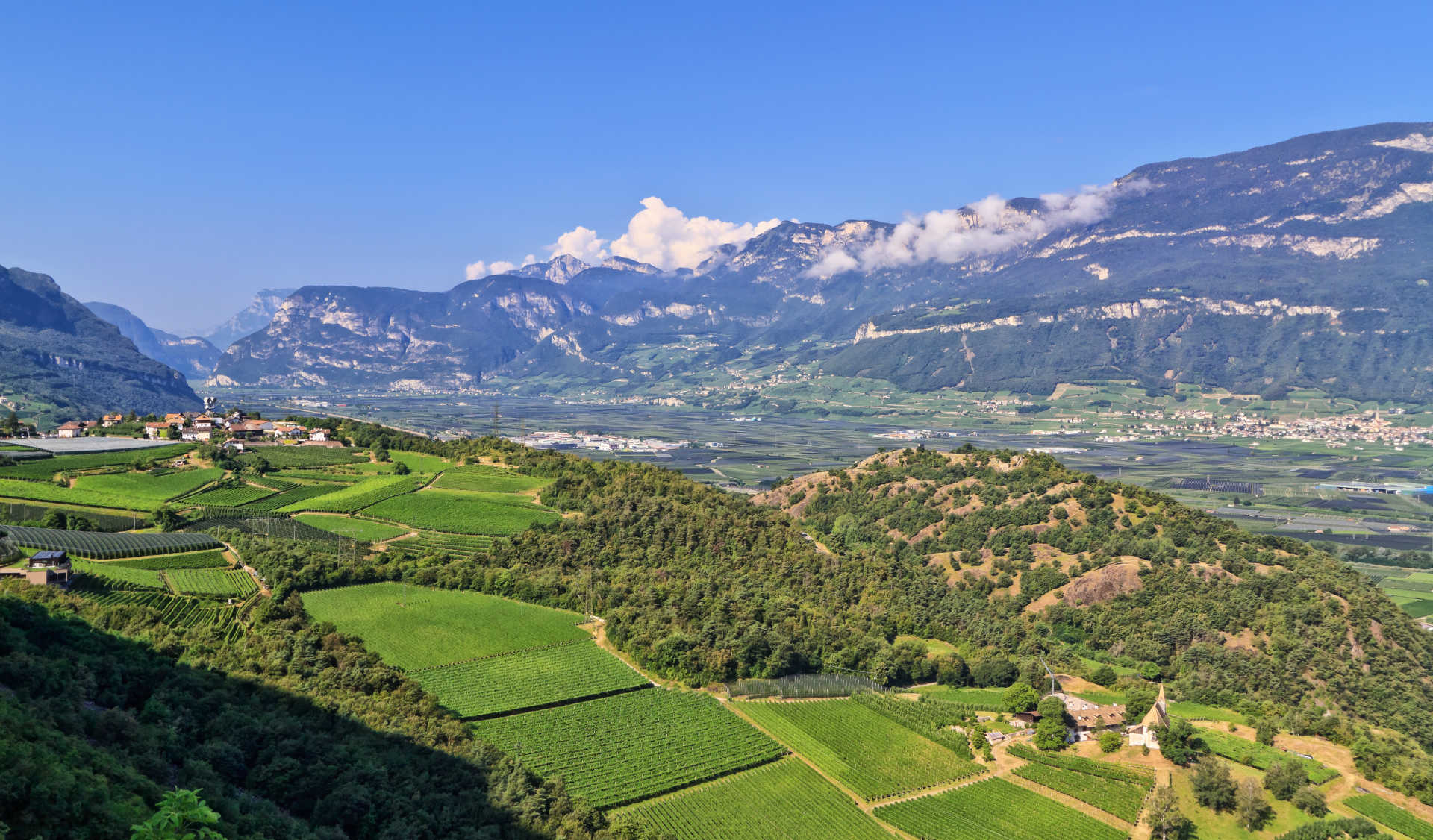
A mountainous northern Italian region heavily influenced by German culture, Trentino-Alto Adige is actually made up of two separate but similar regions: Alto Adige and Trentino.
Trentino, the southern half, is primarily Italian-speaking and largely responsible for the production of non-native, international grapes. There is a significant quantity of Chardonnay, Pinot Grigio and Merlot produced. But Trentino's native and most unique red variety, Teroldego, while still rare, is gaining popularity. It produces a deeply colored red wine rich in wild blackberry, herb, coffee and cocoa.
The rugged terrain of German-speaking Alto Adige (also referred to as Südtirol) focuses on small-scale viticulture, with great value placed on local varieties—though international varieties have been widely planted since the 1800s. Sheltered by the Alps from harsh northerly winds, many of the best vineyards are at extreme altitude but on steep slopes to increase sunlight exposure.
Dominant red varieties include the bold, herbaceous Lagrein and delicate, strawberry-kissed, Schiava, in addition to some Pinot Nero.
The primary white grapes are Pinot grigio, Gewürztraminer, Chardonnay and Pinot blanc, as well as smaller plantings of Sauvignon blanc, Müller Thurgau. These tend to be bright and refreshing with crisp acidity and just the right amount of texture. Some of the highest quality Pinot grigio in Italy is made here.