


Winemaker Notes
The hill overlooking Trento, with its clayey-limestone soils, welcomes the Manzoni Bianco and matures the grapes in late September. The character of the Fontanasanta vineyards is expressed through this hybrid, born of a mix of Riesling with Pinot Bianco. Its ability to evolve overtime requires patience; Fontanasanta Manzoni Bianco is a wine that really comes into its own at least three years after harvest.
Professional Ratings
-
James Suckling
Unique aromas of lemon drops and dried limes with hay and candied pineapple, following through to a full body with layers of fruit and a wonderful flavors of peaches and nectarines, as well as some tile and stone. Creamy texture. From biodynamically grown grapes with Demeter certification.
-
Robert Parker's Wine Advocate
The Foradori 2019 Manzoni Bianco Fontanasanta opens to a bright golden color with some faint copper or greenish highlights. A portion of the wine is aged in clay amphorae. The bouquet is somewhat neutral with loads of pear, Golden Delicious apple and quince. There's nothing too fragrant or floral. Instead, the wine is grounded in unmistakable orchard fruit aromas that color both the bouquet and the wine's flavor profile. You also get honey, saffron and candied orange peel. The wine ends with a touch of mineral dryness, like broken slate or crushed terracotta, that contributes to the tight, almost tannic finish.


There are hundreds of white grape varieties grown throughout the world. Some are indigenous specialties capable of producing excellent single varietal wines. Each has its own distinct viticultural characteristics, as well as aroma and flavor profiles.
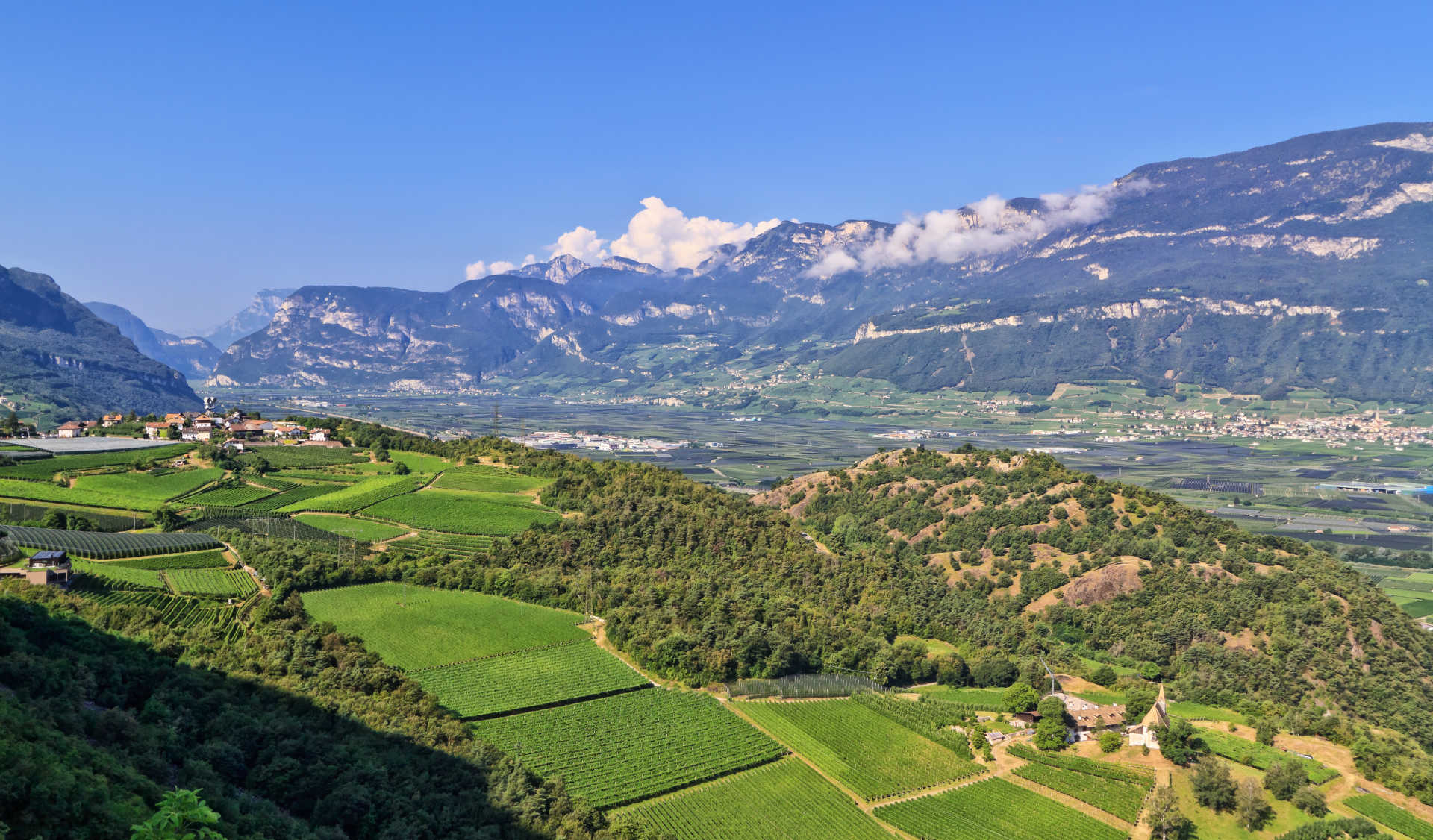
A mountainous northern Italian region heavily influenced by German culture, Trentino-Alto Adige is actually made up of two separate but similar regions: Alto Adige and Trentino.
Trentino, the southern half, is primarily Italian-speaking and largely responsible for the production of non-native, international grapes. There is a significant quantity of Chardonnay, Pinot Grigio and Merlot produced. But Trentino's native and most unique red variety, Teroldego, while still rare, is gaining popularity. It produces a deeply colored red wine rich in wild blackberry, herb, coffee and cocoa.
The rugged terrain of German-speaking Alto Adige (also referred to as Südtirol) focuses on small-scale viticulture, with great value placed on local varieties—though international varieties have been widely planted since the 1800s. Sheltered by the Alps from harsh northerly winds, many of the best vineyards are at extreme altitude but on steep slopes to increase sunlight exposure.
Dominant red varieties include the bold, herbaceous Lagrein and delicate, strawberry-kissed, Schiava, in addition to some Pinot Nero.
The primary white grapes are Pinot grigio, Gewürztraminer, Chardonnay and Pinot blanc, as well as smaller plantings of Sauvignon blanc, Müller Thurgau. These tend to be bright and refreshing with crisp acidity and just the right amount of texture. Some of the highest quality Pinot grigio in Italy is made here.