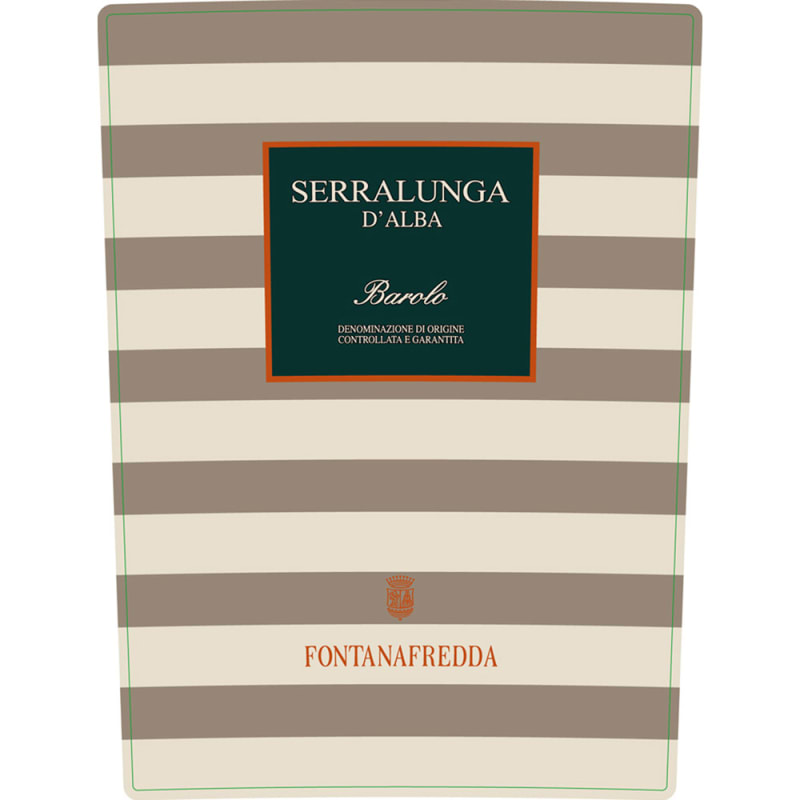

Winemaker Notes
Professional Ratings
-
James Suckling
Bright and aromatic with fresh flowers, dried berry and citrus character. Full body, firm tannins and a racy and beautiful finish. So much going on here. Why wait? Drink now or hold.
-
Wine Enthusiast
Rose, violet, red berry, cake spice and aniseed are some of the aromas you'll find on this delicious Barolo. On the balanced palate, notes of tobacco, licorice, clove and dried herb accent the juicy cherry-berry core. Ripe, firm tannins and fresh acidity provide structure.
-
Wine Spectator
A rich, round style, boasting cherry, berry, cedar and licorice flavors. Packed with sweet fruit, this is dense, with dusty tannins clinging to the long finish. Best from 2018 through 2030.
-
Robert Parker's Wine Advocate
The 2011 Barolo Serralunga d'Alba is a soft and luscious expression with bold tones of dark fruit and dried cherry. The heavy soils of the vineyard have conspired with the warm summer temperatures to produce an opulent and immediate interpretation of Nebbiolo. This wine is all about upfront likability and first impressions. It delivers its entire bounty by the time you take your first sip. It leaves little to the imagination. For this reason, it makes a great option for near-term consumption.



Since 1878, the Fontanafredda Estate & Winery, located in the heart of Piedmont’s Langhe region, has been a benchmark producer of Barolo and Barbera, crafting wines that deftly balance deep aromas and concentration of fruit with elegance.
The history of Fontanafredda is a noble one. It began in 1858 after the unification of Italy, when the country’s first king, Vittorio Emanuele II, purchased this beautiful estate in Piedmont’s Langhe region. Here he started producing wine from native varietals, Dolcetto, Barbera and Nebbiolo, which later developed into a commercial business under the direction of the King’s son, Count Mirafiori. Fontanafredda released their first Nebbiolo labeled as Barolo with the 1878 vintage.
The 250-acre Fontanafredda Barolo cru property in Serralunga d’Alba is the single largest contiguous wine estate in the Langhe. Additional properties in the communes of Barolo and Diano d’Alba bring the total acreage of estate-owned land to 305. The ability to source fruit from some of the Barolo region’s most prized vineyard sites provides Fontanafredda with grapes of the highest quality. There are two main soil types that cover Barolo: Tortonian in the western region that is heavy in clay and magnesium deposits. Wines grown in this soil tends to be more fragrant, elegant and soft, but with notable richness. In eastern Barolo, the chalky, limestone and mineral rich Helvetian soil produces wines of deeper color, body and tannic structure, making for long-lived wines.
Fontanafredda owners Oscar Farinetti and business partner Luca Baffigo Filangieri - founders of the famous EATALY concepts in Italy, Japan and New York - have provided full support to a series of initiatives that started in 1999 by winemaker Danilo Drocco and viticulturist Alberto Grasso. These initiatives involve changes in both the winery and the vineyards that aim to increase the quality of the wines and ensure greater sustainability measures. Drocco and Grasso guide the winery and estate with a philosophy of ecological responsibility and future sustainability. All estate vineyards are managed to achieve a “zero chemical” program, using only natural methods for fertilization and pest control. The vineyard team is working with their grower partners across the region to transition them to the same eco-friendly farming standards. The Fontanafredda estate operates as a refuge for a wide array of local flora and fauna.

Responsible for some of the most elegant and age-worthy wines in the world, Nebbiolo, named for the ubiquitous autumnal fog (called nebbia in Italian), is the star variety of northern Italy’s Piedmont region. Grown throughout the area, as well as in the neighboring Valle d’Aosta and Valtellina, it reaches its highest potential in the Piedmontese villages of Barolo, Barbaresco and Roero. Outside of Italy, growers are still very much in the experimentation stage but some success has been achieved in parts of California. Somm Secret—If you’re new to Nebbiolo, start with a charming, wallet-friendly, early-drinking Langhe Nebbiolo or Nebbiolo d'Alba.

The center of the production of the world’s most exclusive and age-worthy red wines made from Nebbiolo, the Barolo wine region includes five core townships: La Morra, Monforte d’Alba, Serralunga d’Alba, Castiglione Falletto and the Barolo village itself, as well as a few outlying villages. The landscape of Barolo, characterized by prominent and castle-topped hills, is full of history and romance centered on the Nebbiolo grape. Its wines, with the signature “tar and roses” aromas, have a deceptively light garnet color but full presence on the palate and plenty of tannins and acidity. In a well-made Barolo wine, one can expect to find complexity and good evolution with notes of, for example, strawberry, cherry, plum, leather, truffle, anise, fresh and dried herbs, tobacco and violets.
There are two predominant soil types here, which distinguish Barolo from the lesser surrounding areas. Compact and fertile Tortonian sandy marls define the vineyards farthest west and at higher elevations. Typically the Barolo wines coming from this side, from La Morra and Barolo, can be approachable relatively early on in their evolution and represent the “feminine” side of Barolo, often closer in style to Barbaresco with elegant perfume and fresh fruit.
On the eastern side of the Barolo wine region, Helvetian soils of compressed sandstone and chalks are less fertile, producing wines with intense body, power and structured tannins. This more “masculine” style comes from Monforte d’Alba and Serralunga d’Alba. The township of Castiglione Falletto covers a spine with both soil types.
The best Barolo wines need 10-15 years before they are ready to drink, and can further age for several decades.