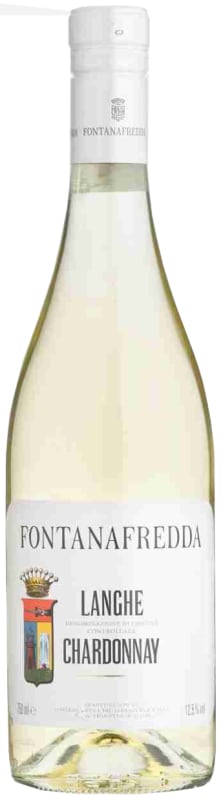


Winemaker Notes
Served chilled it is a great aperitif. Butit is also ideal with fish-based hors-d'oeuvres, light starters, risottos and pastadishes.



Since 1878, the Fontanafredda Estate & Winery, located in the heart of Piedmont’s Langhe region, has been a benchmark producer of Barolo and Barbera, crafting wines that deftly balance deep aromas and concentration of fruit with elegance.
The history of Fontanafredda is a noble one. It began in 1858 after the unification of Italy, when the country’s first king, Vittorio Emanuele II, purchased this beautiful estate in Piedmont’s Langhe region. Here he started producing wine from native varietals, Dolcetto, Barbera and Nebbiolo, which later developed into a commercial business under the direction of the King’s son, Count Mirafiori. Fontanafredda released their first Nebbiolo labeled as Barolo with the 1878 vintage.
The 250-acre Fontanafredda Barolo cru property in Serralunga d’Alba is the single largest contiguous wine estate in the Langhe. Additional properties in the communes of Barolo and Diano d’Alba bring the total acreage of estate-owned land to 305. The ability to source fruit from some of the Barolo region’s most prized vineyard sites provides Fontanafredda with grapes of the highest quality. There are two main soil types that cover Barolo: Tortonian in the western region that is heavy in clay and magnesium deposits. Wines grown in this soil tends to be more fragrant, elegant and soft, but with notable richness. In eastern Barolo, the chalky, limestone and mineral rich Helvetian soil produces wines of deeper color, body and tannic structure, making for long-lived wines.
Fontanafredda owners Oscar Farinetti and business partner Luca Baffigo Filangieri - founders of the famous EATALY concepts in Italy, Japan and New York - have provided full support to a series of initiatives that started in 1999 by winemaker Danilo Drocco and viticulturist Alberto Grasso. These initiatives involve changes in both the winery and the vineyards that aim to increase the quality of the wines and ensure greater sustainability measures. Drocco and Grasso guide the winery and estate with a philosophy of ecological responsibility and future sustainability. All estate vineyards are managed to achieve a “zero chemical” program, using only natural methods for fertilization and pest control. The vineyard team is working with their grower partners across the region to transition them to the same eco-friendly farming standards. The Fontanafredda estate operates as a refuge for a wide array of local flora and fauna.

One of the most popular and versatile white wine grapes, Chardonnay offers a wide range of flavors and styles depending on where it is grown and how it is made. While it tends to flourish in most environments, Chardonnay from its Burgundian homeland produces some of the most remarkable and longest lived examples. California produces both oaky, buttery styles and leaner, European-inspired wines. Somm Secret—The Burgundian subregion of Chablis, while typically using older oak barrels, produces a bright style similar to the unoaked style. Anyone who doesn't like oaky Chardonnay would likely enjoy Chablis.

Set upon a backdrop of the visually stunning Alps, the enchanting and rolling hills of Piedmont are the source of some of the country’s longest-lived and most sought-after red wines. Vineyards cover a great majority of the land area—especially in Barolo—with the most prized sites at the top hilltops or on south-facing slopes where sunlight exposure is maximized. Piedmont has a continental climate with hot, humid summers leading to cold winters and precipitation year-round. The reliable autumnal fog provides a cooling effect, especially beneficial for Nebbiolo, Piedmont’s most prestigious variety.
In fact, Nebbiolo is named exactly for the arrival of this pre-harvest fog (called “nebbia” in Italian), which prolongs cluster hang time and allows full phenolic balance and ripeness. Harvest of Nebbiolo is last among Piedmont's wine varieties, occurring sometime in October. This grape is responsible for the exalted Piedmont wines of Barbaresco and Barolo, known for their ageability, firm tannins and hallmark aromas of tar and roses. Nebbiolo wines, despite their pale hue, pack a pleasing punch of flavor and structure; the best examples can require about a decade’s wait before they become approachable. Barbaresco tends to be more elegant in style while Barolo is more powerful. Across the Tanaro River, the Roero region, and farther north, the regions of Gattinara and Ghemme, also produce excellent quality Nebbiolo.
Easy-going Barbera is the most planted grape in Piedmont, beloved for its trademark high acidity, low tannin and juicy red fruit. Dolcetto, Piedmont’s other important red grape, is usually ready within a couple of years of release.
White wines, while less ubiquitous here, should not be missed. Key Piedmont wine varieties include Arneis, Cortese, Timorasso, Erbaluce and the sweet, charming Muscat, responsible for the brilliantly recognizable, Moscato d'Asti.