

Winemaker Notes
Professional Ratings
-
Robert Parker's Wine Advocate
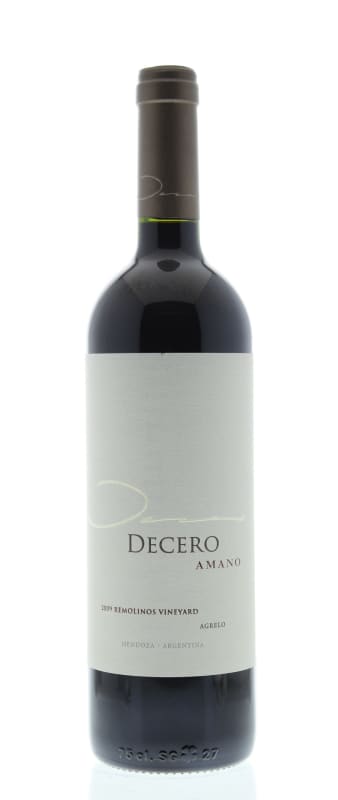
The 2009 Amano - Remolinos Vineyard is a blend of 60% Malbec, 31% Cabernet Sauvignon, 6% Petit Verdot and 3% Tannat aged entirely in new French oak for 20 months. It offers a very ripe, voluminous bouquet of mulberry, blackberry and melted tar with subtle undergrowth aromas. The palate is very well-balanced with juicy ripe red berry fruit laced with white pepper, orange rind and a touch of marmalade. It builds nicely to a ravishing yet fresh finish that has great persistency. If you are wondering, then the answer is -yes-: the 2009 Amano justifies the price tag.
-
Wine Enthusiast
A lovely blend of 60% Malbec, 31% Cabernet Sauvignon, 6% Petit Verdot and 3% Tannat, this is strong, with aromas of coconut, cola, chocolate and pure berry. It’s a powerful wine, with a flavorful core of black fruit accented by coffee and burnt toast.
-
Wine Spectator
A ripe yet fresh red, with juicy dark cherry, plum and wild berry notes giving way to light violet, spice and graphite hints along the finish. Malbec, Cabernet Sauvignon, Petit Verdot and Tannat.


One of the world’s most classic and popular styles of red wine, Bordeaux-inspired blends have spread from their homeland in France to nearly every corner of the New World. Typically based on either Cabernet Sauvignon or Merlot and supported by Cabernet Franc, Malbec and Petit Verdot, the best of these are densely hued, fragrant, full of fruit and boast a structure that begs for cellar time. Somm Secret—Blends from Bordeaux are generally earthier compared to those from the New World, which tend to be fruit-dominant.

With vineyards tretching along the eastern side of the Andes Mountains from Patagonia in the south to Salta in the north, Argentina is one of the world’s largest and most dynamic wine producing countries—and most important in South America.
Since the late 20th century vineyard investments, improved winery technology and a commitment to innovation have all contributed to the country’s burgeoning image as a producer of great wines at all price points. The climate here is diverse but generally continental and agreeable, with hot, dry summers and cold snowy winters—a positive, as snow melt from the Andes Mountains is used heavily to irrigate vineyards. Grapes very rarely have any difficulty achieving full ripeness.
Argentina’s famous Mendoza region, responsible for more than 70% of Argentina’s wine production, is further divided into several sub-regions, with Luján de Cuyo and the Uco Valley most noteworthy. Red wines dominate here, especially Malbec, the country’s star variety, while Chardonnay is the most successful white.
The province of San Juan is best known for blends of Bonarda and Syrah. Torrontés is a specialty of the La Rioja and Salta regions, the latter of which is also responsible for excellent Malbecs grown at very high elevation.