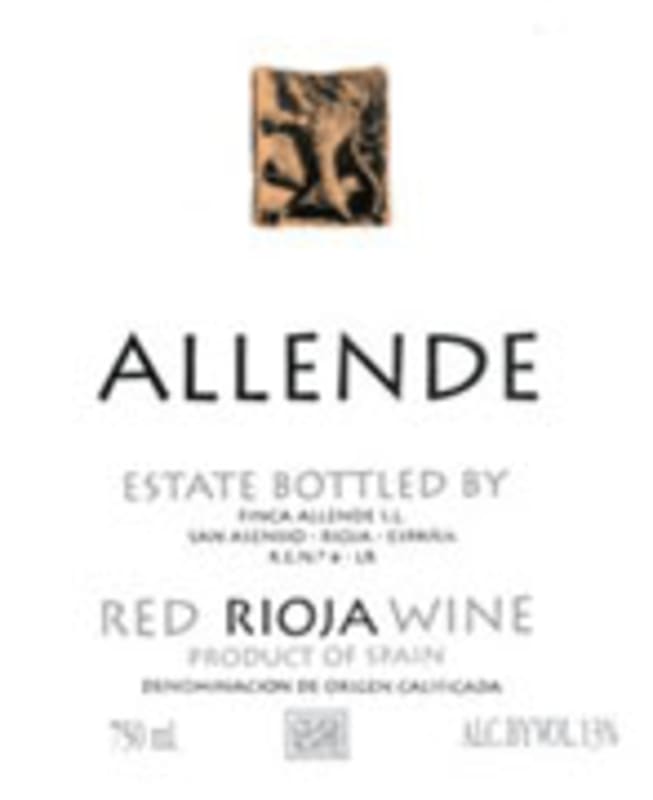

Winemaker Notes
Professional Ratings
-
Robert Parker's Wine Advocate
The 2004 Allende is tighter on the nose compared to the 2003, with raspberry and crushed strawberry fruit, licorice and a touch of mango emerging in the background. The palate is medium bodied with ripe tannins, crisp acidity and weight that build to a composed, anise-tinged finish that is fresh and lively. The 2004 would benefit from more bottle age and remains a great Rioja wine. Drink 2014-2022.
-
Wine Enthusiast
Stylish and alluring nose; quite sexy. The malolactic fermentation took place in barrel, so the wine has mouthfeel and richness. Yet it’s a juicy, friendly, fruit-forward style of Tempranillo, one that finishes with mocha and wood-driven spice notes.
-
Wine Spectator
Focused and balanced, this elegant red delivers plum, licorice and vanilla flavors, with fresh acidity and floral and mineral notes over fine-grained tannins. Drink now through 2012. 3,000 cases imported.


Hailed as the star red variety in Spain’s most celebrated wine region, Tempranillo from Rioja, or simply labeled, “Rioja,” produces elegant wines with complex notes of red and black fruit, crushed rock, leather, toast and tobacco, whose best examples are fully capable of decades of improvement in the cellar.
Rioja wines are typically a blend of fruit from its three sub-regions: Rioja Alta, Rioja Alavesa and Rioja Oriental, although specific sub-region (zonas), village (municipios) and vineyard (viñedo singular) wines can now be labeled. Rioja Alta and Alavesa, at the highest elevations, are considered to be the source of the brightest, most elegant fruit, while grapes from the warmer and drier, Rioja Oriental, produce wines with deep color, great body and richness.