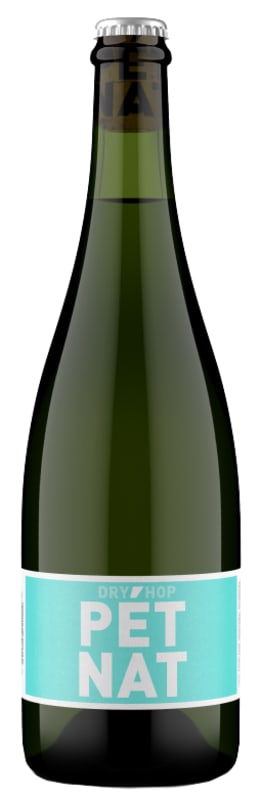


Winemaker Notes
This Chardonnay is sourced 100% from the Arroyo Grande Valley and is harvested very early in order to retain high acidity. The wine is pressed and racked directly onto hops in a large stainless steel tank. The fermentation occurred naturally and lasted 15 days before being racked off of its lees. Field Recordings reserved a small portion of the fermenting juice in a temperature-controlled tank, which was added back to the wine before bottling. No non-grape sugar was used to finish the fermentation in the bottle.
Dry Hop Pét Nat was their first foray into the Pét Nat revolution. The creation of this wine requires perfect timing. It must be captured in bottle at just the right level of natural sugar so it is perfectly carbonated upon release.


Representing the topmost expression of a Champagne house, a vintage Champagne is one made from the produce of a single, superior harvest year. Vintage Champagnes account for a mere 5% of total Champagne production and are produced about three times in a decade. Champagne is typically made as a blend of multiple years in order to preserve the house style; these will have non-vintage, or simply, NV on the label. The term, "vintage," as it applies to all wine, simply means a single harvest year.

Paso Robles has made a name for itself as a source of supple, powerful, fruit-driven Central Coast wines. But with eleven smaller sub-AVAs, there is actually quite a bit of diversity to be found in this inland portion of California’s Central Coast.
Just east over the Santa Lucia Mountains from the chilly Pacific Ocean, lie the coolest in the region: Adelaida, Templeton Gap and (Paso Robles) Willow Creek Districts, as well as York Mountain AVA and Santa Margarita Ranch. These all experience more ocean fog, wind and precipitation compared to the rest of the Paso sub-appellations. The San Miguel, (Paso Robles) Estrella, (Paso Robles) Geneso, (Paso Robles) Highlands, El Pomar and Creston Districts, along with San Juan Creek, are the hotter, more western appellations of the greater Paso Robles AVA.
This is mostly red wine country, with Cabernet Sauvignon and Zinfandel standing out as the star performers. Other popular varieties include Merlot, Petite Sirah, Petit Verdot, Syrah, Grenache and Rhône blends, both red and white. There is a fairly uniform tendency here towards wines that are unapologetically bold and opulently fruit-driven, albeit with a surprising amount of acidity thanks to the region’s chilly nighttime temperatures.