

Winemaker Notes
Professional Ratings
-
Robert Parker's Wine Advocate
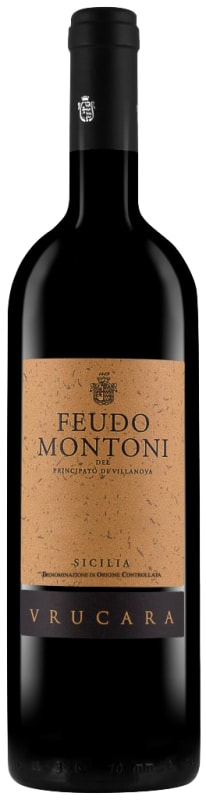
Tasted from magnum, the organic Feudo Montoni 2020 Sicilia Nero d'Avola Vrucara is a wine that vintner Fabio Sireci has been working to improve for many years. It remains one of the best expressions of the grape on the market today. Since the 2017 vintage, it has included 15% stems. The "progetto raspi" is something that was passed down from Fabio's father, Elio. The trick is to avoid the bitterness of the stems, something Fabio does by sun-drying the fruit on cane mats as if it were an appassimento. The wine ages in cement for 40 months. The fruit comes from a 2.2-hectare site with clay and sand at 500 meters in elevation.
-
Wine Enthusiast
The warm nose balances the sweetness of cherry cola and blood orange with the savoriness of dirt and mixed herbs. On the palate, the blood orange and herb notes star, as emergent flavors of red plum, strawberry and black pepper intensify that interplay. Smooth, firm tannins create a streamlined yet deep feel.
-
Wine Spectator
A rich and juicy note of Amarena cherry is underscored by fragrant accents of tar, mountain herbs, cocoa powder and red licorice. The detailed profile rides the lightly plush and pleasing texture, framed by well-integrated, creamy-edged tannins. Drink now through 2034.


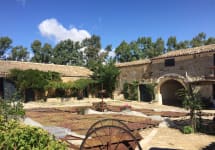
Feudo Montoni has been producing top-quality wines on its historic grounds since 1469, and is currently overseen by Fabio Sireci, the third generation of a family dedicated to producing the most refined expressions of this long-cultivated terroir.
Today, the certified organic winery produces many of Italy’s most celebrated 100% indigenous varietals—Perricone, Nerello Mascalese, Catarratto, Grillo, Inzolia and Passito—in addition to the purest expression of Nero d’Avola.
Sireci is particularly proud of the organic farming methods, artisanal cellar practices and renewable energy sources he’s implemented and maintained, which he says preserves the grapes’ natural flavors and nuances. “We keep the vines rustic, so the foliage is free to express itself,” he says. “The vineyards are not fertilized—we condition the land by sowing broad beans and peas, and we do not use any chemical products.”
All operations in the vineyard are undertaken completely by hand, and the results speak for themselves: thanks to the Sireci family’s dedication and the vineyards’ high altitude, fluctuating temperatures, plentiful rainfall and neighboring olive and wheat plots, Feudo Montoni wines have staked their claim among the finest in the region.

Boldly opulent and robust, Nero d’Avola is Sicily’s most widely planted red grape. Nero d’Avola performs well both as a single varietal bottling and in blends. It loves hot, arid climates and Sicily's old vines are aptly head-trained close to the ground, making them resistant to strong winds. A few pioneering producers in California as well as Australia farm Nero d’Avola in the same way. Somm Secret—Nero d’Avola's other name, Calabrese, suggests origins from the mainland region of Calabria.

A large, geographically and climatically diverse island, just off the toe of Italy, Sicily has long been recognized for its fortified Marsala wines. But it is also a wonderful source of diverse, high quality red and white wines. Steadily increasing in popularity over the past few decades, Italy’s fourth largest wine-producing region is finally receiving the accolades it deserves and shining in today's global market.
Though most think of the climate here as simply hot and dry, variations on this sun-drenched island range from cool Mediterranean along the coastlines to more extreme in its inland zones. Of particular note are the various microclimates of Europe's largest volcano, Mount Etna, where vineyards grow on drastically steep hillsides and varying aspects to the Ionian Sea. The more noteworthy red and white Sicilian wines that come from the volcanic soils of Mount Etna include Nerello Mascalese and Nerello Cappuccio (reds) and Carricante (whites). All share a racy streak of minerality and, at their best, bear resemblance to their respective red and white Burgundies.
Nero d’Avola is the most widely planted red variety, and is great either as single varietal bottling or in blends with other indigenous varieties or even with international ones. For example, Nero d'Avola is blended with the lighter and floral, Frappato grape, to create the elegant, Cerasuolo di Vittoria, one of the more traditional and respected Sicilian wines of the island.
Grillo and Inzolia, the grapes of Marsala, are also used to produce aromatic, crisp dry Sicilian white. Pantelleria, a subtropical island belonging to the province of Sicily, specializes in Moscato di Pantelleria, made from the variety locally known as Zibibbo.