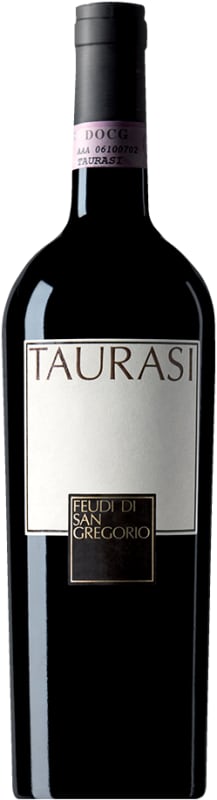


Winemaker Notes
Brilliant ruby red with garnet reflections, fragrant perfumes of maraschino cherry, cinnamon and nutmeg, vanilla and anise. The taste is full and balanced with sweet and soft tannins that give a good aromatic persistence.
An excellent wine for drinking with the finest roasted red meats and poultry, braised in Aglianico.
Professional Ratings
-
James Suckling
Pointed aromas of dark cherry, bitter licorice root, kirsch, tapenade and dried tobacco. There is something gritty and coal face about this. Yet the grape tannins, tightly wrought and detailed, sublimate the clench of oak at the finale, offering consummate poise while auguring well for a long future. Classy Taurasi. Drinkable now, but best from 2026.
-
Robert Parker's Wine Advocate
A classic drinking option for locals, the Feudi di San Gregorio 2019 Taurasi shows dark, tarry aromas with concentrated fruit, campfire ash and sweet spice. This is a generous, full-bodied wine, but it manages careful balance nonetheless. Give it another year of bottle age to allow it to flesh out further.
-
Vinous
The 2019 Taurasi is impossible to ignore, bursting from the glass with an animalistic display of crushed ashen stones, musk, blackberries, sage and dried roses. This is elegant in feel, with a vivid core of ripe red and black fruits propelled by brilliant acidity. Tactile mineral tones add grip toward the close. Tangerine hints mingle with wild blueberries as the 2019 tapers off long and structured. Its tannins are sweet and round. The balance here is simply stunning, showing the power and radiance of the 2019 vintage. Bravo.
Rating: 93+ -
Wine Spectator
A tarry red, with blackberry and plum skin notes firmed by dense, fine-grained tannins. Compact and tightly meshed today, revealing additional details of mountain herbs, anise, milled pepper and toast as this opens in the glass. Best from 2028 through 2038.


Making its home in the mountainous southern Italy, Aglianico is a bold red variety that is late to ripen and often spends until November on the vine. It thrives in Campania as the exclusive variety in the age-worthy red wine called Taurasi. Aglianico also has great success in the volcanic soils of Basilicata where it makes the robust, Aglianico del Vulture. Somm Secret—The name “Aglianico” bears striking resemblance to Ellenico, the Italian word for "Greek," but no evidence shows it has Greek ancestry. However, it first appeared in Italy around an ancient Greek colony located in present-day Avellino, Campania.

A winemaking renaissance is underfoot in Campania as more and more small, artisan and family-run wineries redefine their style with vineyard improvements and cellar upgrades. The region boasts a cool Mediterranean climate with extreme coastal, as well as high elevation mountain terroirs. It is cooler than one might expect in Campania; the region usually sees some of the last harvest dates in Italy.
Just south of Mount Vesuvio, the volcanic and sandy soils create aromatic and fresh reds based on Piedirosso and whites, made from Coda di Volpe and Falanghina. Both reds and whites go by the name, Lacryma Christi, meaning the "tears of Christ." South of Mount Vesuvio, along the Amalfi Coast, the white varieties of Falanghina and Biancolella make fresh, flirty, mineral-driven whites, and the red Piedirosso and Sciasinoso vines, which cling to steeply terraced coastlines, make snappy and ripe red wines.
Farther inland, as hills become mountains, the limestone soil of Irpinia supports the whites Fiano di Avellino, Falanghina and Greco di Tufo as well as the most-respected red of the south, Aglianico. Here the best and most age-worthy examples come from Taurasi.
Farther north and inland near the city of Benevento, the Taburno region also produces Aglianico of note—called Aglianico del Taburno—on alluvial soils. While not boasting the same heft as Taurasi, these are also reliable components of any cellar.