

Winemaker Notes
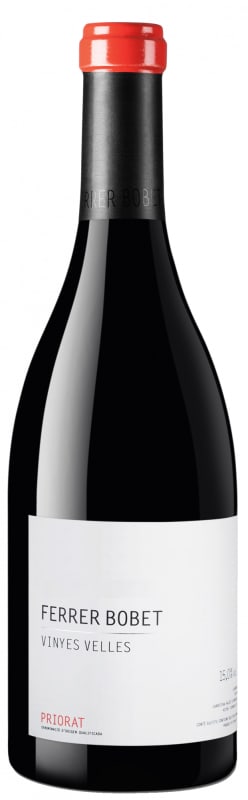
Ferrer Bobet’s Vinyes Velles is an old vine blend of Carignane and Grenache. It’s produced from some of the best steep slate hillside and terraced vineyards in Priorat.
Blend: 86% Carignan, 14% Grenache
Professional Ratings
-
James Suckling
Aromas of cocoa powder, grilled meat, sage, espresso and blackberries. Full-bodied with silky tannins. So elegant and refined with real supple texture and rounded black fruit. Effortless balance. Delicious.
-
Robert Parker's Wine Advocate
The 2019 Vinyes Velles was produced with 79% Cariñena and 21% Garnacha from slope vineyards older than 70 years on llicorella slate soils all within the limits of the village of Porrera. They look for elegance and freshness and avoid over-extraction and over-ripeness; all of the wines are produced in a similar way—fermentation after a short cold soak, with pumping over and punching down and macerated until the taste tells them it's enough. This wine matured in 225-liter French barriques for 16 months. It has 14.5% alcohol, a pH of 3.39 and 5.49 grams of acidity. It has a fruit-driven nose with ripe berries and spices and an earthy touch, reminiscences of graphite, with integrated oak. The palate is full-bodied and juicy, with very fine tannins. 26,824 bottles and 453 magnums produced.
-
Wine & Spirits
Sergi FerrerSalat and Raül Bobet built their gravityflow winery in Porrera, where they planted 70 acres of vines on steep terraces in 2004 and 2005, organically farmed in the midst of their 172-acre estate. For their Vinyes Velles, they work with local growers who tend centenarian vines of carinyena and garnatxa negra, offering a 2019 that is immediately powerful and zesty. “It’s just the pow!” said Nacho Monclús of this wine when it was first poured, but a day later it was much more than just power, with an intriguingly bloody scent of carignan. The lean, austere tannins are haunted by cherries, the tannins holding that fruit with a gentleness that takes all the extract back a notch, the fragrant red fruit lasting with an elegance that implies a long life ahead.
-
Wine Spectator
A sleek, finely meshed red bearing a dark purple hue, with a mix of cassis, boysenberry, violet and espresso notes expanding on the palate and framed by supple tannins. Long and lightly mouthwatering, this is a well-tailored version, with ripe fruit and abundant herbs and spice lingering on the finish.
-
Wine Enthusiast
Aromas of dark and red berries, crumbled sage leaf and licorice set the stage for cassis, raspberry, dark chocolate, wild thyme and eucalyptus flavors. Feathery tannins slowly build in volume and recede, leaving berry and dried herb flavors behind.


With bold fruit flavors and accents of sweet spice, Grenache, Syrah and Mourvèdre form the base of the classic Rhône Red Blend, while Carignan, Cinsault and Counoise often come in to play. Though they originated from France’s southern Rhône Valley, with some creative interpretation, Rhône blends have also become popular in other countries. Somm Secret—Putting their own local spin on the Rhône Red Blend, those from Priorat often include Merlot and Cabernet Sauvignon. In California, it is not uncommon to see Petite Sirah make an appearance.

Tiny and entirely composed of craggy, jagged and deeply terraced vineyards, Priorat is a Catalan wine-producing region that was virtually abandoned until the early 1990s. This Spanish wine's renaissance came with the arrival of one man, René Barbier, who recognized the region’s forgotten potential. He banded with five friends to create five “Clos” in the village of Gratallops. Their aim was to revive some of Priorat’s ancient Carignan vines, as well as plant new—mainly French—varieties. These winemakers were technically skilled, well-trained and locally inspired; not surprisingly their results were a far cry from the few rustic and overly fermented wines already produced.
This movement escalated Priorat’s popularity for a few reasons. Its new wines were modern and made with well-recognized varieties, namely old Carignan and Grenache blended with Syrah, Cabernet Sauvignon and Merlot. When the demand arrived, scarcity commanded higher prices and as the region discovered its new acclaim, investors came running from near and far. Within ten years, the area under vine practically doubled.
Priorat’s steep slopes of licorella (brown and black slate) and quartzite soils, protection from the cold winds of the Siera de Monstant and a lack of water, leading to incredibly low vine yields, all work together to make the region’s wines unique. While similar blends could and are produced elsewhere, the mineral essence and unprecedented concentration of a Priorat wine is unmistakable.