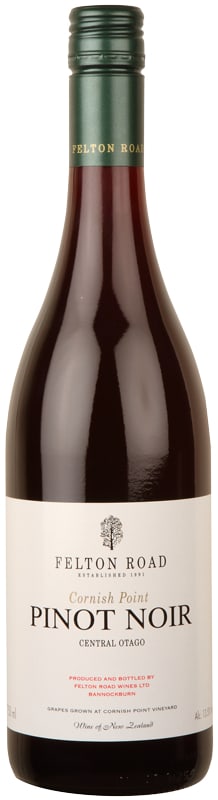


Winemaker Notes
#49 James Suckling Top 100 Wines of the World 2025
Red cherry, plum and a hint of dried herbs open the nose in a delightfully fragrant manner. The aromatics deftly define the knife edge ripeness that’s critical for great Pinot Noir; dialed in with ease in the exceptional 2024 vintage. Cardamom, mace and cranberry make an appearance, followed by a finely poised mouthfeel. The silky tannins are luscious and sweet, providing backbone and length. A typically expressive Cornish Point.
Professional Ratings
-
James Suckling
This is so perfumed, with violet, fresh strawberry and black cherry aromas. It’s medium-bodied with ultra-fine tannins and a persistent and caressing finish. From organically grown grapes.
-
Robert Parker's Wine Advocate
The 2024 Cornish Point Pinot Noir is succulent and concentrated, with abundantly dark fruit, sappy tannins and baking spices. There are notes of star anise and sweet licorice, tapenade and mulberry, with dark chocolate to close. The fruit in the Felton Road Pinots this year feels starkly different in character than previous vintages, and I do not attribute this to any major change in the vineyard but rather an effect of the season. This is very good. 14% alcohol.


Thin-skinned, finicky and temperamental, Pinot Noir is also one of the most rewarding grapes to grow and remains a labor of love for some of the greatest vignerons in Burgundy. Fairly adaptable but highly reflective of the environment in which it is grown, Pinot Noir prefers a cool climate and requires low yields to achieve high quality. Outside of France, outstanding examples come from in Oregon, California and throughout specific locations in wine-producing world. Somm Secret—André Tchelistcheff, California’s most influential post-Prohibition winemaker decidedly stayed away from the grape, claiming “God made Cabernet. The Devil made Pinot Noir.”

Home to the globe’s most southerly vineyards, which are cultivated below the 45th parallel, Central Otago is a true one-of-a-kind wine growing region, but not only because of its extreme location.
Central Otago is more dependent on one single variety than any other region in New Zealand—and it isn’t Sauvignon blanc. They don’t even make Sauvignon blanc there.
Pinot Noir claims nearly 75% of the region’s vineyards with Pinot Gris coming in a far second place and Riesling behind it. This is also New Zealand’s only wine region with a continental climate, giving it more diurnal and seasonal temperature shifts than any other.
The subregion of Bannockburn has enjoyed the most success historically but the area’s exceptional growth has moved to the promising regions of Cromwell/Bendigo and Alexandra districts. Central Otago is known for its fruity and full-bodied Pinot noir. With the freedom to experiment here, growers and winemakers are easily exhibiting the area’s great potential.