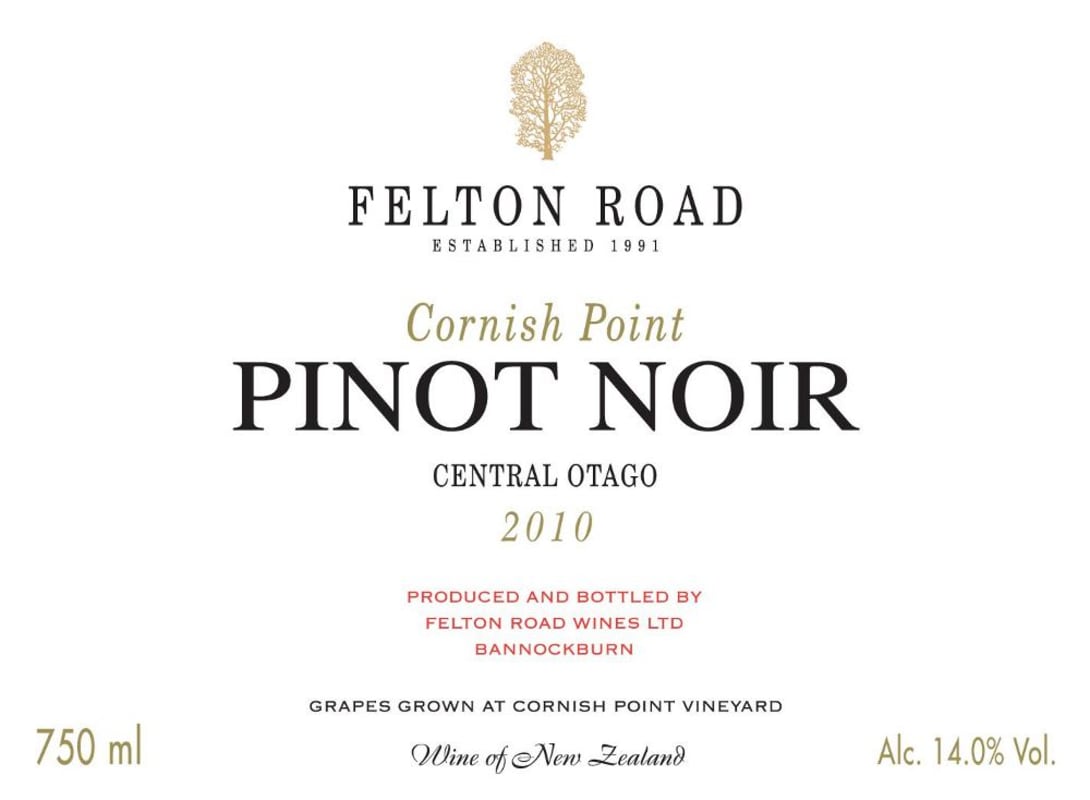

Winemaker Notes
Professional Ratings
-
James Suckling
A vivid bright red/purple in the glass, this has both poise and concentration, oozing poached red and blue fruits on the nose; quite bright but with a convincing sense of ripeness, dried herbs, the oak has been subsumed, gently meat now. The palate's lithe and even, showing open and lacy tannins and a smooth transition from front to back, runs smooth, red and dark cherry fruits hold fresh to the very end.
-
Wine Enthusiast
More perfumed and floral than the other 2010 Pinot Noirs from Felton Road, the Cornish Point is a pretty, slightly delicate wine that nevertheless doesn’t lack for intensity. It’s medium in weight, with creamy tannins that finish like silk.
-
Wine & Spirits
This starts off simple and juicy, focused on blueberry flavors and a rasp of fruit skin spice. As it evolves in the glass, the scent opens to flowers and the fruit becomes more complex. Give this six months in bottle then serve with Cantonese roast duck.


Thin-skinned, finicky and temperamental, Pinot Noir is also one of the most rewarding grapes to grow and remains a labor of love for some of the greatest vignerons in Burgundy. Fairly adaptable but highly reflective of the environment in which it is grown, Pinot Noir prefers a cool climate and requires low yields to achieve high quality. Outside of France, outstanding examples come from in Oregon, California and throughout specific locations in wine-producing world. Somm Secret—André Tchelistcheff, California’s most influential post-Prohibition winemaker decidedly stayed away from the grape, claiming “God made Cabernet. The Devil made Pinot Noir.”

Home to the globe’s most southerly vineyards, which are cultivated below the 45th parallel, Central Otago is a true one-of-a-kind wine growing region, but not only because of its extreme location.
Central Otago is more dependent on one single variety than any other region in New Zealand—and it isn’t Sauvignon blanc. They don’t even make Sauvignon blanc there.
Pinot Noir claims nearly 75% of the region’s vineyards with Pinot Gris coming in a far second place and Riesling behind it. This is also New Zealand’s only wine region with a continental climate, giving it more diurnal and seasonal temperature shifts than any other.
The subregion of Bannockburn has enjoyed the most success historically but the area’s exceptional growth has moved to the promising regions of Cromwell/Bendigo and Alexandra districts. Central Otago is known for its fruity and full-bodied Pinot noir. With the freedom to experiment here, growers and winemakers are easily exhibiting the area’s great potential.