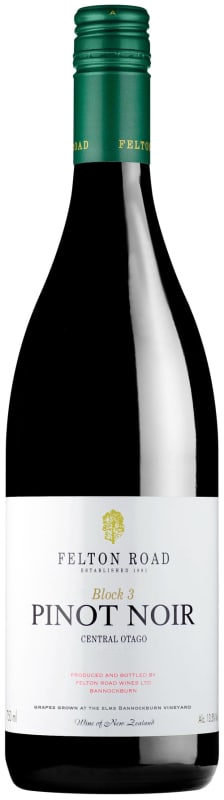


Winemaker Notes
Professional Ratings
-
James Suckling
This fresh, vibrant young and complex Block 3 pinot is a powerhouse of ripe red and dark-cherry aromas with striking purity of fruit, framed in sappy freshness. The palate is seamless with such long, finely detailed tannin, carrying really supple and meltingly ripe red and dark cherries. A thing of wonder. This has a wildly fresh, lively fruit core that launches up and expands long on the finish. Superb! Drink now. Screw cap.
-
Robert Parker's Wine Advocate
The 2018 vintage was an aberrant vintage, in that the summer was the hottest on record; a cyclone that hit the North Island never eventuated in the South, and then the coldest end to harvest ever slowed the last six weeks down. The 2018 Block 3 Pinot Noir is today seven years from its harvest, and it shows as a light, savory wine, with dried flowers and tapenade, brick dust and even saffron. The wine is so textural, the tannins so fine that once again they define the finish. A chalky splay of tannin is the enduring feature of the wine, and I like it so much for that. 14% alcohol. Rating:93+
-
Wine Enthusiast
Block 3—one of Felton Road’s oldest vineyard blocks at around 25 years—is located on some of the estate’s deepest, heaviest soils. There’s power here, and also a fair bit of oak influence, but there’s elegance and complexity in spades. Raspberry and blueberry fruit combine with potpourri spice, vanilla, chocolate and a bit of earthy, Burgundy-style reductive funk. There’s a lovely texture on the palate: silky with bright fruit, chalky acidity and a well-structured line of tannins. A slightly oaky astringency that should dissipate over time creeps in on the finish.
-
Wine Spectator
Supple and elegant, featuring fresh raspberry and wild strawberry flavors that reveal a thread of cream soda and spice running through. Pretty details of fresh sage, thyme and cinnamon linger on the finish. Drink now through 2030.


Thin-skinned, finicky and temperamental, Pinot Noir is also one of the most rewarding grapes to grow and remains a labor of love for some of the greatest vignerons in Burgundy. Fairly adaptable but highly reflective of the environment in which it is grown, Pinot Noir prefers a cool climate and requires low yields to achieve high quality. Outside of France, outstanding examples come from in Oregon, California and throughout specific locations in wine-producing world. Somm Secret—André Tchelistcheff, California’s most influential post-Prohibition winemaker decidedly stayed away from the grape, claiming “God made Cabernet. The Devil made Pinot Noir.”

Home to the globe’s most southerly vineyards, which are cultivated below the 45th parallel, Central Otago is a true one-of-a-kind wine growing region, but not only because of its extreme location.
Central Otago is more dependent on one single variety than any other region in New Zealand—and it isn’t Sauvignon blanc. They don’t even make Sauvignon blanc there.
Pinot Noir claims nearly 75% of the region’s vineyards with Pinot Gris coming in a far second place and Riesling behind it. This is also New Zealand’s only wine region with a continental climate, giving it more diurnal and seasonal temperature shifts than any other.
The subregion of Bannockburn has enjoyed the most success historically but the area’s exceptional growth has moved to the promising regions of Cromwell/Bendigo and Alexandra districts. Central Otago is known for its fruity and full-bodied Pinot noir. With the freedom to experiment here, growers and winemakers are easily exhibiting the area’s great potential.