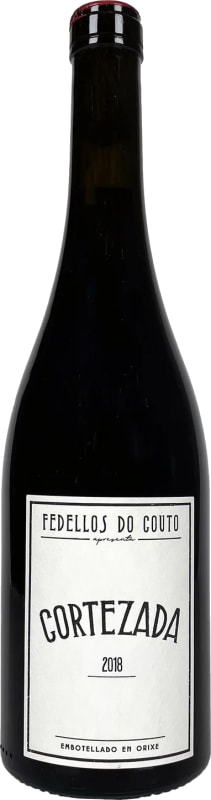


Winemaker Notes
The grapes for this wine come from a single vineyard above Sil river. A subtle, elegant version of Mencia that is floral and refined. A little peppery, dark cherries, plums, undergrowth and tobacco leaf on the nose. On tasting velvety, juicy fruit, sunny warm flavors with bright acidity.
Professional Ratings
-
Robert Parker's Wine Advocate
The amazing 2018 Cortezada is often one of the best values in Spain. It's produced with Mencía grapes from the vineyard of the Pazo do Couto called Cortezada that was planted in 2002 on southeast-facing terraces at 350 meters in altitude, on soils that are rich in gneiss, iron, slate and quartzite. The full clusters fermented with indigenous yeasts at less than 20 degrees Celsius, followed by a long maceration of 60 days. Only part of the wine matured in 300- and 500-liter French oak barrels for six months and then another six months in concrete, and part of the wine was in concrete for the whole of those 12 months. In previous years, all of the wine was matured in barrel. They now use concrete to try to make it sharper. This is heartier, darker and meatier than the rest of the wines from the 2018 vintage, more Cornas than Chambolle, with rustic elegance and more Mencía than previous vintages. They reckon 2018 saw a very complete and long ripening cycle, and each vineyard really shows the character. I've never seen the character of each of the wines so defined and different from each other. This is sharper but, at the same time, more powerful, a wine with more clout and, I'd say, aging potential.
Rating:93+


Spanish red wine is known for being bold, heady, rustic and age-worthy, Spain is truly a one-of-a-kind wine-producing nation. A great majority of the country is hot, arid and drought-ridden, and since irrigation has only been recently introduced and (controversially) accepted, viticulture has sustained—and flourished—only through a great understanding of Spain’s particular conditions. Large spacing between vines allows each enough resources to survive and as a result, the country has the most acreage under vine compared to any other country, but is usually third in production.
Of the Spanish red wines, the most planted and respected grape variety is Tempranillo, the star of Spain’s Rioja and Ribera del Duero regions. Priorat specializes in bold red blends, Jumilla has gained global recognition for its single varietal Monastrell and Utiel-Requena has garnered recent attention for its reds made of Bobal.