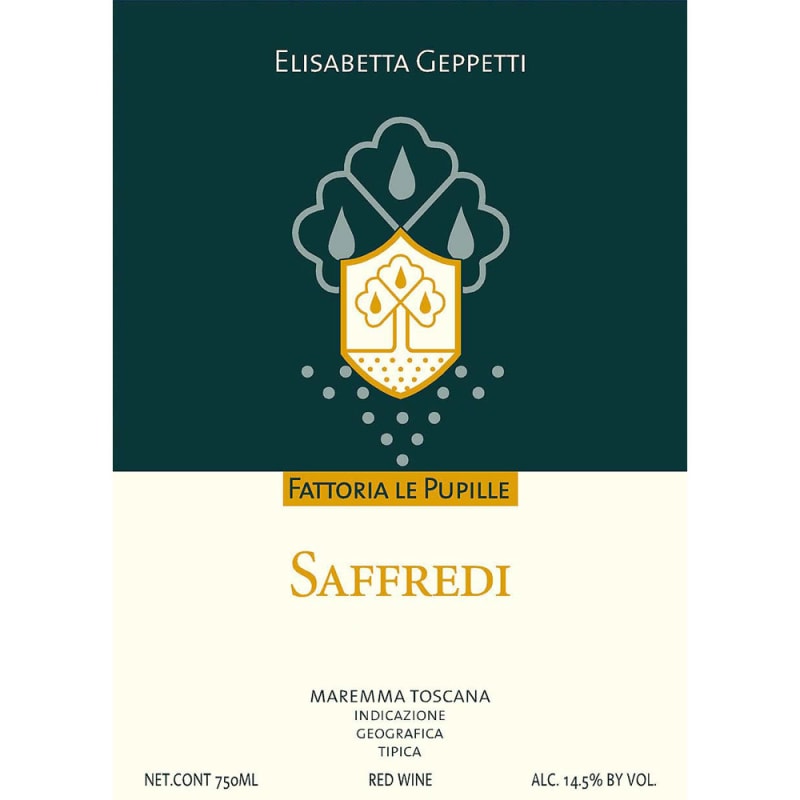

Winemaker Notes
Pair with elegant, layered pasta dishes, grilled game preparations or roasted prime rib.
Professional Ratings
-
James Suckling
This is another great Saffredi following the perfect 100-point 2012. I tasted it a year ago and thought it was sensational. Even better now. It's so dense and structured yet shows a lively, jazz-like vibe that gives it form and beauty. Needs at least four to five years to soften. Powerful and muscular. Cabernet sauvignon, merlot and petit verdot.
-
Robert Parker's Wine Advocate
The 2013 and 2016 vintages represent the best work by consulting enologist Luca D'Attoma during his time at Fattoria le Pupille. He joined the estate in 2012 and left as the 2018s were bottled. The 2013 Saffredi is very fine and elegant, and it offers a bright point of freshness that helps it stand apart from the 2012 and 2011 vintages, which show less overall clarity. This wine vaunts extreme focus instead, and although it does show ample oak and spice definition, the fruit is beautifully presented.


Legendary in Italy for its Renaissance art and striking landscape, Tuscany is also home to many of the country’s best red wines. Sangiovese reigns supreme here, as either the single varietal, or a dominant player, in almost all of Tuscany’s best.
A remarkable Chianti, named for its region of origin, will have a bright acidity, supple tannins and plenty of cherry fruit character. From the hills and valleys surrounding the medieval village of Montalcino, come the distinguished and age-worthy wines based on Brunello (Sangiovese). Earning global acclaim since the 1970s, the Tuscan Blends are composed solely of international grape varieties or a mix of international and Sangiovese. The wine called Vine Nobile di Montepulciano, composed of Prognolo Gentile (Sangiovese) and is recognized both for finesse and power.