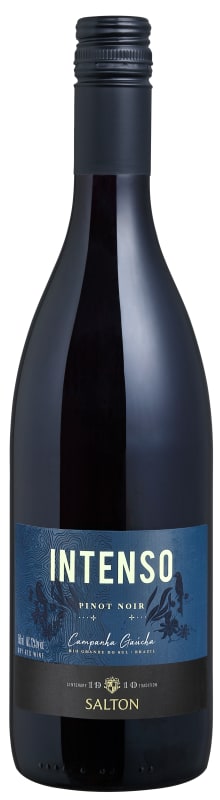


Winemaker Notes
A bright and delicate garnet red color gives way to fresh red fruit aromas, such as cherry and raspberry with notes of strawberries and spices. Light body with delicate tannins and balanced acidity, this excellent Pinot Noir is very food friendly. Made from 100% Pinot Noir this round and silky red is made from hand-picked grapes; the juice is extracted with low-pressure pneumatic presses. After the clarification, the must is fermented at low temperature with selected yeasts. The wine is then a aged with French and American oak prior to bottling.


Thin-skinned, finicky and temperamental, Pinot Noir is also one of the most rewarding grapes to grow and remains a labor of love for some of the greatest vignerons in Burgundy. Fairly adaptable but highly reflective of the environment in which it is grown, Pinot Noir prefers a cool climate and requires low yields to achieve high quality. Outside of France, outstanding examples come from in Oregon, California and throughout specific locations in wine-producing world. Somm Secret—André Tchelistcheff, California’s most influential post-Prohibition winemaker decidedly stayed away from the grape, claiming “God made Cabernet. The Devil made Pinot Noir.”

Portugese colonists brought wine producing grapes to Brazil as far back as the mid 16th century but the mainly humid, tropical environment proved to be a challenge for the early settlers. Though it is a large country, only a small portion, towards its southern end near Uruguay, is within the ideal latitudes for wine production. Brazil has about the same acreage under vine as its South American wine-producing neighbors, Chile and Argentina, but most of it is for table grapes. About 10% of the land is Vitis vinifera, the wine producing species.
Brazil has enjoyed consistent quality advancements since the 1970s and 1980s, largely due to investments by international wine companies, namely Moet & Chandon, Seagram, Bacardi, Domecq and Martini & Rossi. Serra Gaucha, a southerly coastal region of low mountains, recognized for sparkling wine production, is Brazil’s key wine region. Campanha, its neighbor, is attracting more attention for its red wines (Cabernet and Tannat) and white wines (Chardonnay).