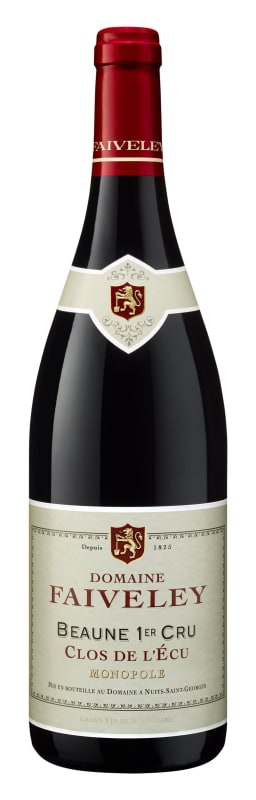


Winemaker Notes
Professional Ratings
-
Wine Enthusiast
This full wine is well structured and offers rich red fruits. It is still young, but its concentration and ripe red-berry and cherry flavors are all there. Let the wine age for a few years and drink from 2024.
-
Robert Parker's Wine Advocate
This is a successful vintage for Faiveley's 2016 Beaune 1er Cru Clos de l'Écu Monopole, an expressive wine that offers up a generous bouquet of ripe cherries, raw cocoa and a nicely integrated framing of cedary new oak. On the palate, the wine is medium to full-bodied, ample and satiny textured, with melting tannins and a fleshy but succulent core of fruit. This will offer a broad drinking window.
-
Wine Spectator
This is packed with sweet ripe cherry and berry aromas and flavors shaded by tobacco, spice and mineral accents. Lively, firming up on the lingering aftertaste. Best from 2022 through 2033. 75 cases imported.



Founded in 1825, Bourgognes Faiveley has been handed down from father to son for over 175 years. As the sixth generation to take the reins, François Faiveley manages, with equal amounts passion and competence, the largest family domaine in Burgundy. Methodically reconstructing vineyards fractured by French inheritance laws, Bourgognes Faiveley today owns more appellations in their entirety (monopoles) than any other domaine in Burgundy.
"Faiveley’s wines are... supremely clean and elegant: definitive examples of Pinot Noir... above all they have richness and breed, the thumbprint of a master winemaker."
-Clive Coates M.W.
Côte d’Or, A Celebration of the Great Wines of Burgundy

Thin-skinned, finicky and temperamental, Pinot Noir is also one of the most rewarding grapes to grow and remains a labor of love for some of the greatest vignerons in Burgundy. Fairly adaptable but highly reflective of the environment in which it is grown, Pinot Noir prefers a cool climate and requires low yields to achieve high quality. Outside of France, outstanding examples come from in Oregon, California and throughout specific locations in wine-producing world. Somm Secret—André Tchelistcheff, California’s most influential post-Prohibition winemaker decidedly stayed away from the grape, claiming “God made Cabernet. The Devil made Pinot Noir.”

While the city represents the epicenter of wine production in Burgundy, the term, “Beaune” also refers to the specific sub-appellation of the greater Côte de Beaune, whose vineyards climb up the pastoral slopes that border the city to its west. Originally founded as a Roman camp by Julius Caesar, the city of Beaune eventually became the seat of the dukes of Burgundy until the 13th century. Today it is home to top négociants such as Louis Jadot, Joseph Drouhin, Louis Latour, and Bouchard Père et Fils.
The appellation, dominated by Pinot Noir plantings, represents a lovely and charming place to begin to understand red Burgundy. Its sandy soils create light and supple, floral driven Pinot Noir. These wines are designed to be enjoyed within five to 10 years. The vineyards of Beaune span a broad swath of Premier Crus from Savigny-lès-Beaune to its border with Pommard.
Chardonnay acreage here has been increasing here in the more recent years.