

Winemaker Notes
Professional Ratings
-
Wine & Spirits
Juicier than La Source, this has demonstrative black cherry and plum scents framed by hints of woodland briar and dried flowers. The wine is both ripe and lean, with flavors of wild cherry sprinkled with herbs and flowers, generous and clean-lined. Like La Source, it has presence without pronounced body, persistence without weight—contrasts that make the wine completely seductive and suggest a long life ahead.
-
Wine Spectator
A delicate, ethereal style, light on its feet, with red berry and Earl Grey tea flavors gliding easily through the long, expressive finish. Gets more interesting with each sip, finishing harmonious and elegant.
-
Robert Parker's Wine Advocate
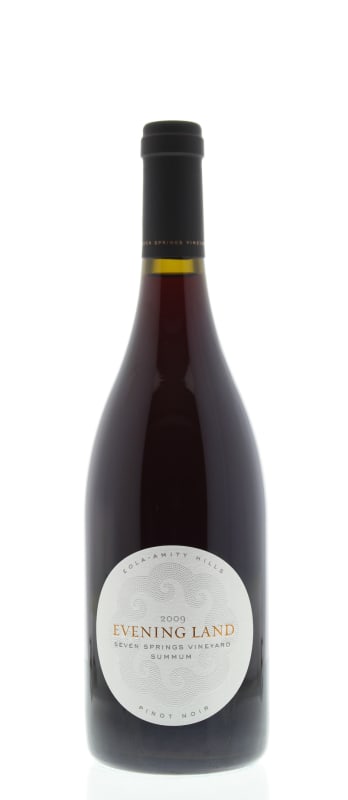
The gorgeous nose of Evening Land’s 2009 Pinot Noir Seven Springs Vineyard Summum projects not just mint-, and cardamom-tinged, lightly-cooked pomegranate and red raspberry, but is also – did they blend Chardonnay into this?! – garlanded with iris and gentian. The complex dynamic offered on the palate involves the counterpoint of soothing, metaphorically cooling herbal essences with tart-edged, invigoratingly seedy red fruits; satiny texture with vivacious brightness; and octave leaps between high-toned floral perfume and a stony, woodsy ground. This could keep you and your chosen cuisine glorious company for hours ... or over at least another 6-8 years in bottle.


Thin-skinned, finicky and temperamental, Pinot Noir is also one of the most rewarding grapes to grow and remains a labor of love for some of the greatest vignerons in Burgundy. Fairly adaptable but highly reflective of the environment in which it is grown, Pinot Noir prefers a cool climate and requires low yields to achieve high quality. Outside of France, outstanding examples come from in Oregon, California and throughout specific locations in wine-producing world. Somm Secret—André Tchelistcheff, California’s most influential post-Prohibition winemaker decidedly stayed away from the grape, claiming “God made Cabernet. The Devil made Pinot Noir.”

Running north to south, adjacent to the Willamette River, the Eola-Amity Hills AVA has shallow and well-drained soils created from ancient lava flows (called Jory), marine sediments, rocks and alluvial deposits. These soils force vine roots to dig deep, producing small grapes with great concentration.
Like in the McMinnville sub-AVA, cold Pacific air streams in via the Van Duzer Corridor and assists the maintenance of higher acidity in its grapes. This great concentration, combined with marked acidity, give the Eola-Amity Hills wines—namely Pinot noir—their distinct character. While the region covers 40,000 acres, no more than 1,400 acres are covered in vine.