

Winemaker Notes
Professional Ratings
-
Robert Parker's Wine Advocate
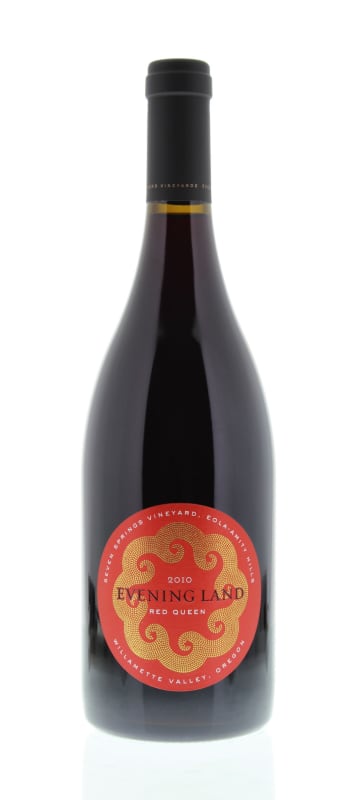
With their 2010 Pinot Noir Seven Springs Vineyard Red Queen, the Evening Land team repeats an experiment attempted in the 2008 vintage of including around one-third whole clusters and stems in the ferment. The result makes for a striking and illuminating contrast with the otherwise nearly identical fruit and methods that informed the La Source of this vintage. Iris, gentian, black pepper, licorice, and smoky black tea convey aromatic as well as inner-mouth complexity to tart-edged red berries, all of which combine for a distinctive and forceful resonance that carries into a gripping finish. There is a chew to the tannins here but also expansiveness to the wine’s flower-enhanced inner-mouth perfume that set it apart from its stable mates. This is going to be fascinating to follow in parallel with its La Source sibling over the coming decade.
-
Wine Enthusiast
The Red Queen bottling is Evening Land’s most limited in terms of production. The grapes are sourced from a block in the estate vineyard at the highest point of the hill, and the wine is aged in 30% new French oak for 14 months. Tasted a few weeks prior to its official release, it was stubbornly unyielding, even after a full 24 hours. Given the pedigree of this estate, and the superb quality of the two other 2010 Pinots, it is reasonable to expect this to come out of its hard shell and earn a much higher score.
-
Wine Spectator
Ripe cherry and spice flavors play with deftness on an open frame. This is generous with its fruit, showinbg subtle hints of black pepper and licorice. Finishes with intensity and impressive length.


Thin-skinned, finicky and temperamental, Pinot Noir is also one of the most rewarding grapes to grow and remains a labor of love for some of the greatest vignerons in Burgundy. Fairly adaptable but highly reflective of the environment in which it is grown, Pinot Noir prefers a cool climate and requires low yields to achieve high quality. Outside of France, outstanding examples come from in Oregon, California and throughout specific locations in wine-producing world. Somm Secret—André Tchelistcheff, California’s most influential post-Prohibition winemaker decidedly stayed away from the grape, claiming “God made Cabernet. The Devil made Pinot Noir.”

Running north to south, adjacent to the Willamette River, the Eola-Amity Hills AVA has shallow and well-drained soils created from ancient lava flows (called Jory), marine sediments, rocks and alluvial deposits. These soils force vine roots to dig deep, producing small grapes with great concentration.
Like in the McMinnville sub-AVA, cold Pacific air streams in via the Van Duzer Corridor and assists the maintenance of higher acidity in its grapes. This great concentration, combined with marked acidity, give the Eola-Amity Hills wines—namely Pinot noir—their distinct character. While the region covers 40,000 acres, no more than 1,400 acres are covered in vine.