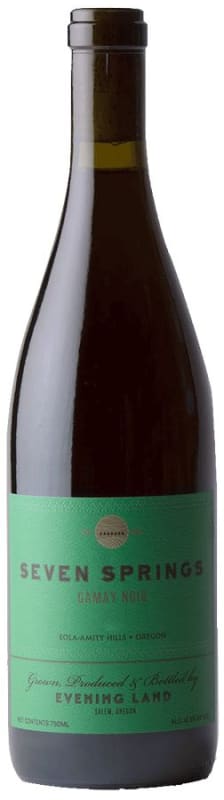


Winemaker Notes
This Gamay Noir from Evening Land leads with a rich, ripe nose of red and blue fruits, a hint of spice, and a touch of smokiness from the volcanic soils. On the palate the wine is soft, pillowy, and approachable on the entry. Complexity and spice start to creep in on the mid-palate and the finish brings a bright zip of acidity and an encore of the exuberant fruit from the nose.
Professional Ratings
-
Robert Parker's Wine Advocate
The 2018 Gamay Noir from the Seven Springs vineyard has a vibrant ruby-purple color and lovely scents of crushed raspberries, cranberries and strawberries with accents of red cherry candy, blueberries, garrigue and crushed granite. The palate is light to medium-bodied with crunchy fruits and a light framing of chalky tannins, finishing super fresh and juicy. It'd be dangerously easy to pound a bottle of this!


Delightfully playful, but also capable of impressive gravitas, Gamay is responsible for juicy, berry-packed wines. From Beaujolais, Gamay generally has three classes: Beaujolais Nouveau, a decidedly young, fruit-driven wine, Beaujolais Villages and Cru Beaujolais. The Villages and Crus are highly ranked grape growing communes whose wines are capable of improving with age whereas Nouveau, released two months after harvest, is intended for immediate consumption. Somm Secret—The ten different Crus have their own distinct personalities—Fleurie is delicate and floral, Côte de Brouilly is concentrated and elegant and Morgon is structured and age-worthy.

Running north to south, adjacent to the Willamette River, the Eola-Amity Hills AVA has shallow and well-drained soils created from ancient lava flows (called Jory), marine sediments, rocks and alluvial deposits. These soils force vine roots to dig deep, producing small grapes with great concentration.
Like in the McMinnville sub-AVA, cold Pacific air streams in via the Van Duzer Corridor and assists the maintenance of higher acidity in its grapes. This great concentration, combined with marked acidity, give the Eola-Amity Hills wines—namely Pinot noir—their distinct character. While the region covers 40,000 acres, no more than 1,400 acres are covered in vine.