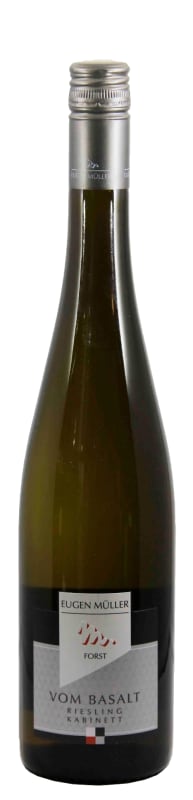


Winemaker Notes
Basalt is of course (and famously) the soil of the Pechstein, from which this wine indeed hails, but it’s bottled under the name of a small privileged Grosslage because it’s the “item” Müller’s private customers recognize. It is also a super-aromatic lot fermented with a less vigorous yeast strain that guarantees an incomplete result, i.e., residual sugar. It’s more gentle than to intervene to stop fermentation by chilling, filtering or sulfuring. So if you’re someone for whom the very notion of cultured yeast fills you with dread…well, um yes: actual thinking is hard. This wine also snakes its way around the palate but this time it’s all flowers and gloss; starts out musky but firms up and becomes sleek and lithe with a refined dialogue among herbs, pebbles and blooms.
Professional Ratings
-
Wine Spectator
A well-knit, crowd-pleasing style that offers a range of ripe orchard and citrus fruit flavors, combined with savory mineral notes. Although quite juicy, this features enough acidity for balance. Shows decent length. Drink now through 2026.


Riesling possesses a remarkable ability to reflect the character of wherever it is grown while still maintaining its identity. A regal variety of incredible purity and precision, this versatile grape can be just as enjoyable dry or sweet, young or old, still or sparkling and can age longer than nearly any other white variety. Somm Secret—Given how difficult it is to discern the level of sweetness in a Riesling from the label, here are some clues to find the dry ones. First, look for the world “trocken.” (“Halbtrocken” or “feinherb” mean off-dry.) Also a higher abv usually indicates a drier Riesling.

This sunny and relatively dry region served for many years as a German tourist mecca and was associated with low cost, cheerful wines. But since the 1980s, it has gained a reputation as one of Germany’s more innovative regions, which has led to increased international demand.