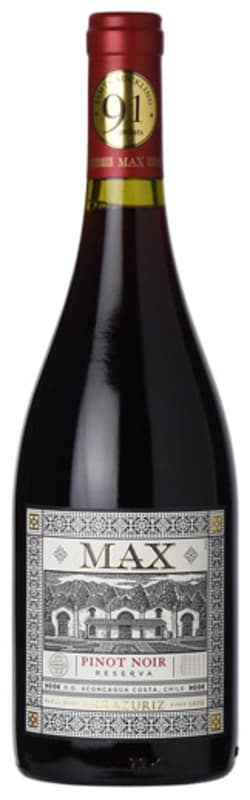


Winemaker Notes
Beautiful cherry red color. Aromas of cherries, raspberries, and rose hips are complemented, with soft touches of tobacco and earthy notes. On the palate, the wine is juicy, predominated by red fruit character and is accompanied by delicate balsamic notes. A wine of great balance, structure, elegant tannins, and length.
Professional Ratings
-
James Suckling
Hibiscus, bright violets, blueberry tea, Chinese spices and herbs. Medium body, tight yet never firm tannins that frame a crunchy core of blue fruit up to a minerally, super-refined finish. Drink now.
-
Wilfred Wong of Wine.com
COMMENTARY: After tasting the 2017 Errázuriz Max Pinot Noir, I have to keep the Aconcagua Costa region on my radar screen of places to consider for this grape variety. TASTING NOTES: This wine is perfectly beautiful. Its balanced aromas and flavors of cranberry and wild strawberries should make it a superb pairing partner with poached salmon. (Tasted: October 1, 2018, San Francisco, CA)
-
Robert Parker's Wine Advocate
I tasted three different labels of Pinot Noir, including the 2017 Max Reserva Pinot Noir from Aconcagua, a restrained red with moderate alcohol and very good freshness. After destemming and crushing, it fermented in stainless steel and then aged for 11 months in French oak barrels, 15% of them new. It has some iron-like aromas of fresh blood and red berries and a tasty, medium-bodied palate. 60,420 bottles produced. It was bottled in May 2018.


Thin-skinned, finicky and temperamental, Pinot Noir is also one of the most rewarding grapes to grow and remains a labor of love for some of the greatest vignerons in Burgundy. Fairly adaptable but highly reflective of the environment in which it is grown, Pinot Noir prefers a cool climate and requires low yields to achieve high quality. Outside of France, outstanding examples come from in Oregon, California and throughout specific locations in wine-producing world. Somm Secret—André Tchelistcheff, California’s most influential post-Prohibition winemaker decidedly stayed away from the grape, claiming “God made Cabernet. The Devil made Pinot Noir.”

The Aconcagua River runs east from the charming costal town of Valparaiso and bisects the land creating the valley after which it was named. While alluvial soils predominate the Aconcagua Valey along its river throughout, its east-west flow creates drastically different conditions on each of its ends. Its western, seaside vineyards, with clay and stony soils upon gently rolling hills, produce cool-climate varieties such as Sauvignon Blanc, Chardonnay and Pinot Noir. Its inner region is one of Chile’s hottest and produces some of its best red wines. Panquehue in the inner Aconcagua is the site of Chile’s first Syrah vines, planted in 1993.