
Winemaker Notes
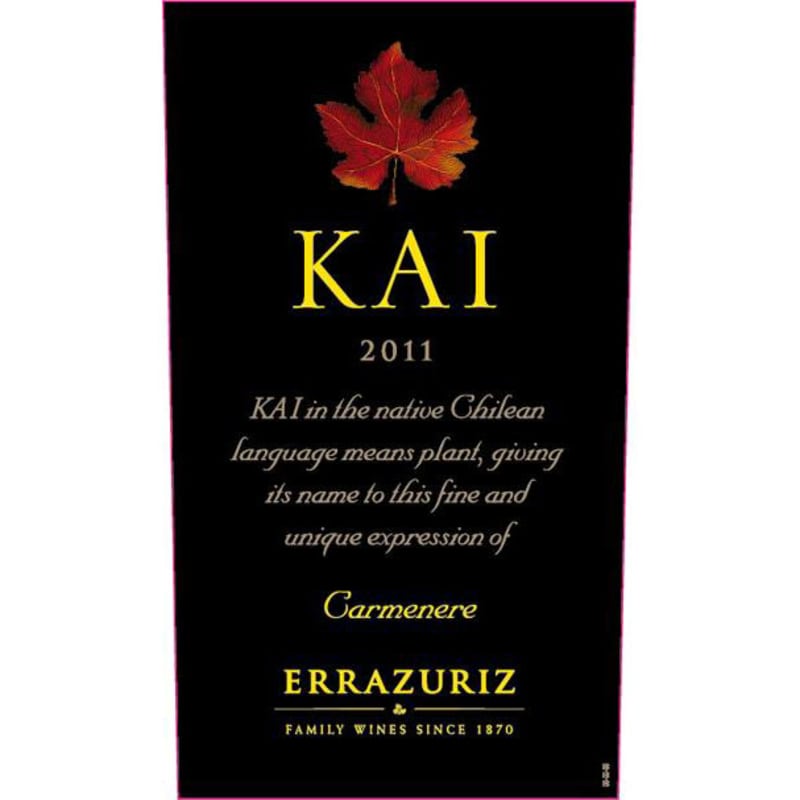
Blend: 95% Carmenere, 5% Petit Verdot
Professional Ratings
-
James Suckling
A juicy red with chocolate, berry and hints of toasted oak. Fresh herbs. Full body, with fine tannins and a savory and salty finish. This is one of the best known carmeneres. A delicious carmenere to drink now and age.
-
Wine Enthusiast
Despite cool growing conditions in 2011, this version of Kai shows raisiny, fully ripe aromas of loamy blackberry combined with graphite. A rich palate is grounded by good acidity, while flavors of lemony oak, olive, mocha and vanilla work alongside core berry. On the finish, chocolaty notes blend with residual black-fruit flavors. Drink through 2018.
-
Wine Spectator
Offers a deeply spiced aroma, with French roast notes to the chewy dark fruit and pemmican flavors, accented by hints of green olive and slate. The dense finish is firmly tannic.


Dark, full-bodied and herbaceous with a spicy kick, Carménère found great success with its move to Chile in the mid-19th century. However, the variety went a bit undercover until 1994 when many plantings previously thought to be Merlot, were profiled as Carménère. Somm Secret— Carménère is both a progeny and a great-grandchild of the similarly flavored Cabernet Franc.

The Aconcagua River runs east from the charming costal town of Valparaiso and bisects the land creating the valley after which it was named. While alluvial soils predominate the Aconcagua Valey along its river throughout, its east-west flow creates drastically different conditions on each of its ends. Its western, seaside vineyards, with clay and stony soils upon gently rolling hills, produce cool-climate varieties such as Sauvignon Blanc, Chardonnay and Pinot Noir. Its inner region is one of Chile’s hottest and produces some of its best red wines. Panquehue in the inner Aconcagua is the site of Chile’s first Syrah vines, planted in 1993.