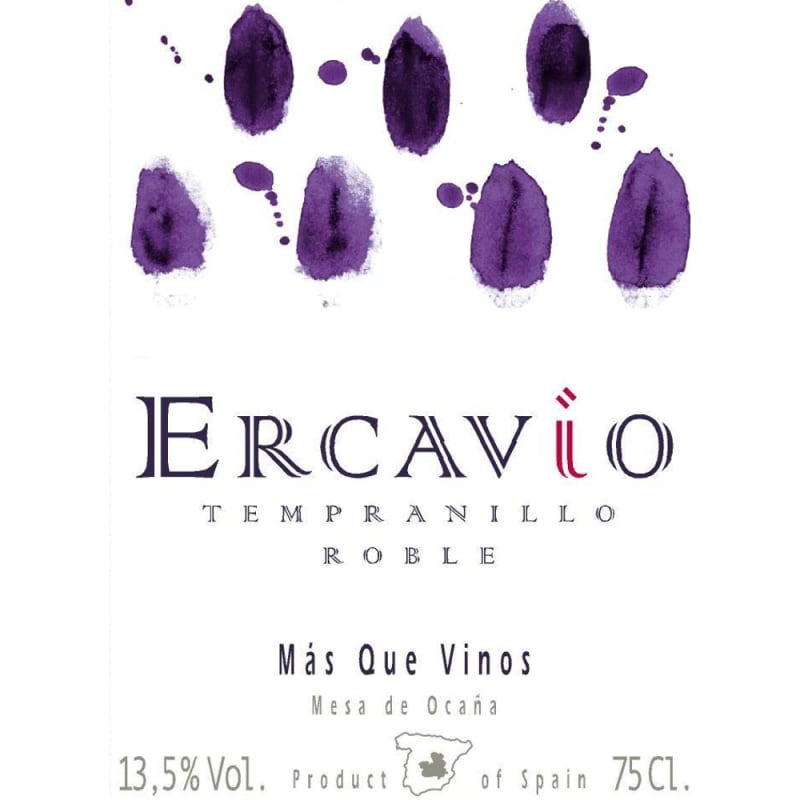

Winemaker Notes
Mas Que Vinos = 3 Winemakers & 3 Friends. Margarita Madrigal, Gonzalo Rodriguez, and Alexandra Schmedes met in 1998 in Rioja and began a "flying winemaker" consultant firm, taking them to projects across Spain. They were drawn to Gonzalo's home town of Dosbarrios where they saw great potential in the vineyards and decided to launch their own project, Ercavio, named for an old Roman settlement. They renovated an old family winery (from 1851) with typical tinajas (large clay wine vats: the traditional and antique method for fermenting in the region), located in the house of La plazuela in Dosbarrios. It is here that the wine la Plazuela is barrel aged.
The area of the village Dosbarrios, Huerta and Cabañas, with their vineyards is the Mesa de Ocaña, located about 60km east of Toledo. The continental climate is especially suited to growing grapes with cold, dry winters and hot summers, tempered by high altitude cooling.
Professional Ratings


Spanish red wine is known for being bold, heady, rustic and age-worthy, Spain is truly a one-of-a-kind wine-producing nation. A great majority of the country is hot, arid and drought-ridden, and since irrigation has only been recently introduced and (controversially) accepted, viticulture has sustained—and flourished—only through a great understanding of Spain’s particular conditions. Large spacing between vines allows each enough resources to survive and as a result, the country has the most acreage under vine compared to any other country, but is usually third in production.
Of the Spanish red wines, the most planted and respected grape variety is Tempranillo, the star of Spain’s Rioja and Ribera del Duero regions. Priorat specializes in bold red blends, Jumilla has gained global recognition for its single varietal Monastrell and Utiel-Requena has garnered recent attention for its reds made of Bobal.