
Winemaker Notes
Dark ruby red, with black cherry tones. Complex and intense nose with presence of black berries, spices and soft notes of fine oak. Lively and bright red fruit. Sophisticated texture full of pointedly firm tannins.
Serve Erasmo with meat, meat pies, game or wild boar cooked on an open fire. Generally with full flavored main courses.
Professional Ratings
-
Wine & Spirits
From the dry-farmed vineyards of Maule, this blend of cabernet sauvignon, merlot and cabernet franc is extremely austere when first poured. Oxygen reveals its lovely, bright red fruit and its sophisticated texture full of pointedly firm tannins. The long and profound finish calls for braised beef.
-
Robert Parker's Wine Advocate
The 2005 Erasmo is composed of 60% Cabernet Sauvignon, 30% Merlot, and 10% Cabernet Franc. Purple-colored, it has an alluring bouquet of toasty oak, spice box, wood smoke, cassis, and black currants. This leads to a medium-bodied, elegant wine with enough concealed structure to evolve for 3-4 years. This lengthy effort will be at its best from 2011 to 2020.
-
Wine Spectator
Sleek and focused, with a solid core of red currant fruit surrounded by sweet spice, toast and mineral notes. Long, pure finish has the flesh to match its sinew. Best vintage yet for this Italian-owned project. Cabernet Sauvignon, Merlot and Cabernet Franc. Drink now through 2010.
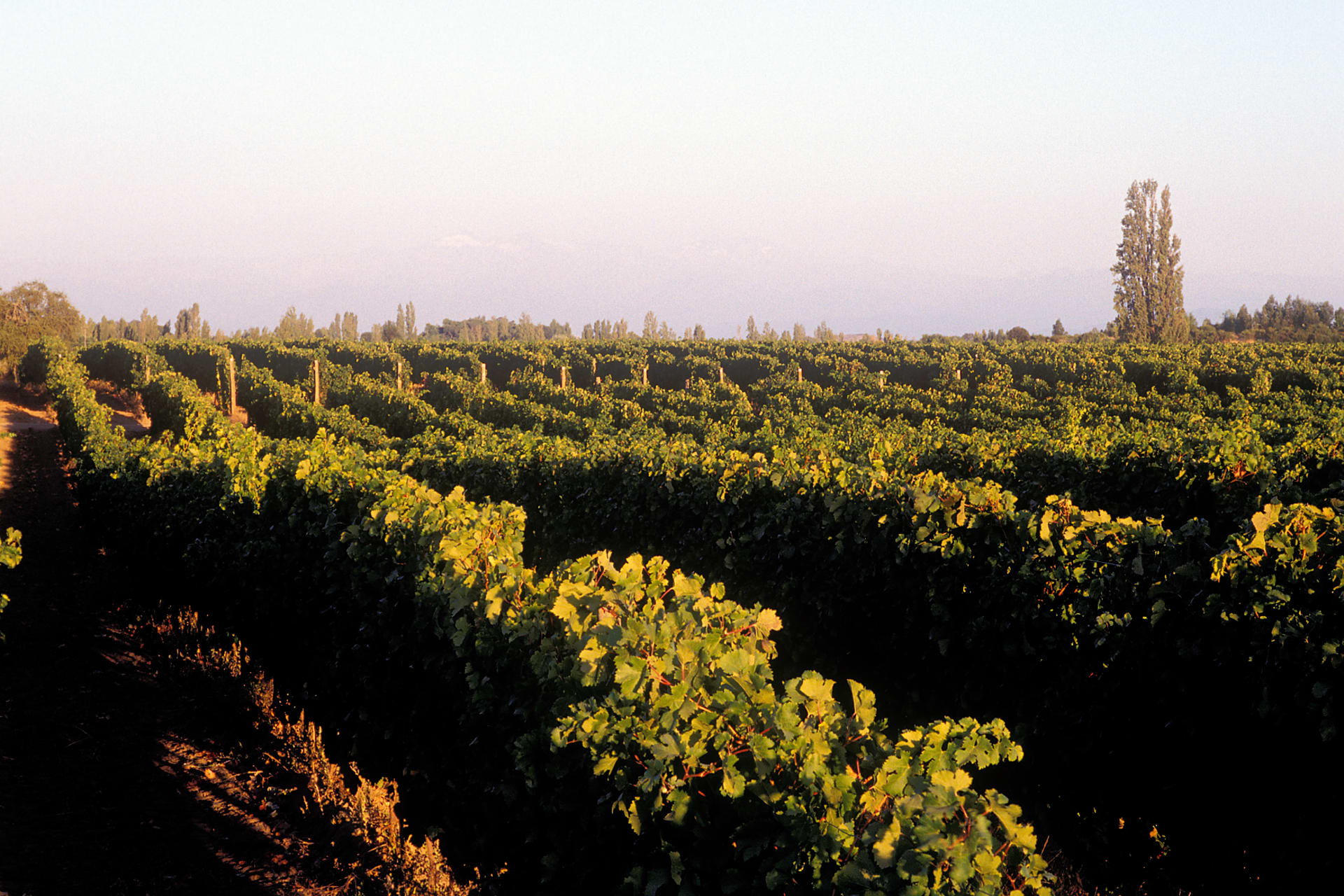


“Erasmo is the name of a local farmer that helped me understand the uniqueness of the ancient land of Caliboro…Come and visit this extraordinary organic farm where ancient traditions and state of the art winemaking meet.” –Count Francesco Marone Cinzano
In 1995, Count Francesco Marone Cinzano, owner of the eminent Col d’Orcia estate in Montalcino, visited the Maule Valley in Chile on a trip to the Conquistadores Trail. He fell in love with the land – an area he felt exhibited a true “Harmony of Nature” - and felt there was immense potential for the production of world-class wines. Count Cinzano and longtime consultant Maurizio Castelli settled on the area of “Riserva di Caliboro” in the Maule Valley to establish Erasmo. The decision to farm organically was paramount from the beginning. In fact, the Caliboro area was chosen because of the allowance of dry farming. The estate was certified organic with the 2014 vintage.
The Caliboro Valley lies along the river Perquilauquen. It is covered in gently sloping alluvial terraces and rich in native vegetation and wildlife. The area enjoys intense sunlight, dry southerly winds and optimal rainfall.
Count Cinzano’s life is inextricably linked with fine wine, with a family tradition of winemaking dating back over 400 years. His unshakeable dedication to producing the highest quality sustainable and organic wines is apparent with Erasmo, but it does not end with grapes. His dedication to the people behind the wines is foremost. Most of the estate’s workers live on the farm and are allowed to cultivate their own plot of land within the propriety, as well as keep their own livestock.

One of the world’s most classic and popular styles of red wine, Bordeaux-inspired blends have spread from their homeland in France to nearly every corner of the New World. Typically based on either Cabernet Sauvignon or Merlot and supported by Cabernet Franc, Malbec and Petit Verdot, the best of these are densely hued, fragrant, full of fruit and boast a structure that begs for cellar time. Somm Secret—Blends from Bordeaux are generally earthier compared to those from the New World, which tend to be fruit-dominant.

Dramatic geographic and climatic changes from west to east make Chile an exciting frontier for wines of all styles. Chile’s entire western border is Pacific coastline, its center is composed of warm valleys and on its eastern border, are the soaring Andes Mountains.
Chile’s central valleys, sheltered by the costal ranges, and in some parts climbing the eastern slopes of the Andes, remain relatively warm and dry. The conditions are ideal for producing concentrated, full-bodied, aromatic reds rich in black and red fruits. The eponymous Aconcagua Valley—hot and dry—is home to intense red wines made from Cabernet Sauvignon, Syrah and Merlot.
The Maipo, Rapel, Curicó and Maule Valleys specialize in Cabernet and Bordeaux Blends as well as Carmenère, Chile’s unofficial signature grape.
Chilly breezes from the Antarctic Humboldt Current allow the coastal regions of Casablanca Valley and San Antonio Valley to focus on the cool climate loving varieties, Pinot Noir, Chardonnay and Sauvignon Blanc.
Chile’s Coquimbo region in the far north, containing the Elqui and Limari Valleys, historically focused solely on Pisco production. But here the minimal rainfall, intense sunlight and chilly ocean breezes allow success with Chardonnay and Pinot Noir. The up-and-coming southern regions of Bio Bio and Itata in the south make excellent Riesling, Chardonnay and Pinot Noir.
Spanish settlers, Juan Jufre and Diego Garcia de Cáceres, most likely brought Vitis vinifera (Europe’s wine producing vine species) to the Central Valley of Chile sometime in the 1550s. One fun fact about Chile is that its natural geographical borders have allowed it to avoid phylloxera and as a result, vines are often planted on their own rootstock rather than grafted.