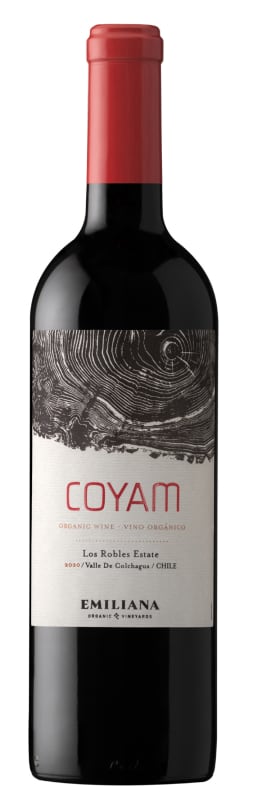


Winemaker Notes
The wine shows a deep red color with raspberry-colored rims. It is complex on the nose, with black fruits like plums and blackberries, fresh Mediterranean herbs such as rosemary and lavender, spices, notes of mocha, and graphite. It offers a silky texture on the palate, a medium volume, and elegant tannins. It is a long and fruity wine.
Blend: 38% Syrah, 37% Carménère, 8% Cabernet Sauvignon, 5% Carignan, 4% Garnacha, 4% Mourvèdre, 2% Petit Verdot, 1% Malbec, 1% Tempranillo
Professional Ratings
-
Vinous
The 2020 Coyam is a blend of 38% Syrah, 37% Carménère, 8% Cabernet Sauvignon, 5% Carignan, 4% Garnacha, 4% Mourvèdre, 2% Petit Verdot, 1% Malbec and 1% Tempranillo from the Los Robles vineyard in Colchagua. It was aged for 18 months, 75% in barrels and the rest in foudres and eggs. A rich purple in the glass. The complex nose features nuanced aromas ranging from blackberry to blueberry and currant with hints of cedar and spice. In the mouth, it’s juicy with a grippy texture and delicate, concentrated but relaxed tannins before the lengthy finish. It seems that the healthy biodynamic vineyard was able to withstand the warmth of 2020. An extremely well-made wine that handled the conditions with aplomb.
-
Decanter
This flagship wine from organic producer Emiliana hugely over-delivers for the price. A seamless blend of old-vine Syrah, Caremenere, Cabernet Sauvignon, Carignan, Grenache and Mourvedre, with dashes of Petit Verdot, Malbec and Tempranillo. Harmonious nose of cassis, fruits of the forest, black currant leaf, redcurrants and dark chocolate. Poised and complex palate: ripe, juicy fruit is balanced by freshness and a sappy florality, with hints of violet, mocha, pencil shavings, liquorice, rounded tannins and a lingering finish. Super stuff!
-
Robert Parker's Wine Advocate
The balsamic and peppery red 2020 Coyam was produced with a multi-grape blend of 38% Syrah, 37% Carmenere, 8% Cabernet Sauvignon, 5% Carignan, 4% Garnacha, 4% Mourvèdre, 2% Petit Verdot, 1% Malbec and 1% Tempranillo cropped from a warm and dry year. It fermented in stainless steel, concrete and oak, all with indigenous yeasts, and the élevage lasted 18 months and was 75% in French oak barrels (new and used), 15% in 2,000- and 5,000-liter oak foudre and 10% in concrete eggs. The wine is soft, textured, round and ripe without excess, elegant and combining power with finesse. Very good.
-
Wine Spectator
This kitchen sink blend pulls together a lot of nuance. Offers notes of violet and toasted vanilla bean mixed with ripe and richly layered plum and brambly raspberry flavors. A dose of ganache and plush tannins add to this version's allure on the well-spiced finish. Syrah, Carmenère, Cabernet Sauvignon, Mourvèdre, Malbec, Garnacha, Tempranillo and Carignan. Drink now through 2033.


With hundreds of red grape varieties to choose from, winemakers have the freedom to create a virtually endless assortment of blended red wines. In many European regions, strict laws are in place determining the set of varieties that may be used, but in the New World, experimentation is permitted and encouraged resulting in a wide variety of red wine styles. Blending can be utilized to enhance balance or create complexity, lending different layers of flavors and aromas. For example, a red wine blend variety that creates a fruity and full-bodied wine would do well combined with one that is naturally high in acidity and tannins. Sometimes small amounts of a particular variety are added to boost color or aromatics. Blending can take place before or after fermentation, with the latter, more popular option giving more control to the winemaker over the final qualities of the wine.
How to Serve Red Wine
A common piece of advice is to serve red wine at “room temperature,” but this suggestion is imprecise. After all, room temperature in January is likely to be quite different than in August, even considering the possible effect of central heating and air conditioning systems. The proper temperature to aim for is 55° F to 60° F for lighter-bodied reds and 60° F to 65° F for fuller-bodied wines.
How Long Does Red Wine Last?
Once opened and re-corked, a bottle stored in a cool, dark environment (like your fridge) will stay fresh and nicely drinkable for a day or two. There are products available that can extend that period by a couple of days. As for unopened bottles, optimal storage means keeping them on their sides in a moderately humid environment at about 57° F. Red wines stored in this manner will stay good – and possibly improve – for anywhere from one year to multiple decades. Assessing how long to hold on to a bottle is a complicated science. If you are planning long-term storage of your reds, seek the advice of a wine professional.

Well-regarded for intense and exceptionally high quality red wines, the Colchagua Valley is situated in the southern part of Chile’s Rapel Valley, with many of the best vineyards lying in the foothills of the Coastal Range.
Heavy French investment and cutting-edge technology in both the vineyard and the winery has been a boon to the local viticultural industry, which already laid claim to ancient vines and a textbook Mediterranean climate.
The warm, dry growing season in the Colchagua Valley favors robust reds made from Cabernet Sauvignon, Carmenère, Malbec and Syrah—in fact, some of Chile’s very best are made here. A small amount of good white wine is produced from Chardonnay and Sauvignon Blanc.