


Winemaker Notes
Professional Ratings
-
Wine Enthusiast
This beautiful, luminously hued Barolo opens with enticing scents of perfumed berry, dark spice, eucalyptus, violet and forest floor. The savory palate combines elegance and structure, delivering juicy red cherry, raspberry compote, star anise and wild mint framed in taut, refined tannins that give it a smooth but firm texture. Bright acidity keeps energized. What a stunner. Drink 2024–2038.
Cellar Selection -
Wine & Spirits
Valter Fissore’s Ravera is typically reticent in youth, but this wine from the 2018 vintage shows an early exuberance in its red-cherry and raspberry flavors heightened by scents of rose petals and balsamic herbs. The tannins, while taut, are a bit softer and rounder in this vintage. Since 2017, Fissore has been including some stems in his Barolo fermentation's—about 20 to 30 percent in this wine—which enhances the freshness and adds some complex spice notes to the finish.
-
Robert Parker's Wine Advocate
The Elvio Cogno 2018 Barolo Ravera is becoming one of the most important wines in Novello, and it performs very nicely in this more challenging vintage. In fact, 2018 helps to cement Ravera's steadfast reputation precisely because it performs so well despite spells of humidity and heat. The wine shows small-berry detailing with rust and crushed stone at the back. There is a point of bitterness that accompanies the tannins of this full-bodied wine.
-
Wine Spectator
This is alluring for the strawberry, cherry and currant flavors, with details of iron, tar and tobacco. Starts out silky in texture, then the structure sneaks up on you as this red builds to a long finish.
-
James Suckling
Nice complexity to the nose, showing red cherry, walnut shell and pungent earth. Hints of pressed flowers, too. The palate is medium-bodied with lightly firm, velvety tannins and a very tightly wound core of fruit and tannin at the heart of the wine. The lighter structure is set, reflecting the vintage, but there’s enough going on for positive development with bottle age. Refined feel to this.
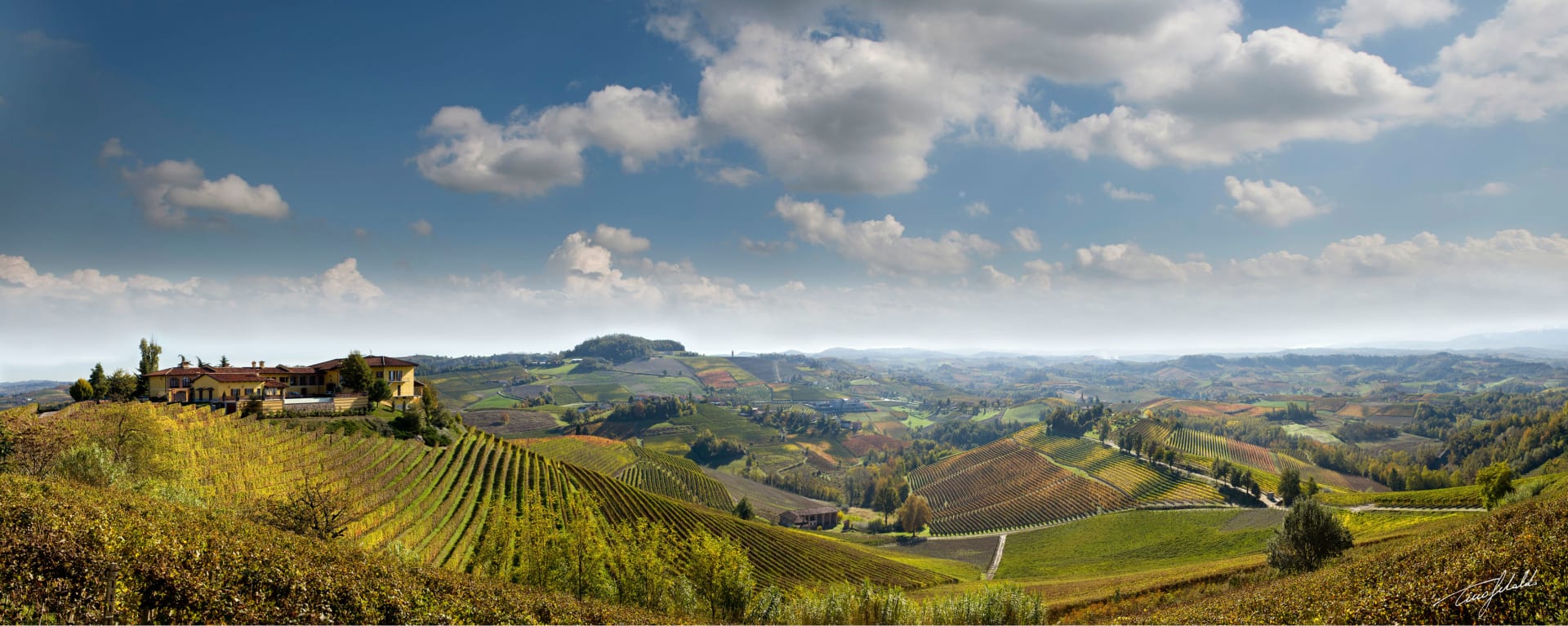


The Cogno family has been making wine for four generations in Piedmont. In 1990, Elvio Cogno left a long and fruitful partnership with the venerable Barolo producer Marcarini at La Morra and bought a splendid, historic 18th-century farmhouse on the top of Bricco Ravera, a hill near Novello in the Langhe area. (Novello is one of the 11 communes in which Barolo is produced.) The farm was surrounded by 11 hectares (27.18 acres) of steeply sloped vineyards. Elvio restored the manor, converted the old granaries to wine cellars and founded his eponymous winery. For the next 20 years he devoted himself to the winemaking traditions handed down to him by his father and grandfather.
Elvio, in turn, has now passed the torch to his daughter, Nadia, and her husband, Valter Fissore, who has worked beside Elvio for 25 years. Following in the footsteps of Elvio the maestro, Elvio Cogno winery continues to produce elegant wines without altering the traditions, styles and flavors of the Langhe, with its breathtaking quilted landscape and unique grape varieties.
The Elvio Cogno winery sits at the top of Bricco Ravera, a hill near Novello in the Langhe area of Piedmont, one of the 11 communes in which Barolo is produced. Ravera is the finest cru of Novello, encircling the top of the hill and the winery, reaching a 380-meter (1,246-foot) elevation, with breathtaking views in all directions.

Responsible for some of the most elegant and age-worthy wines in the world, Nebbiolo, named for the ubiquitous autumnal fog (called nebbia in Italian), is the star variety of northern Italy’s Piedmont region. Grown throughout the area, as well as in the neighboring Valle d’Aosta and Valtellina, it reaches its highest potential in the Piedmontese villages of Barolo, Barbaresco and Roero. Outside of Italy, growers are still very much in the experimentation stage but some success has been achieved in parts of California. Somm Secret—If you’re new to Nebbiolo, start with a charming, wallet-friendly, early-drinking Langhe Nebbiolo or Nebbiolo d'Alba.

The center of the production of the world’s most exclusive and age-worthy red wines made from Nebbiolo, the Barolo wine region includes five core townships: La Morra, Monforte d’Alba, Serralunga d’Alba, Castiglione Falletto and the Barolo village itself, as well as a few outlying villages. The landscape of Barolo, characterized by prominent and castle-topped hills, is full of history and romance centered on the Nebbiolo grape. Its wines, with the signature “tar and roses” aromas, have a deceptively light garnet color but full presence on the palate and plenty of tannins and acidity. In a well-made Barolo wine, one can expect to find complexity and good evolution with notes of, for example, strawberry, cherry, plum, leather, truffle, anise, fresh and dried herbs, tobacco and violets.
There are two predominant soil types here, which distinguish Barolo from the lesser surrounding areas. Compact and fertile Tortonian sandy marls define the vineyards farthest west and at higher elevations. Typically the Barolo wines coming from this side, from La Morra and Barolo, can be approachable relatively early on in their evolution and represent the “feminine” side of Barolo, often closer in style to Barbaresco with elegant perfume and fresh fruit.
On the eastern side of the Barolo wine region, Helvetian soils of compressed sandstone and chalks are less fertile, producing wines with intense body, power and structured tannins. This more “masculine” style comes from Monforte d’Alba and Serralunga d’Alba. The township of Castiglione Falletto covers a spine with both soil types.
The best Barolo wines need 10-15 years before they are ready to drink, and can further age for several decades.