


Winemaker Notes
Professional Ratings
-
James Suckling
Tons of ripe yellow fruit here and a delicately smoky touch adding interest to this concentrated, but not massive gewurtz. Long, creamy finish. With a bit more complexity this would have rated even higher. Drink or hold.
-
Robert Parker's Wine Advocate
The terraced Kastelaz vineyard is located near the town of Tramin and is planted to Gewürztraminer and Merlot at 350 meters above sea level. This panoramic vineyard site gives rise to the beautiful 2017 Alto Adige Gewürztraminer Kastelaz. This fragrant and abundant wine delivers beautiful tones of white rose, candied orange peel, wild herb and honey. This is a dry wine with impressive textural richness. The wine sees six hours of skin contact and is fermented at cool temperatures (18 degrees Celsius) in stainless steel to lock in those floral aromas. Some 14,000 bottles were produced.
-
Wine Spectator
A firm and focused version, offering an expressive display of lychee, pink grapefruit sorbet, jasmine and spice aromas and flavors, all finely meshed with stony minerality and vibrant acidity on the lacy palate. Drink now through 2025. 1,200 cases made.
-
Wine & Spirits
This wine opens with scents of rose petals and flavors of mango and litchi. It picks up notes of ginger and spice with exposure to air, and finishes a bit warm. Chill it well and serve with a spicy stir-fry.


Gewürztraminer, an expressive and aromatically distinctive white grape variety, is considered a noble variety in the Alsace region of France, and produces wonderful wines in the mountainous Alto Adige region of NE Italy. Generally this grape grows well in cooler regions and its natural intensity makes it a great ally for flavorful cuisine such as Indian, Middle Eastern or Moroccan. Somm Secret—Because of a charming perfume and tendency towards slight sweetness, Gewürztraminer makes for an excellent gateway wine for those who love sweet wines but want to venture into the realm of drier whites.
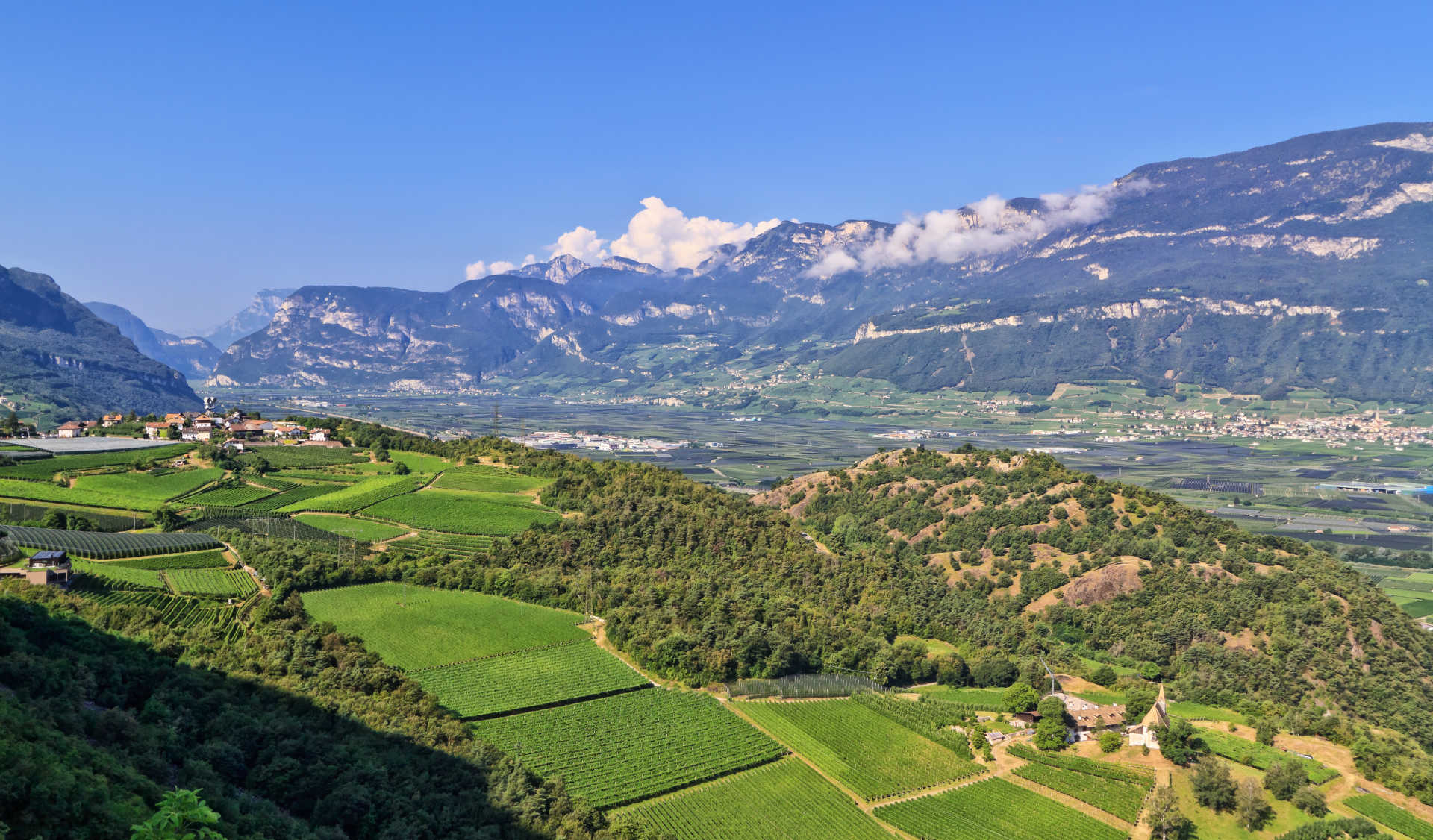
A mountainous northern Italian region heavily influenced by German culture, Trentino-Alto Adige is actually made up of two separate but similar regions: Alto Adige and Trentino.
Trentino, the southern half, is primarily Italian-speaking and largely responsible for the production of non-native, international grapes. There is a significant quantity of Chardonnay, Pinot Grigio and Merlot produced. But Trentino's native and most unique red variety, Teroldego, while still rare, is gaining popularity. It produces a deeply colored red wine rich in wild blackberry, herb, coffee and cocoa.
The rugged terrain of German-speaking Alto Adige (also referred to as Südtirol) focuses on small-scale viticulture, with great value placed on local varieties—though international varieties have been widely planted since the 1800s. Sheltered by the Alps from harsh northerly winds, many of the best vineyards are at extreme altitude but on steep slopes to increase sunlight exposure.
Dominant red varieties include the bold, herbaceous Lagrein and delicate, strawberry-kissed, Schiava, in addition to some Pinot Nero.
The primary white grapes are Pinot grigio, Gewürztraminer, Chardonnay and Pinot blanc, as well as smaller plantings of Sauvignon blanc, Müller Thurgau. These tend to be bright and refreshing with crisp acidity and just the right amount of texture. Some of the highest quality Pinot grigio in Italy is made here.