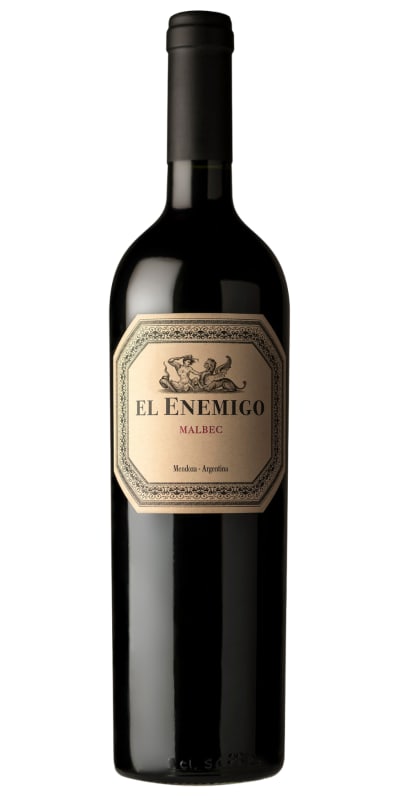


Winemaker Notes
El Enemigo Malbec displays rich and concentrated aromas of black fruit such as cherries and berries. It's full-bodied with spice, blackberry, black cherry, pepper, and floral notes leading into an elegant and lengthy finish. Certified Sustainable by Bodegas de Argentina.
Pair El Enemigo Malbec with Lyonnaise sauces, grilled steaks, and barbecued ribs.
Professional Ratings
-
James Suckling
This has pretty aromas of blackberries, ripe blueberries, dark chocolate, walnuts and crushed stones. Hints of citrus zest. It’s medium-bodied with fine, fleshy tannins. Textured and velvety with a solid core of dark fruit.
-
Robert Parker's Wine Advocate
It's always interesting to compare different vintages of the same wine, in this case the 2019 Malbec with the following two years. It has 8% Cabernet Franc and 2% Petit Verdot in the blend and only 13.5% alcohol while retaining very good acidity. The grapes were sourced from Gualtallary and were co-fermented. This is varietal with an herbal twist, serious, subtle and mineral with austerity and elegance, reflecting a very balanced and good year. It's medium-bodied, nicely textured and has a chalky texture from the limestone soils. Rating: 93+
-
Wine Enthusiast
Aged 15 months in foudres, this is an elegant Malbec from Gualtallary in the Uco Valley. The nose offers subtle spices, a dash of aromatic herbs, hints of black pepper and vanilla bean followed by plums. Silky tannins and excellent acidity provide a nice frame for this layered red. Rosemary, cherry, plums and dark chocolate contribute to the wine’s complexity.



The wines of El Enemigo are a tribute to those internal battles that make us who we are. Winemaker Alejandro Vigil and historian Adrianna Catena reach back in time to capture the era when European immigrants first settled in Argentina. These settlers sought to make wines as good as or finer than those of their old homelands. By 1936, Malbec and Petit Verdot were Argentina’s most widely planted varietals, and their blend was considered the ultimate in refinement and aging potential.
Enemigo thrives in the thrill of experimentation and delights in the new and unconventional. It was born from a desire to carve a unique path and a shared obsession with terroir—each bottle an unfettered song to the wild, free-spirited soul. The wines reflect the freshness and character of each individual vineyard: a pure expression of terroir.

Celebrated for its bold flavors and supple texture, Malbec has enjoyed runaway success in Argentina since the late 20th century. The grape originated in Bordeaux, France, where it historically contributed color and tannin to blends. A French agronomist, who saw great potential for the variety in Mendoza’s hot, high-altitude landscape, brought Malbec to Argentina in 1868. Somm Secret—If you’re trying to please a crowd, Malbec is generally a safe bet with its combination of dense fruit and soft tannins.

By far the largest and best-known winemaking province in Argentina, Mendoza is responsible for over 70% of the country’s enological output. Set in the eastern foothills of the Andes Mountains, the climate is dry and continental, presenting relatively few challenges for viticulturists during the growing season. Mendoza, divided into several distinctive sub-regions, including Luján de Cuyo and the Uco Valley, is the source of some of the country’s finest wines.
For many wine lovers, Mendoza is practically synonymous with Malbec. Originally a Bordelaise variety brought to Argentina by the French in the mid-1800s, here it found success and renown that it never knew in its homeland where a finicky climate gives mixed results. Cabernet Sauvignon, Syrah, Merlot and Pinot Noir are all widely planted here as well (and sometimes even blended with each other or Malbec). Mendoza's main white varieties include Chardonnay, Torrontés, Sauvignon Blanc and Sémillon.