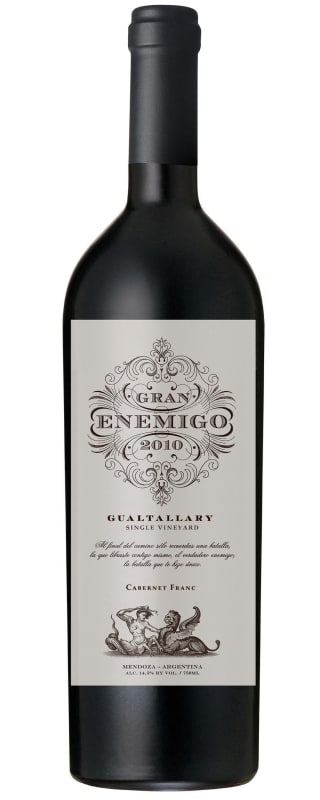


Winemaker Notes
This wine is excellent with grilled meats and various cheeses.
Professional Ratings
-
James Suckling
A rich and intense red with fabulous fruit and balance. Full body, round and soft tannins. Excellent richness. Lots of fruit energy but a salt, iron undertone. Drink or hold.
-
Robert Parker's Wine Advocate
The 2010 Gran Enemigo Gualtallary Single Vineyard is mainly Cabernet Franc with Malbec from granite and calcareous soils. It is produced with the crazy Vigil method of seven different harvests to achieve different levels of ripeness and different character from small plots that he believes increases the complexity of the wine. Its nose of thyme and chalk is completely austere. It has citric, sharp, chunky, delineated palate with laser-like definition that makes you salivate. I’m sure this wine is going to age for a very long time and provide drinking pleasure throughout its life. This seems to have the depth and austerity of Chateau Lafleur and the acidity of ancient vintage Madeira. A tour de force terroir wine. Only 2,800 bottles exist. At this quality level this is a real bargain. Drink 2015-2025.
-
Wine Enthusiast
Jammy, ripe and loaded with inky, sweet black-fruit aromas, the bouquet on this modern Cab Franc draws you in. Once there, look for a big but balanced palate with blackberry, roasted notes, loam and chocolate flavors. The satisfying finish is pure and long, with toasty blackness.



The wines of El Enemigo are a tribute to those internal battles that make us who we are. Winemaker Alejandro Vigil and historian Adrianna Catena reach back in time to capture the era when European immigrants first settled in Argentina. These settlers sought to make wines as good as or finer than those of their old homelands. By 1936, Malbec and Petit Verdot were Argentina’s most widely planted varietals, and their blend was considered the ultimate in refinement and aging potential.
Enemigo thrives in the thrill of experimentation and delights in the new and unconventional. It was born from a desire to carve a unique path and a shared obsession with terroir—each bottle an unfettered song to the wild, free-spirited soul. The wines reflect the freshness and character of each individual vineyard: a pure expression of terroir.

Cabernet Franc, a proud parent of Cabernet Sauvignon, is the subtler and more delicate of the Cabernets. Today Cabernet Franc produces outstanding single varietal wines across the wine-producing world. Somm Secret—One of California's best-kept secrets is the Happy Canyon appellation of Santa Barbara. Here Cabernet Franc shines as a single varietal wine or in blends, expressing sumptuous fruit, savory aromas and polished tannins.

By far the largest and best-known winemaking province in Argentina, Mendoza is responsible for over 70% of the country’s enological output. Set in the eastern foothills of the Andes Mountains, the climate is dry and continental, presenting relatively few challenges for viticulturists during the growing season. Mendoza, divided into several distinctive sub-regions, including Luján de Cuyo and the Uco Valley, is the source of some of the country’s finest wines.
For many wine lovers, Mendoza is practically synonymous with Malbec. Originally a Bordelaise variety brought to Argentina by the French in the mid-1800s, here it found success and renown that it never knew in its homeland where a finicky climate gives mixed results. Cabernet Sauvignon, Syrah, Merlot and Pinot Noir are all widely planted here as well (and sometimes even blended with each other or Malbec). Mendoza's main white varieties include Chardonnay, Torrontés, Sauvignon Blanc and Sémillon.