

Winemaker Notes
This wine pairs well with grilled meat, cheese, or slow-roasted beef dishes.
Professional Ratings
-
Robert Parker's Wine Advocate
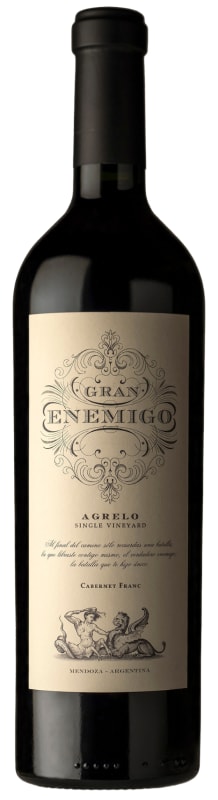
The 2020 Gran Enemigo Agrelo Single Vineyard is a blend of 85% Cabernet Franc and 15% Malbec from a 40-year-old vineyard by the Catena winery. It fermented in concrete and some barrels and matured in large old foudres for 15 months. It has 13.5% alcohol and good freshness. At Agrelo, you always get spices, clove and herbs, berries and flowers, and the élevage provides some toasted and smoky undertones. This is tasty and with very fine tannins. It's mostly Cabernet Franc, mentioned on the label, but it also contains 15% Malbec that matured in two ancient oak foudres for 15 months.
-
James Suckling
The floral, mint and blackberry character comes through nicely, but there’s also a dark earth undertone. Medium-bodied, polished and pretty center palate with softness and juiciness. Drink now or hold.
-
Wine Enthusiast
A basket of black and red berries on the nose suggests a fruit-forward character. Oak aging lends spice to a core of blackberries and blueberries. It's juicy and layered, with cinnamon, chocolate and black pepper. A delicious Cabernet Franc, with a touch of Malbec, from Agrelo in Luján de Cuyo.
-
Wine Spectator
This takes some time to open up but is broad and generous when it does, with spicy details to the berry preserve core, followed by a wealth of herbal tones that gather and linger around minerally accents and pleasing tannins. Drink now through 2036.


Cabernet Franc, a proud parent of Cabernet Sauvignon, is the subtler and more delicate of the Cabernets. Today Cabernet Franc produces outstanding single varietal wines across the wine-producing world. Somm Secret—One of California's best-kept secrets is the Happy Canyon appellation of Santa Barbara. Here Cabernet Franc shines as a single varietal wine or in blends, expressing sumptuous fruit, savory aromas and polished tannins.

By far the largest and best-known winemaking province in Argentina, Mendoza is responsible for over 70% of the country’s enological output. Set in the eastern foothills of the Andes Mountains, the climate is dry and continental, presenting relatively few challenges for viticulturists during the growing season. Mendoza, divided into several distinctive sub-regions, including Luján de Cuyo and the Uco Valley, is the source of some of the country’s finest wines.
For many wine lovers, Mendoza is practically synonymous with Malbec. Originally a Bordelaise variety brought to Argentina by the French in the mid-1800s, here it found success and renown that it never knew in its homeland where a finicky climate gives mixed results. Cabernet Sauvignon, Syrah, Merlot and Pinot Noir are all widely planted here as well (and sometimes even blended with each other or Malbec). Mendoza's main white varieties include Chardonnay, Torrontés, Sauvignon Blanc and Sémillon.